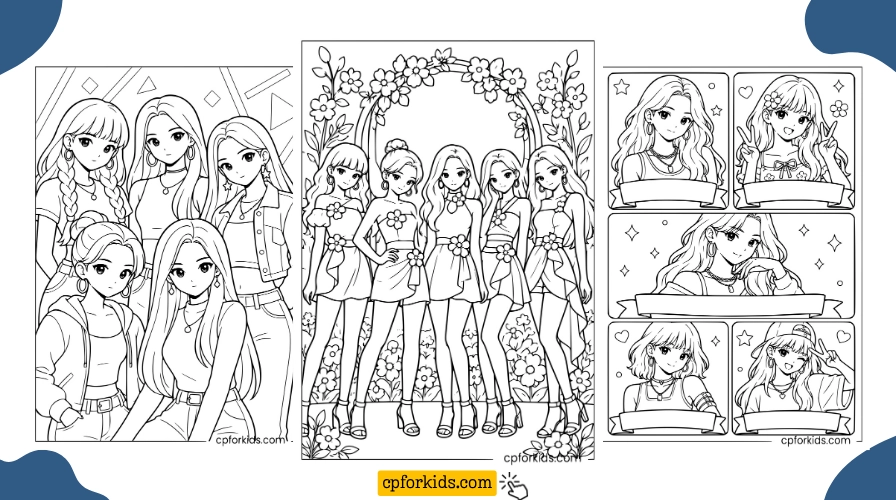

Demon Slayer is known for its patterned haori, distinctive Nichirin weapons, Breathing Styles, and visually detailed characters. This collection includes 44 free Demon Slayer coloring pages featuring Tanjiro, Nezuko, Zenitsu, Inosuke, all nine Hashira, Upper Rank demons, and scenes inspired by the Infinity Castle. Every design opens as a printable PDF with no sign-up required.
The gallery combines calm character portraits with dynamic battle scenes. Tanjiro appears using Water Breathing and Hinokami Kagura, Nezuko appears in both quiet and action-focused designs, Zenitsu prepares a Thunder Breathing attack, and Inosuke charges with his dual blades. Each Hashira has an individual page, alongside a full nine-character lineup. Akaza, Doma, and Kokushibo appear separately and together, while two detailed pages explore the shifting architecture of the Infinity Castle.
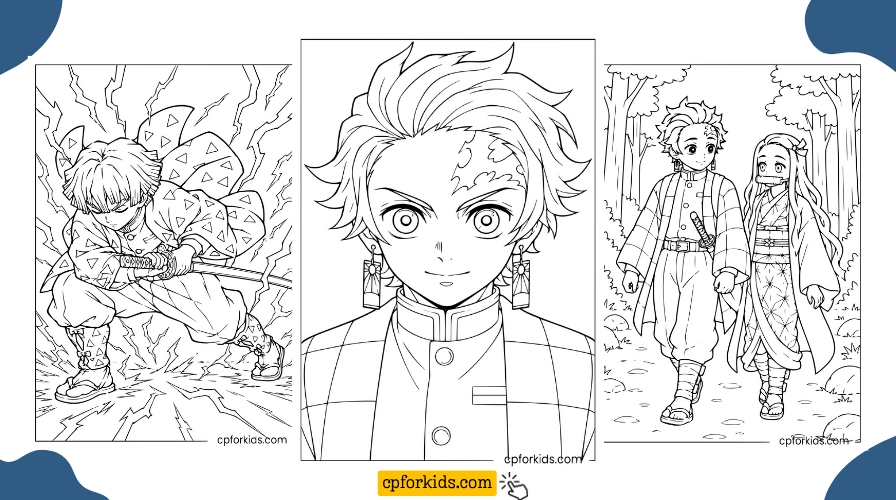
Simplified and chibi designs provide wider spaces and thicker outlines for beginners. The Hashira battle poses, Upper Rank demon pages, and Infinity Castle interiors contain smaller costume, weapon, and background details for experienced colorists who prefer longer projects.
Select Download PDF below any image to open the full-size page in your browser. Every design is prepared to print clearly on both US Letter and A4 paper.
Free Demon Slayer Coloring Pages
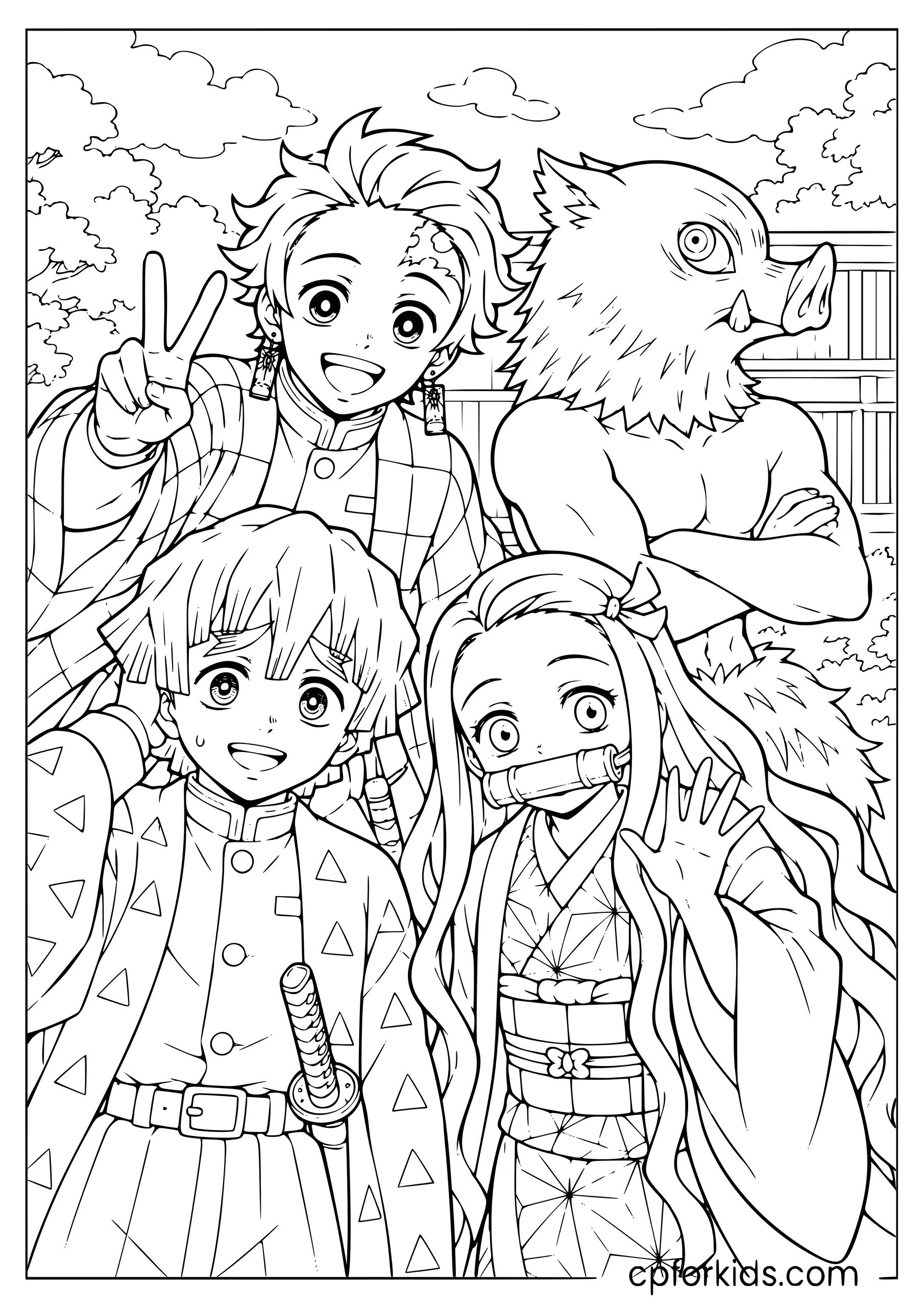
Team Tanjiro — Group Shot
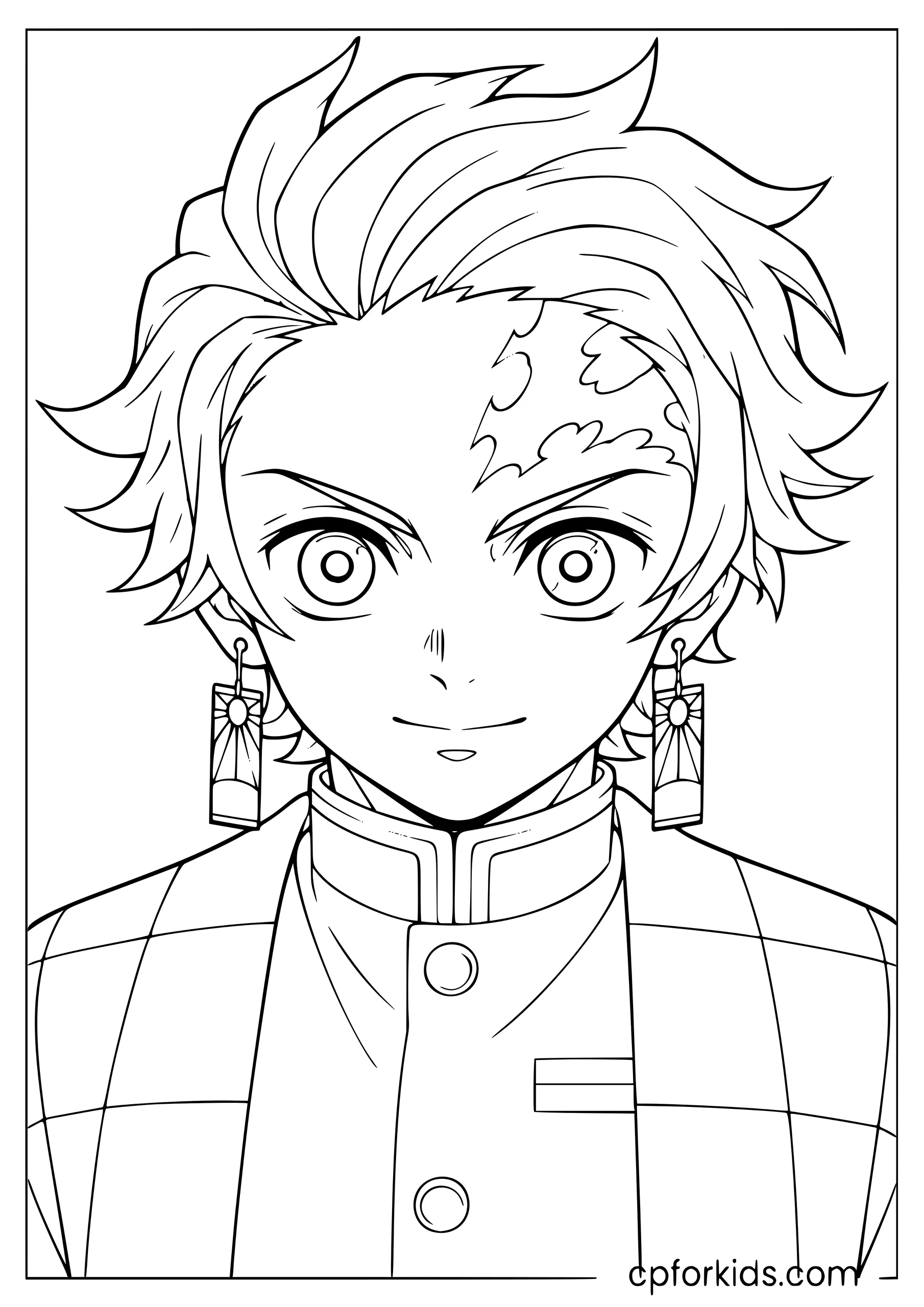
Tanjiro — Portrait
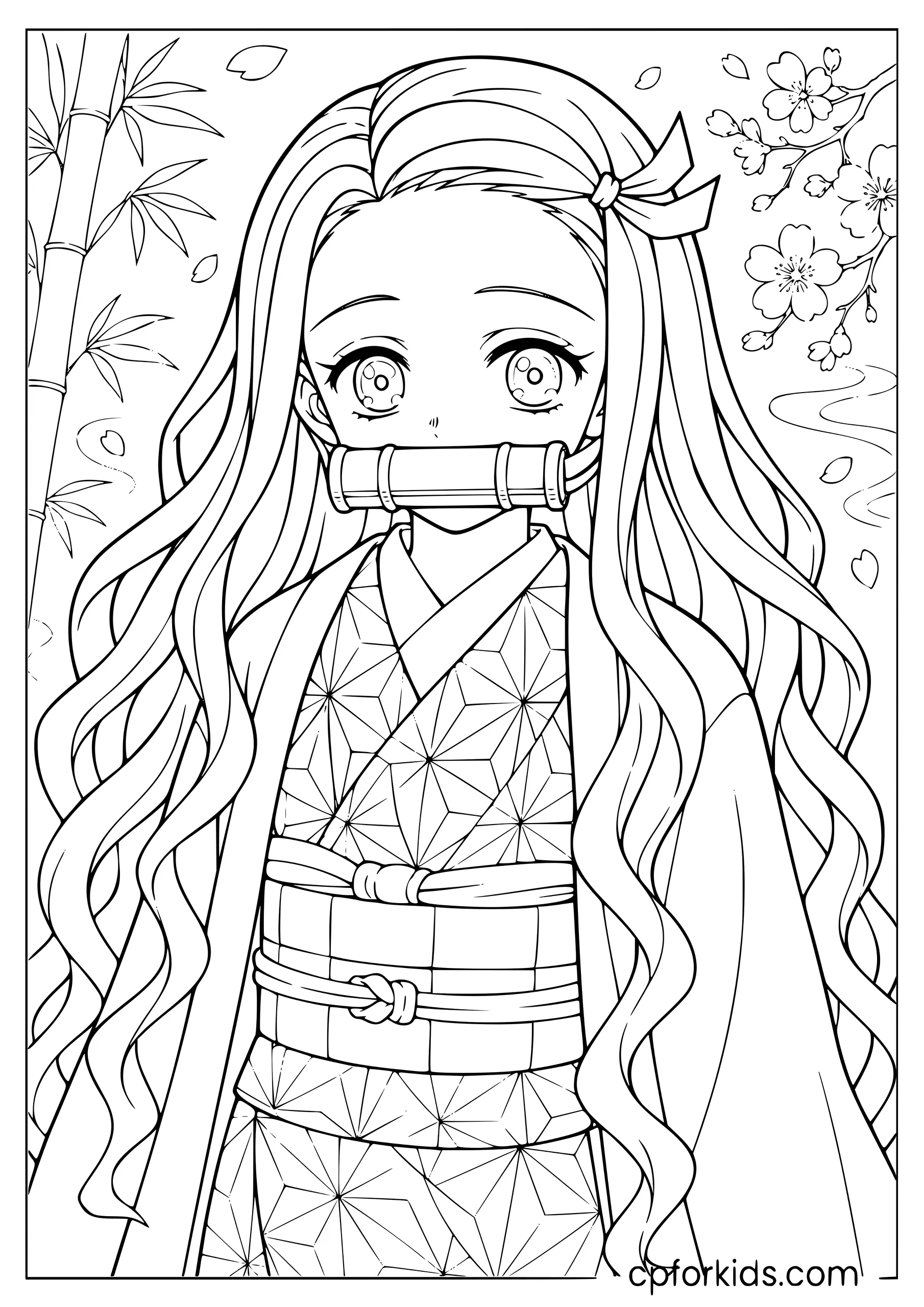
Nezuko — Portrait
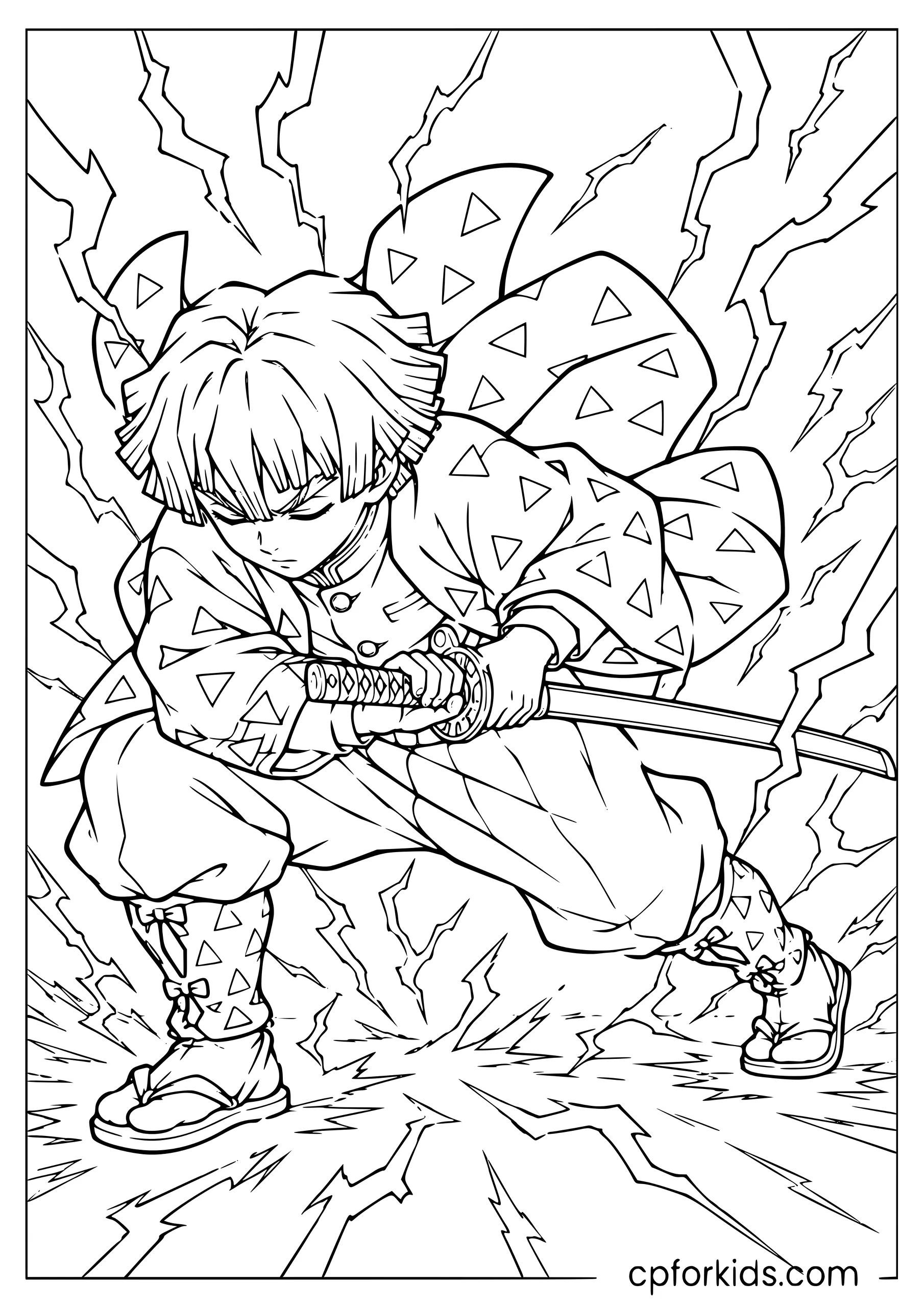
Zenitsu — Thunder Breathing Stance
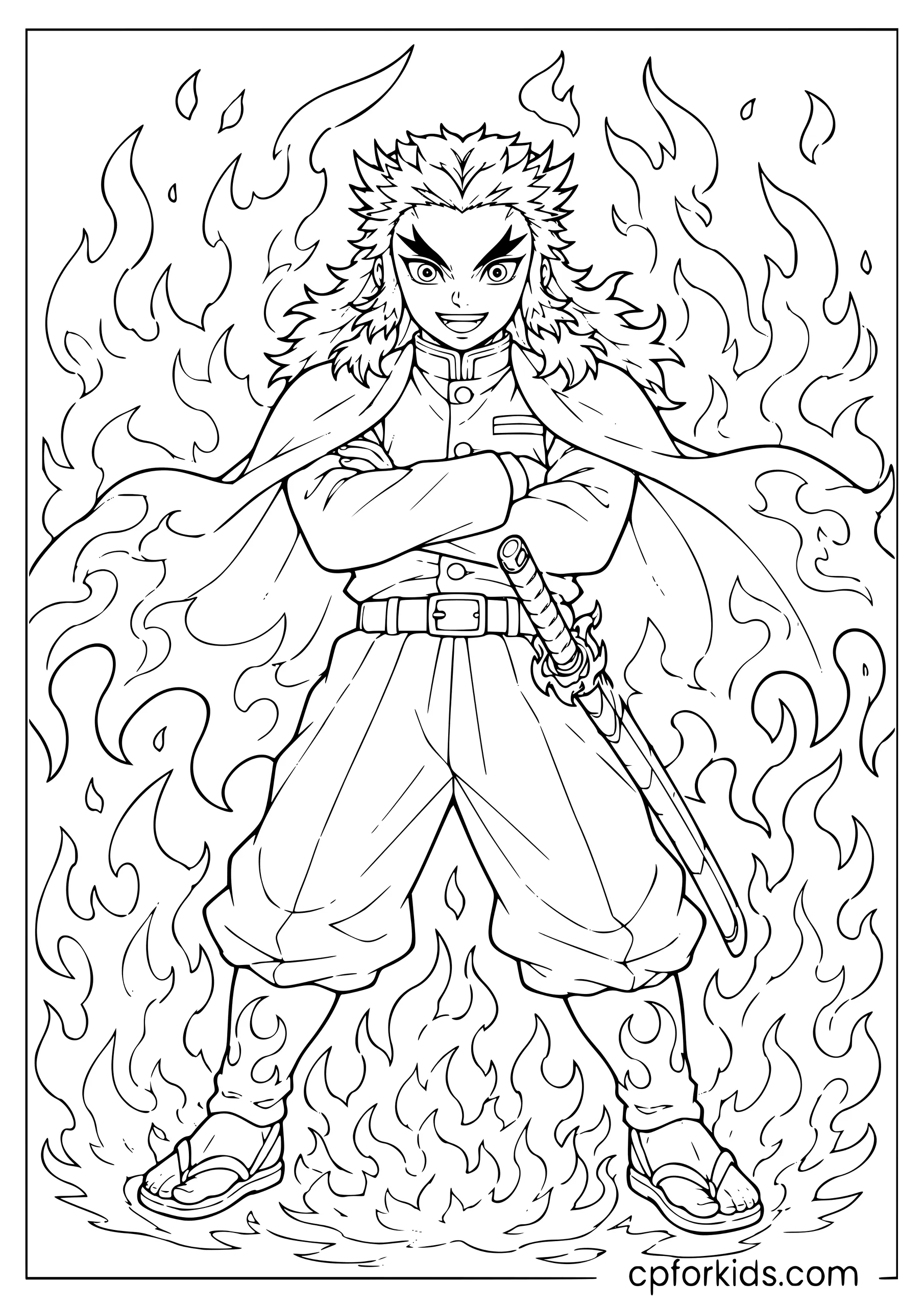
Rengoku — Flame Stance
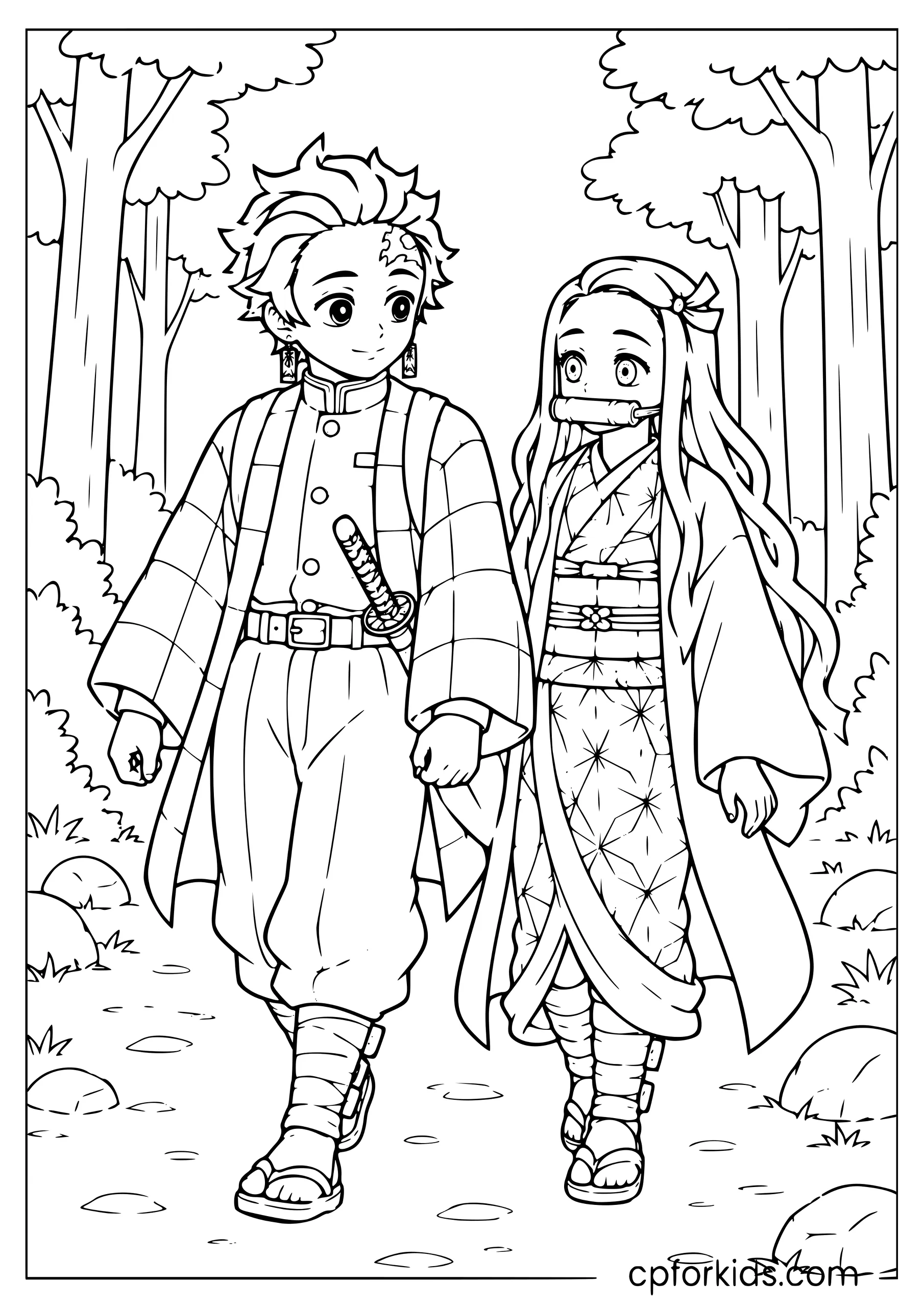
Tanjiro and Nezuko — Forest Road
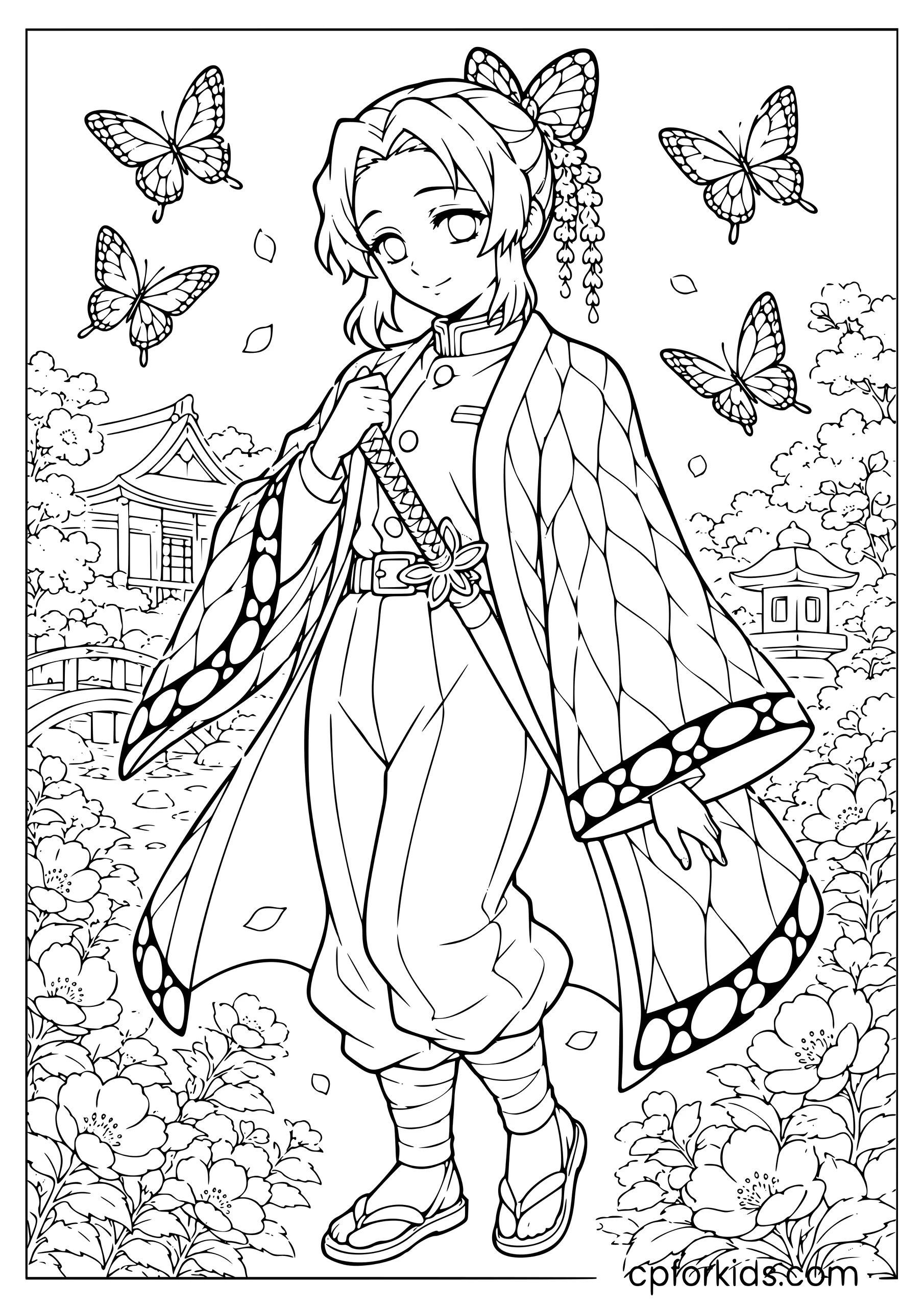
Shinobu — Butterfly Garden
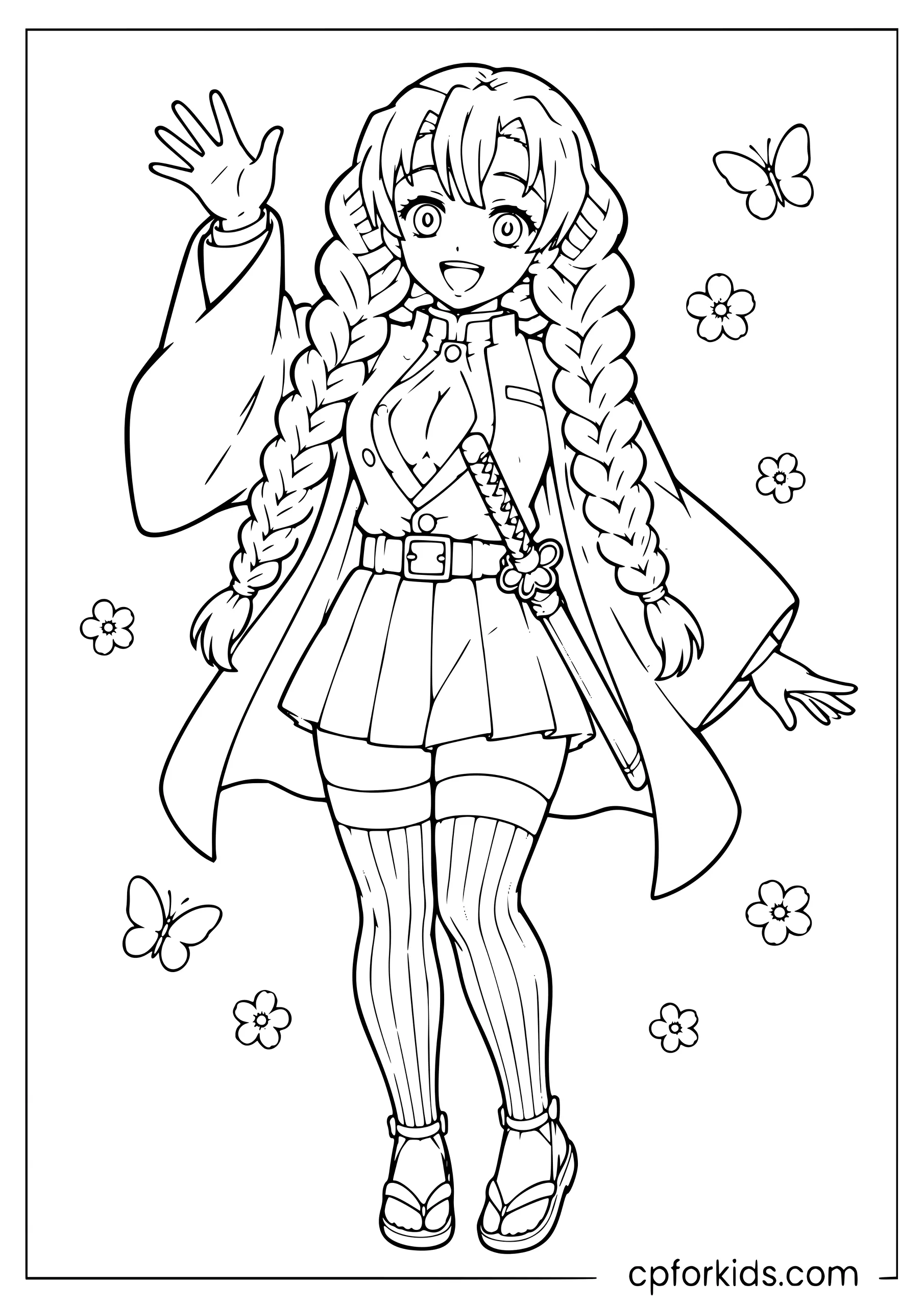
Mitsuri Kanroji — Cheerful Portrait
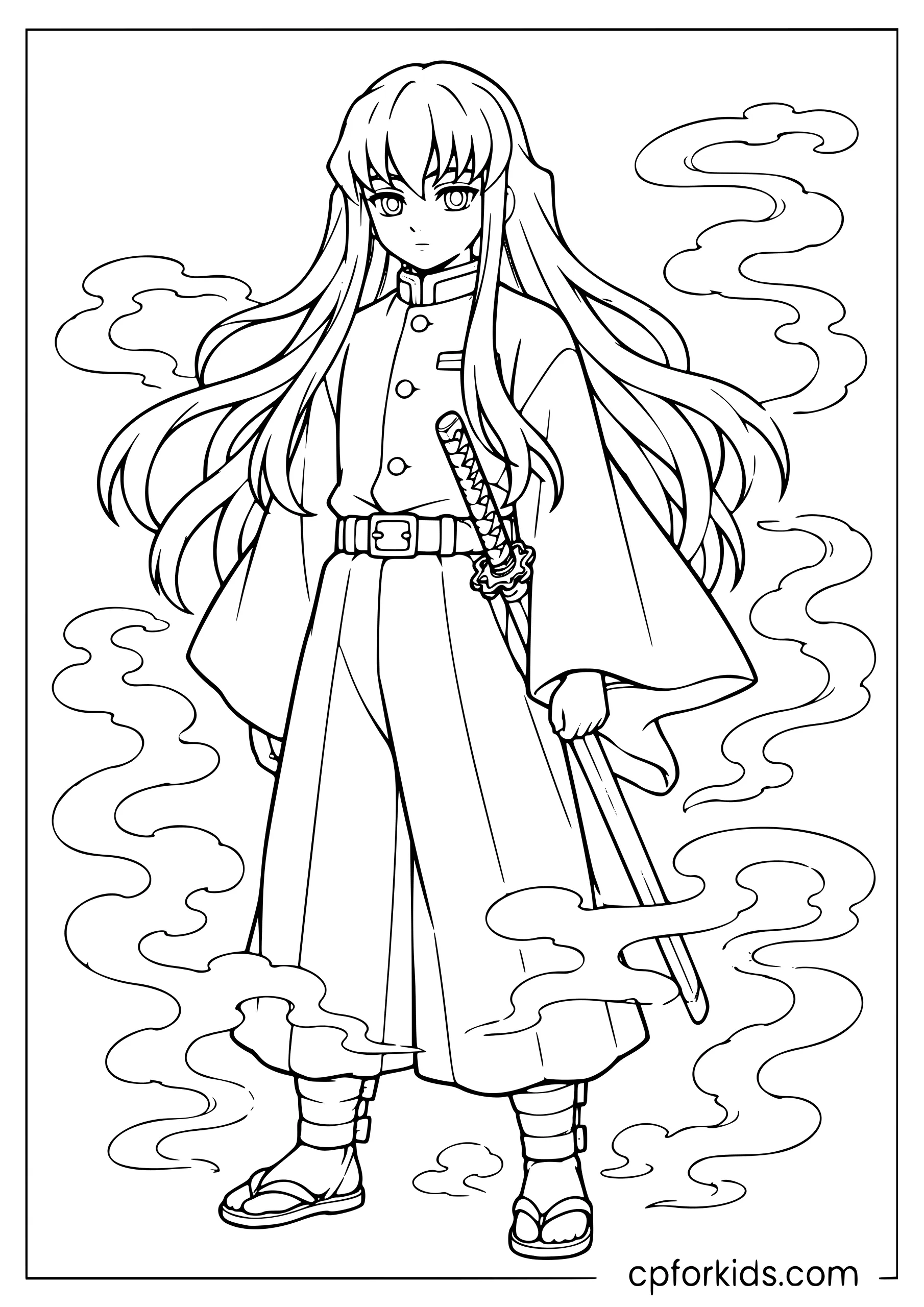
Muichiro — Standing in Mist
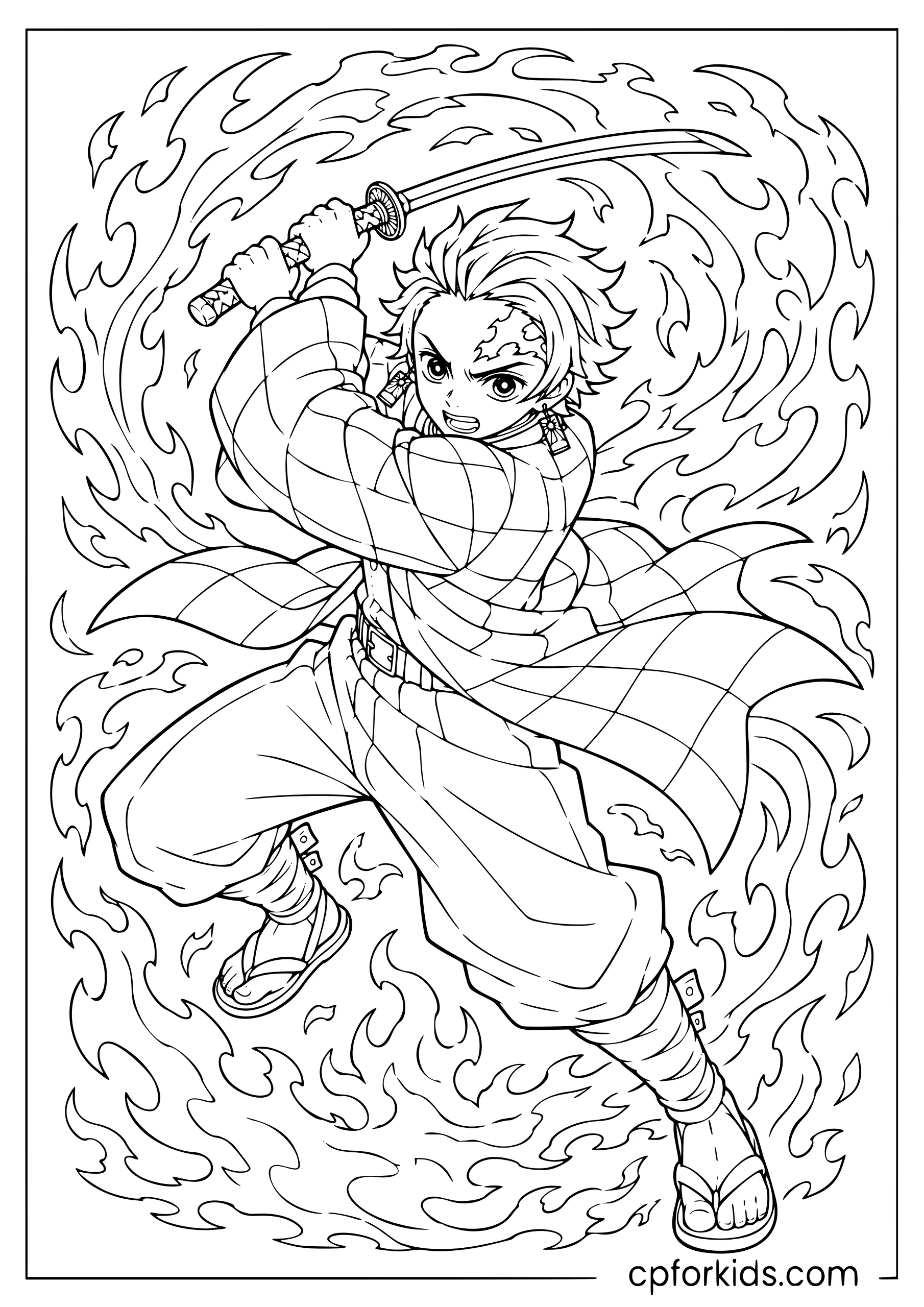
Tanjiro — Hinokami Kagura
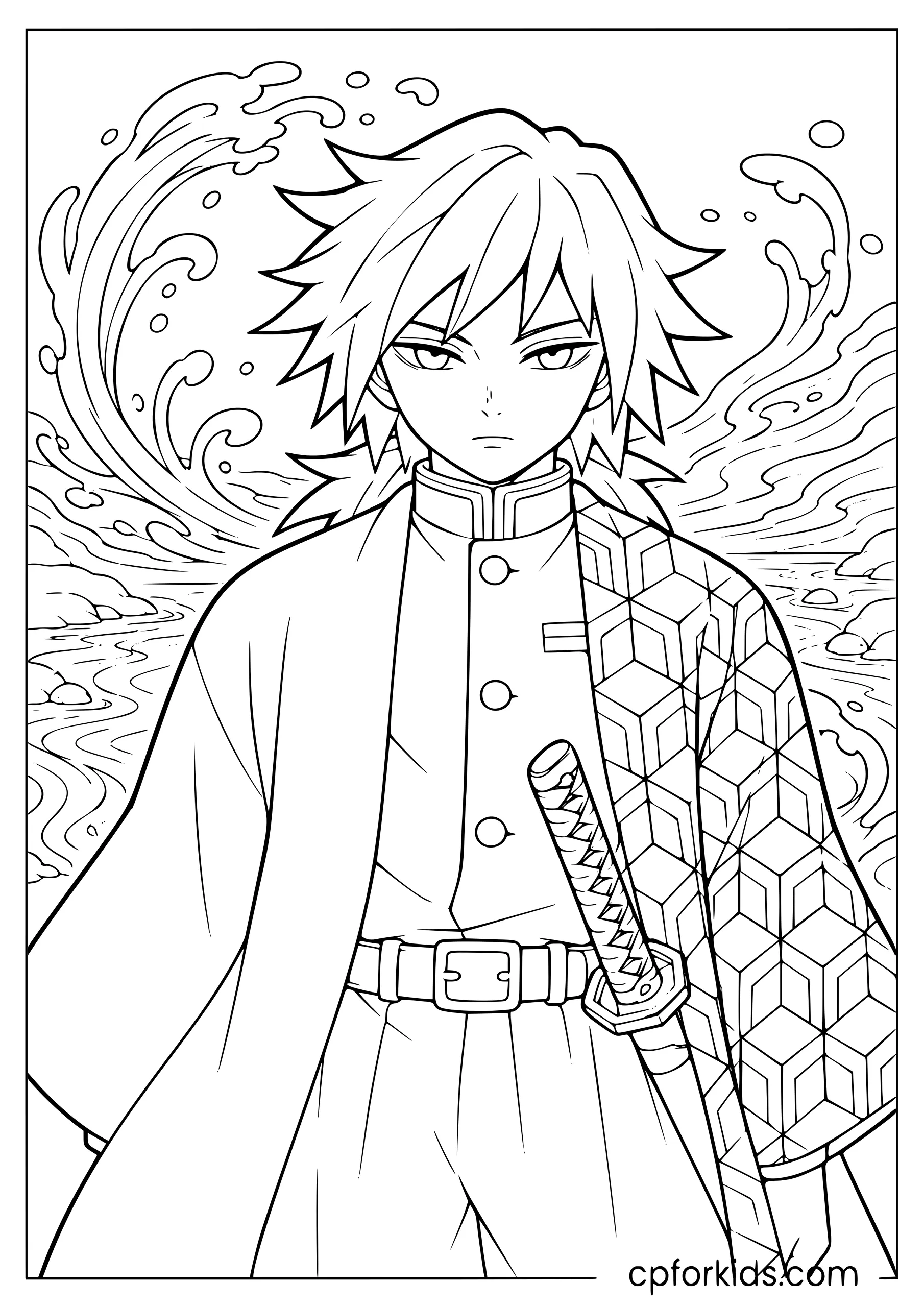
Giyu — Water Hashira Portrait
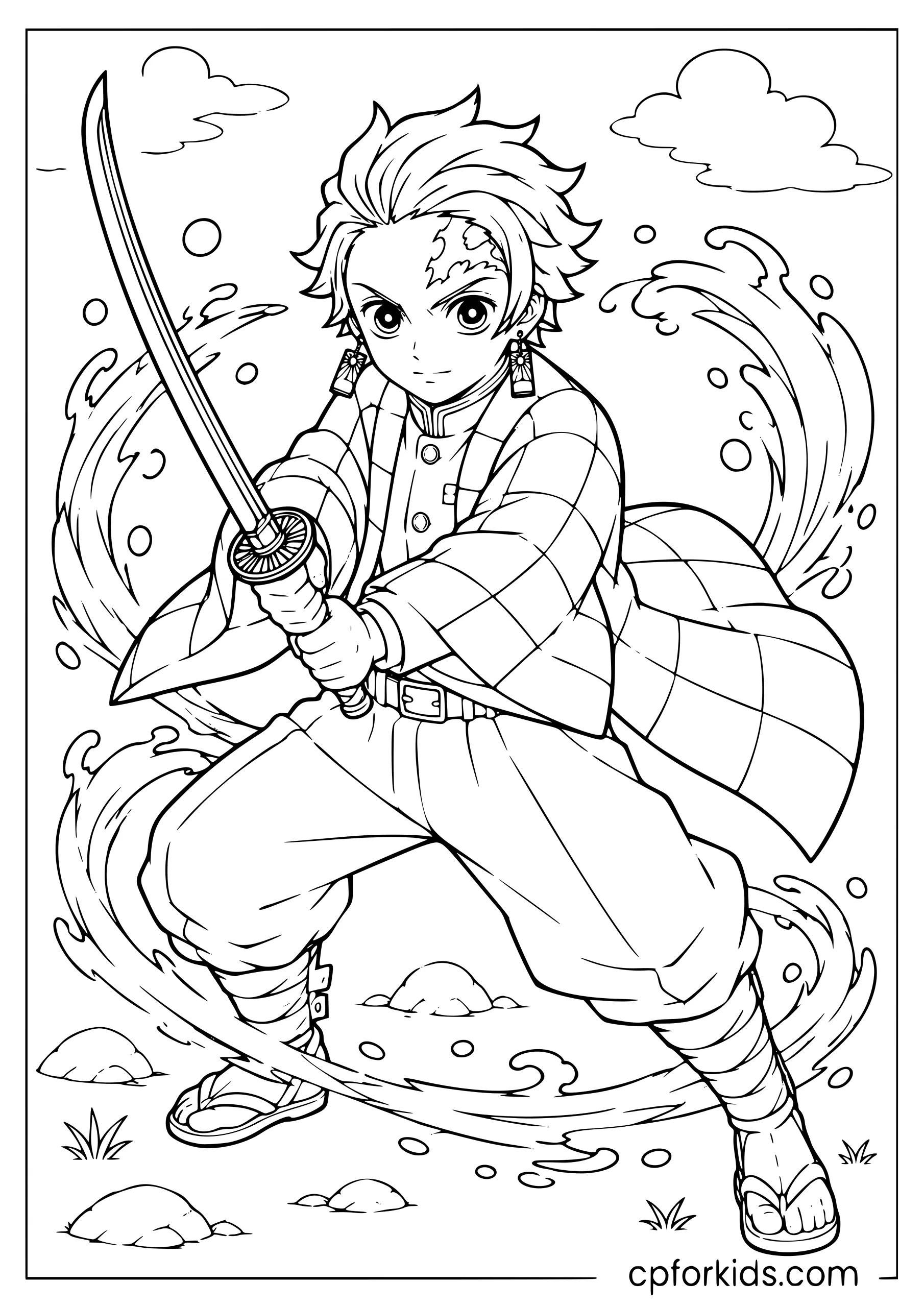
Tanjiro — Water Breathing
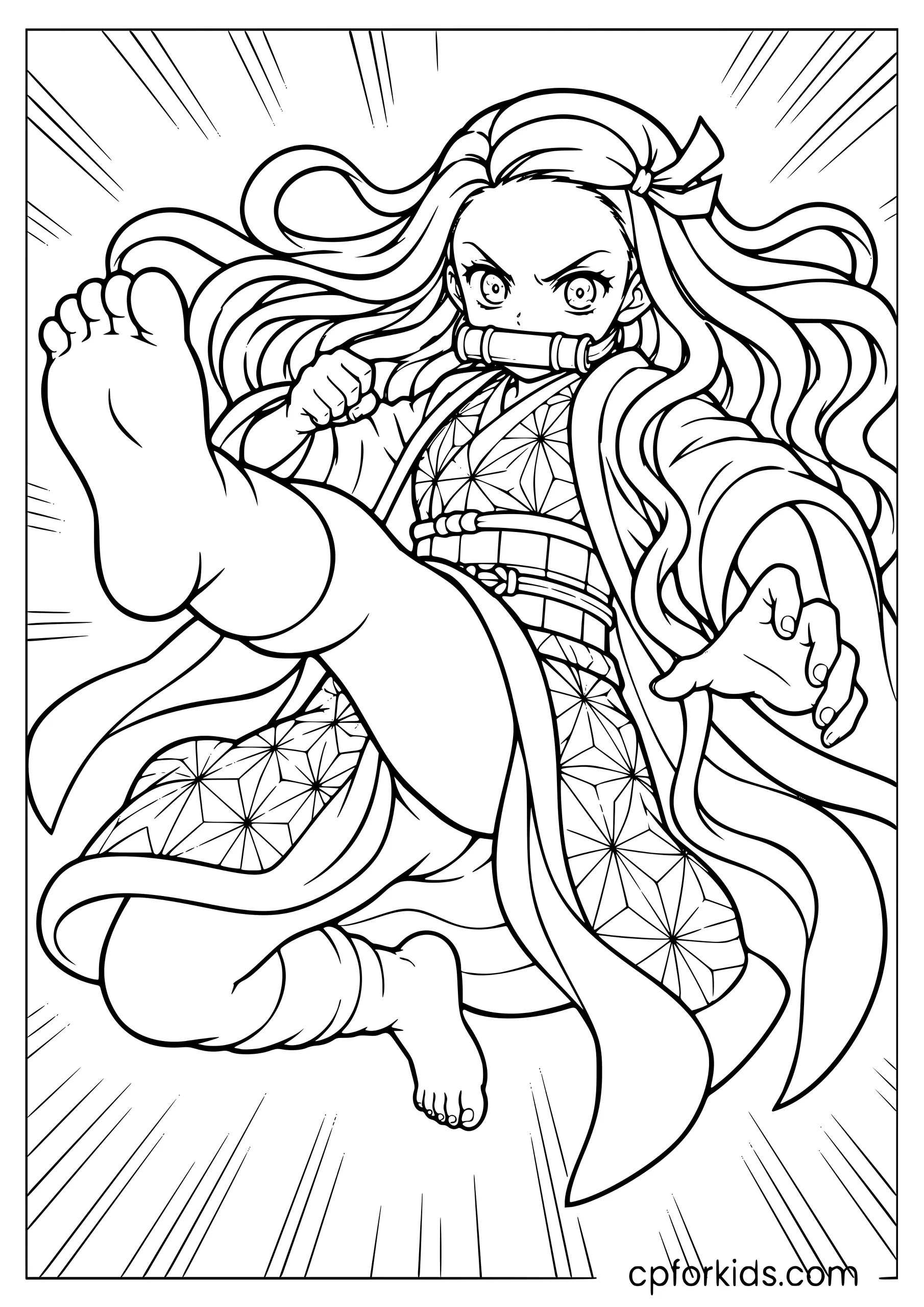
Nezuko — Midair Kick
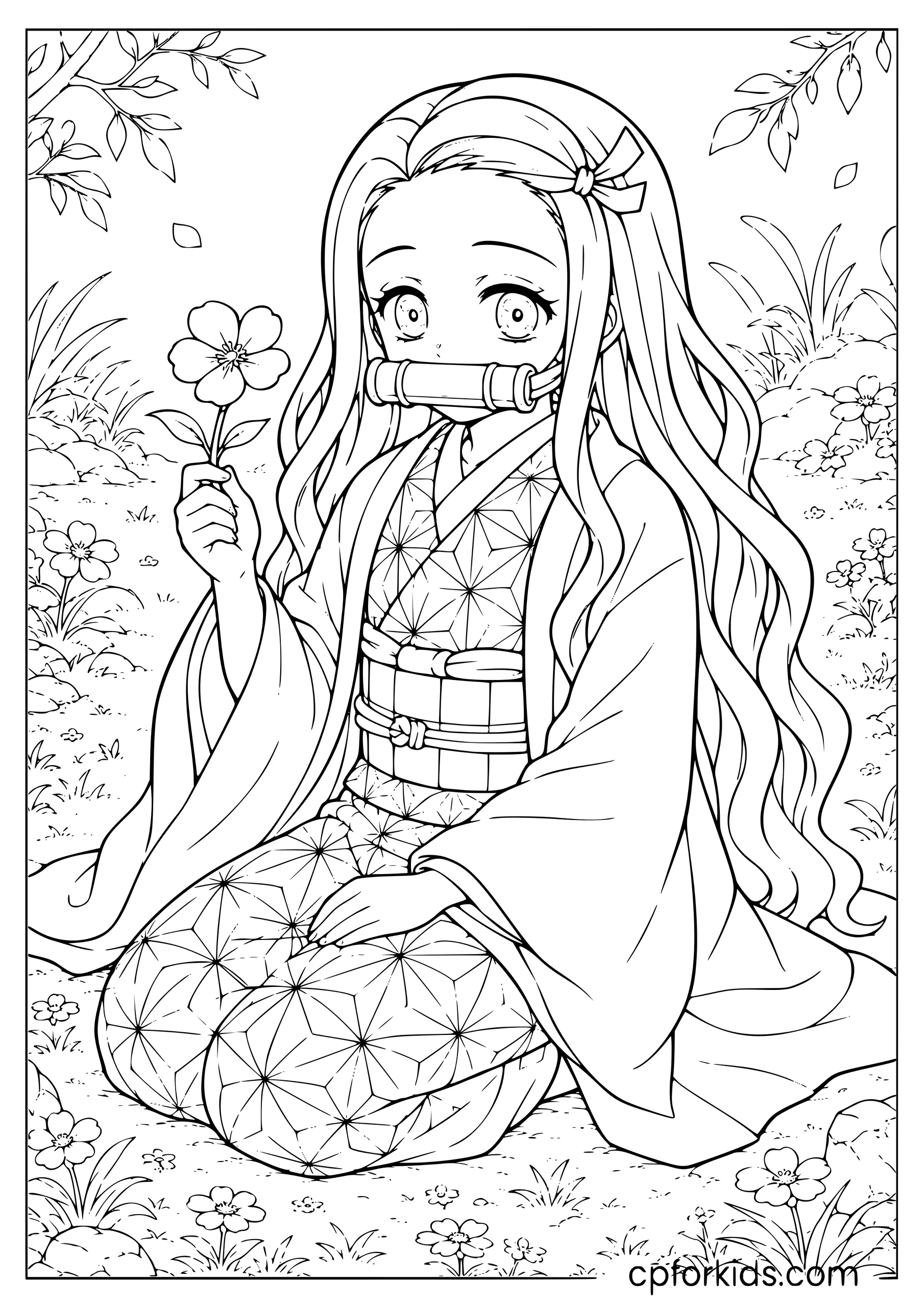
Nezuko — Sitting with Flowers
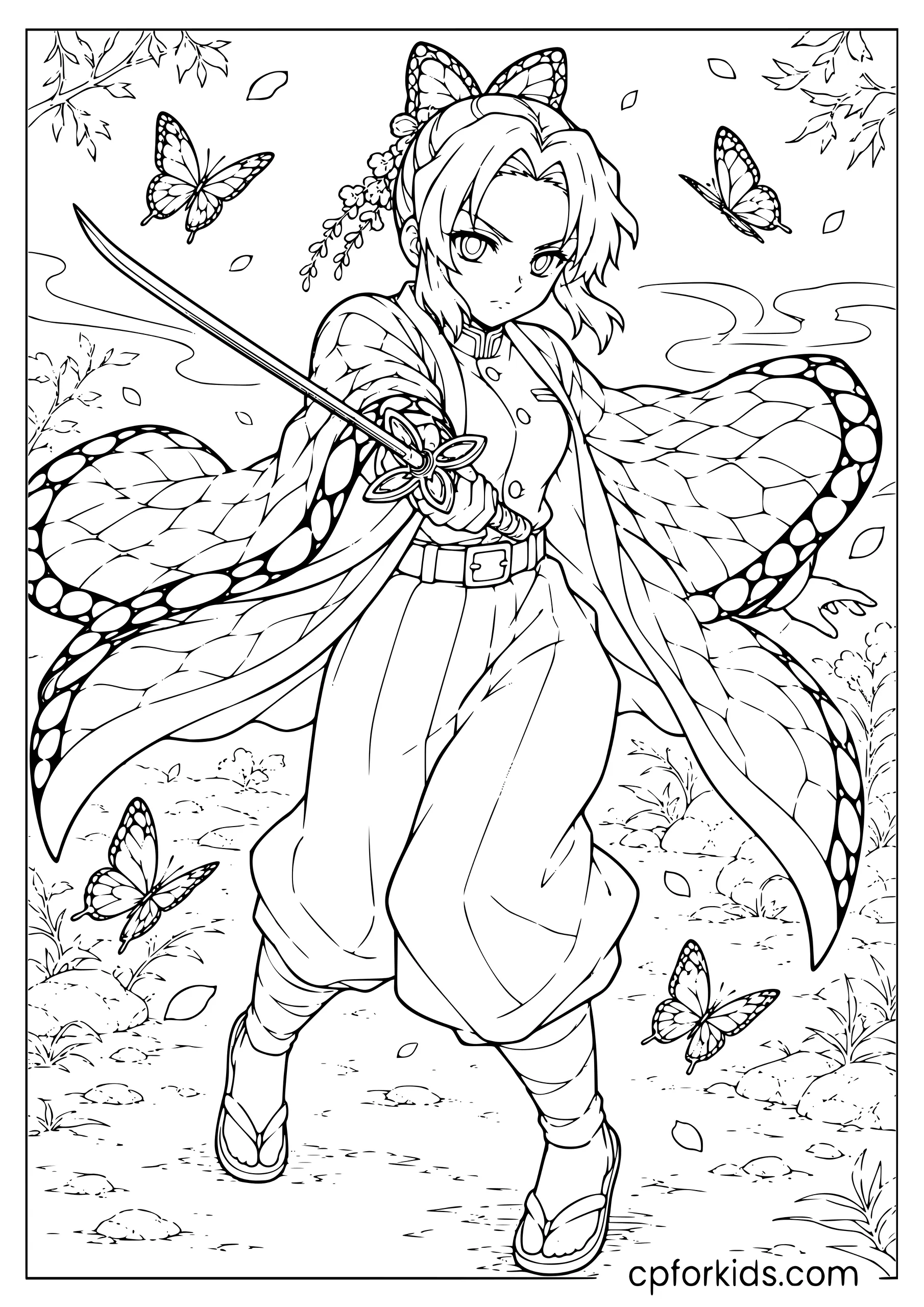
Shinobu — Battle Stance
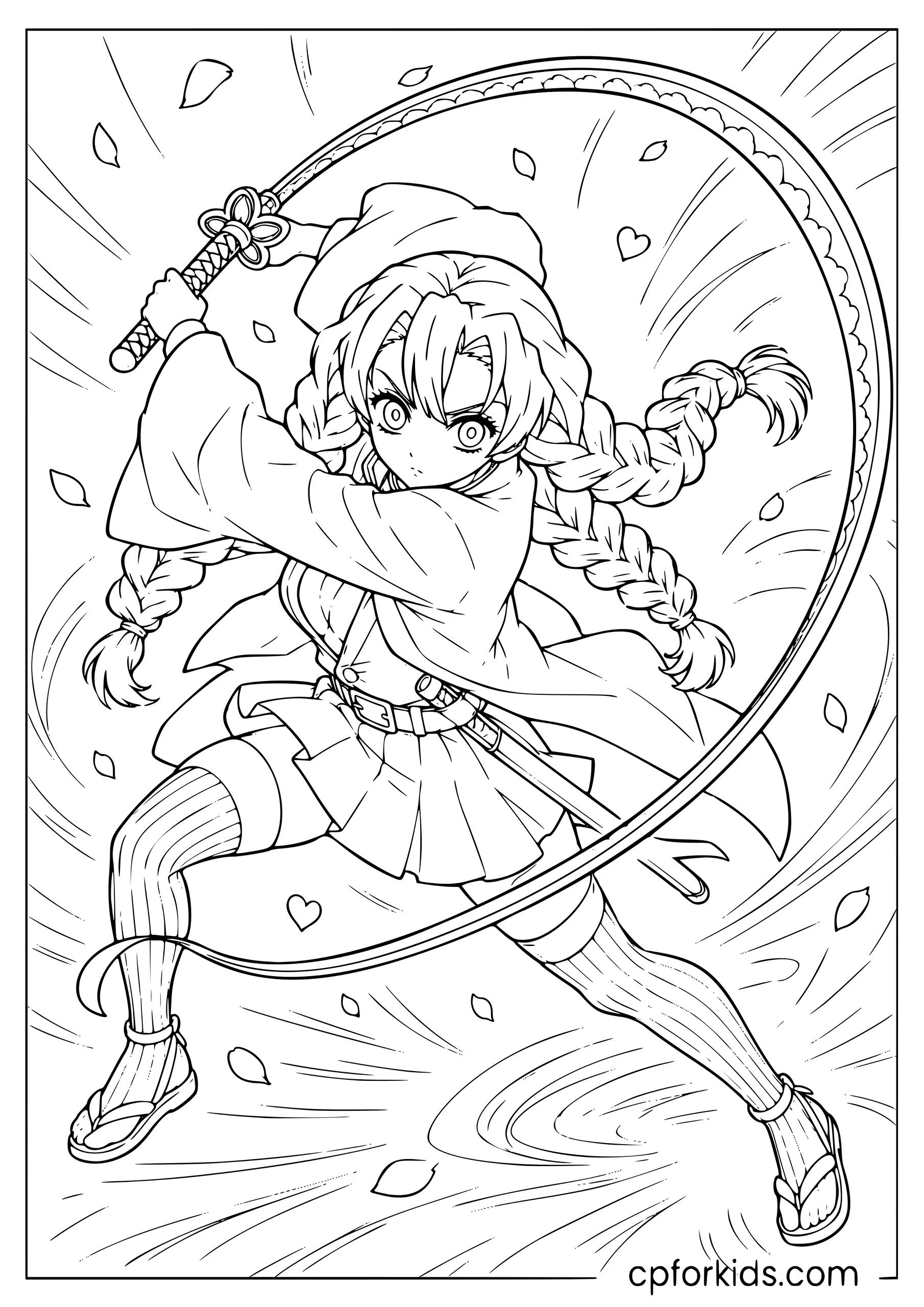
Mitsuri — Love Breathing
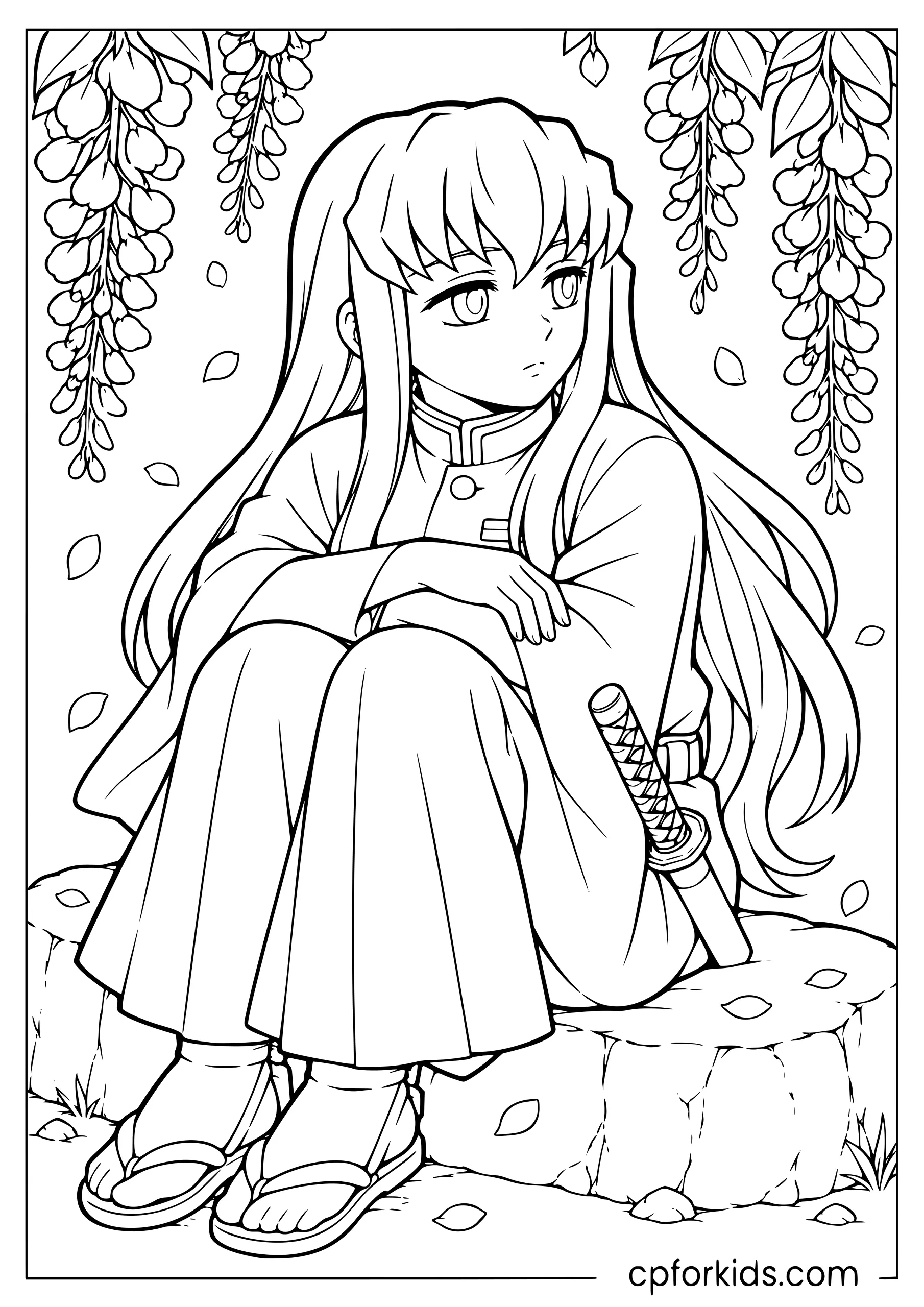
Muichiro — Under the Wisteria
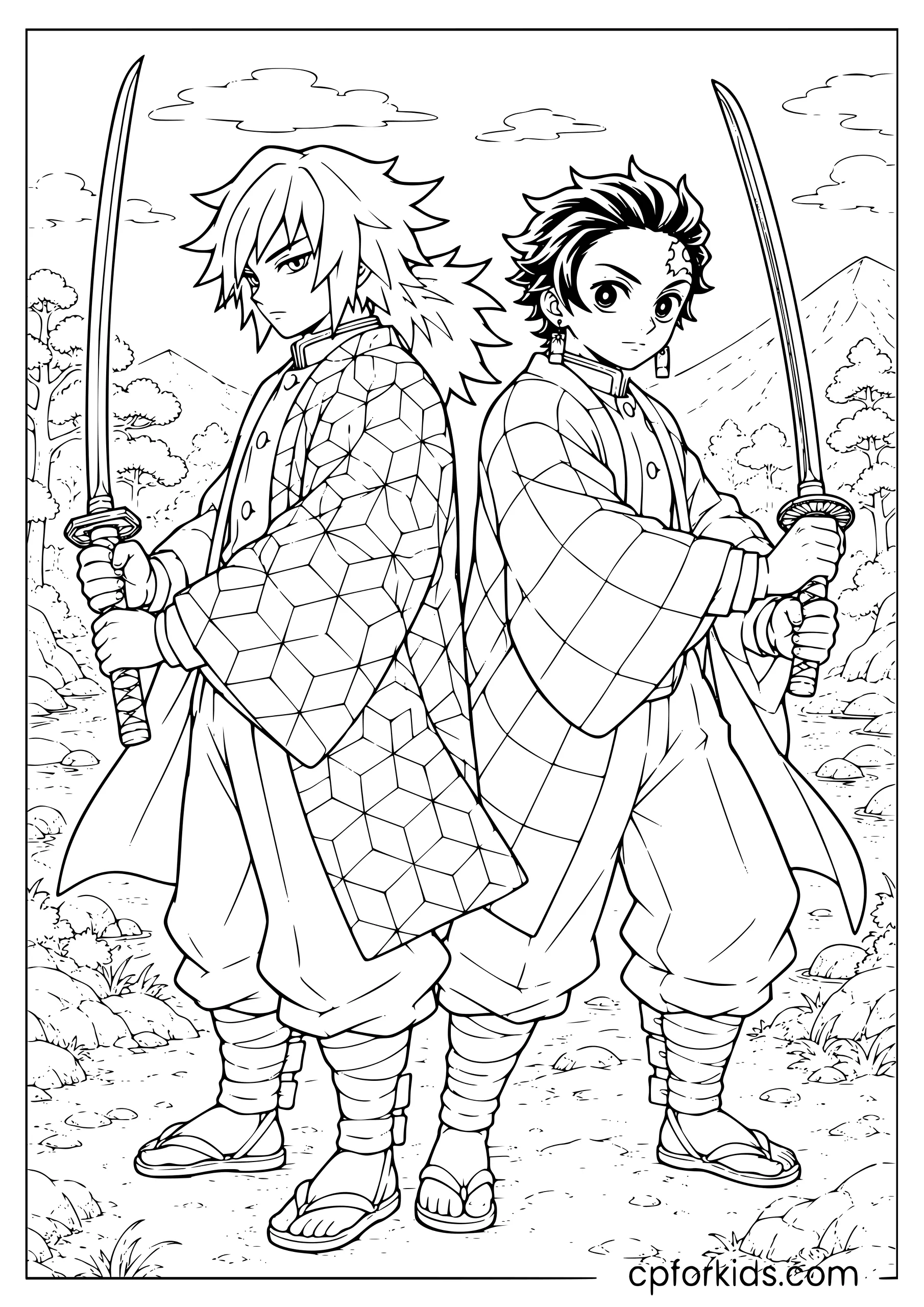
Giyu and Tanjiro — Back to Back
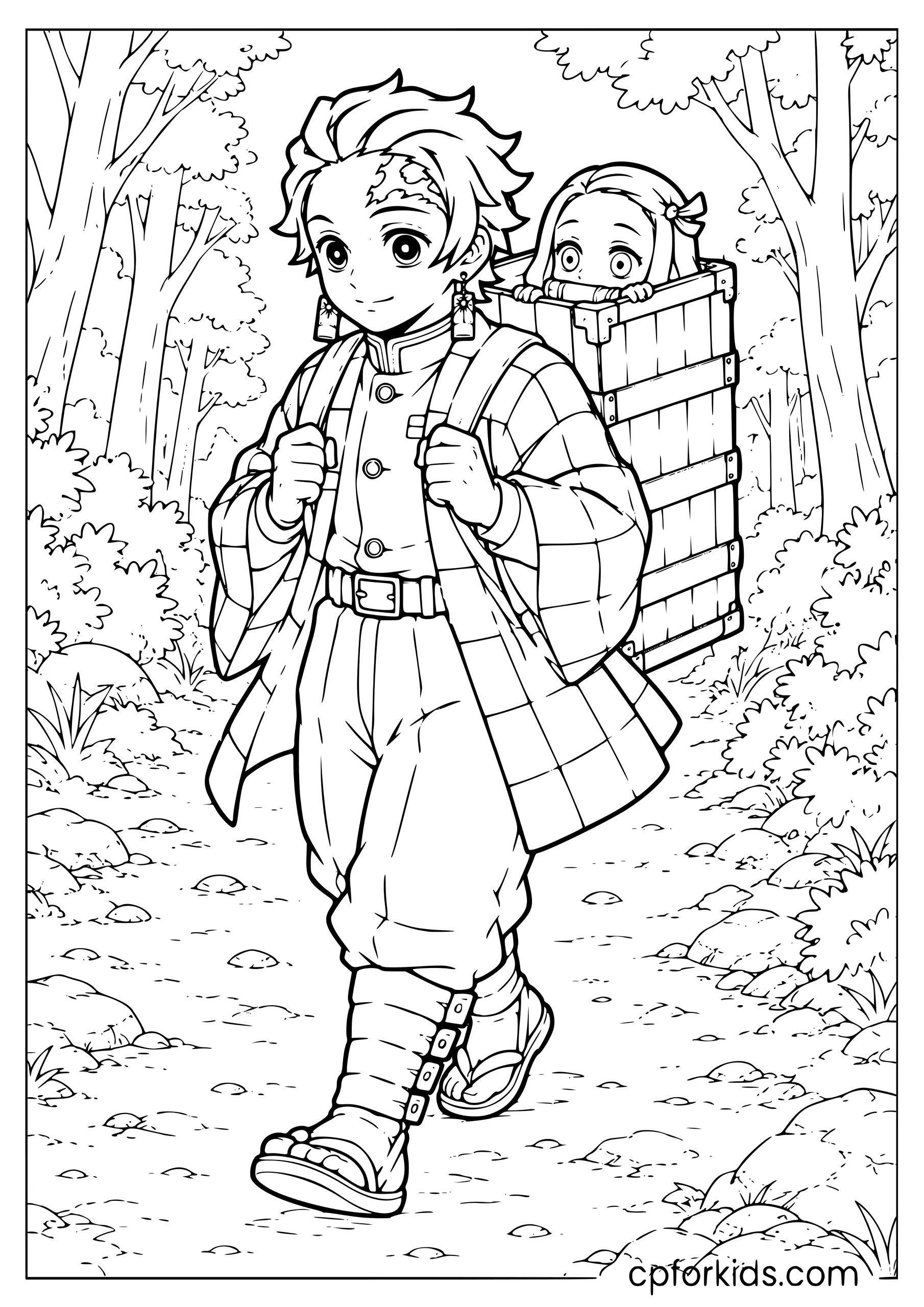
Tanjiro Carrying Nezuko’s Box
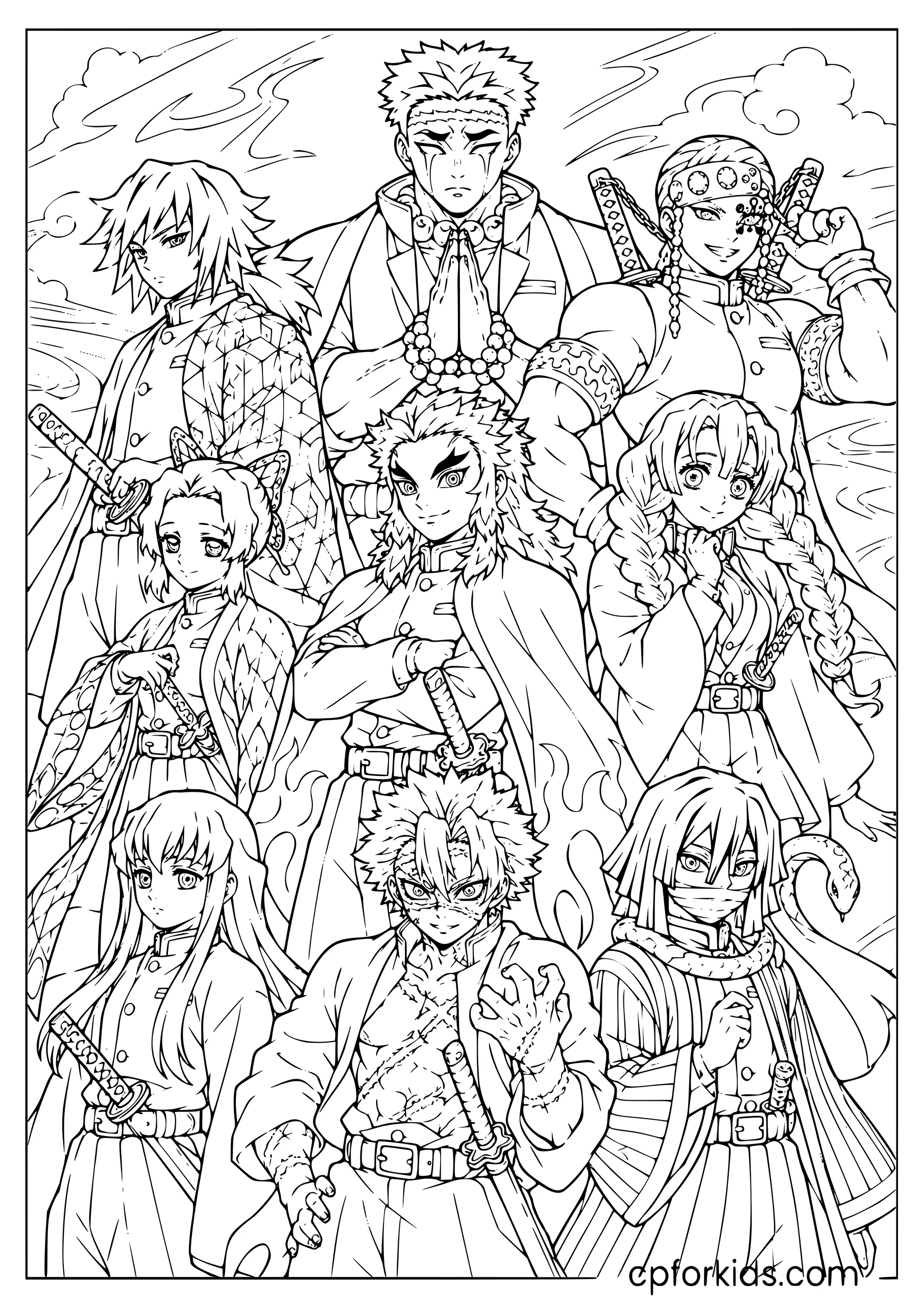
All Nine Hashira — Group Lineup
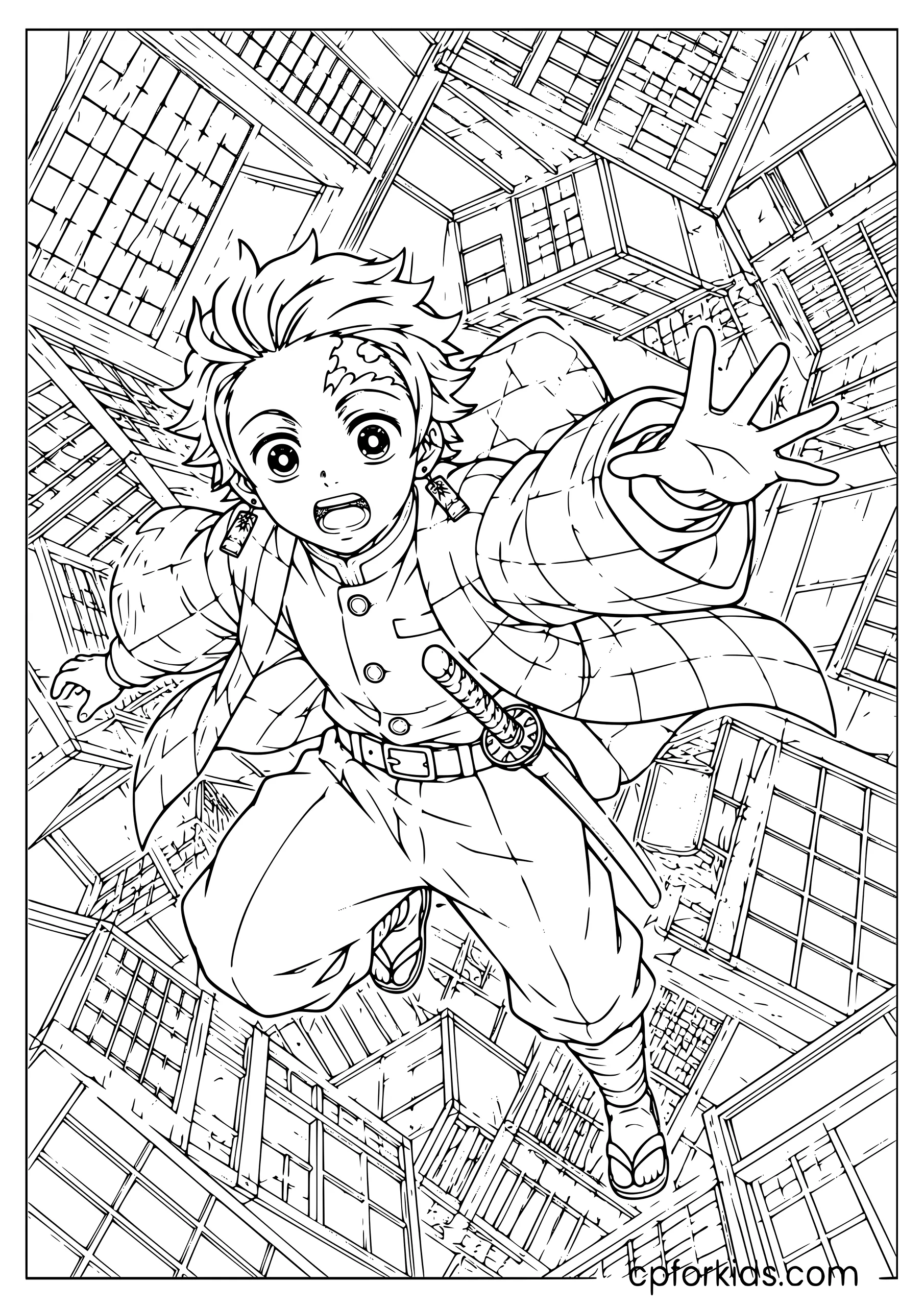
Tanjiro — Falling in the Infinity Castle
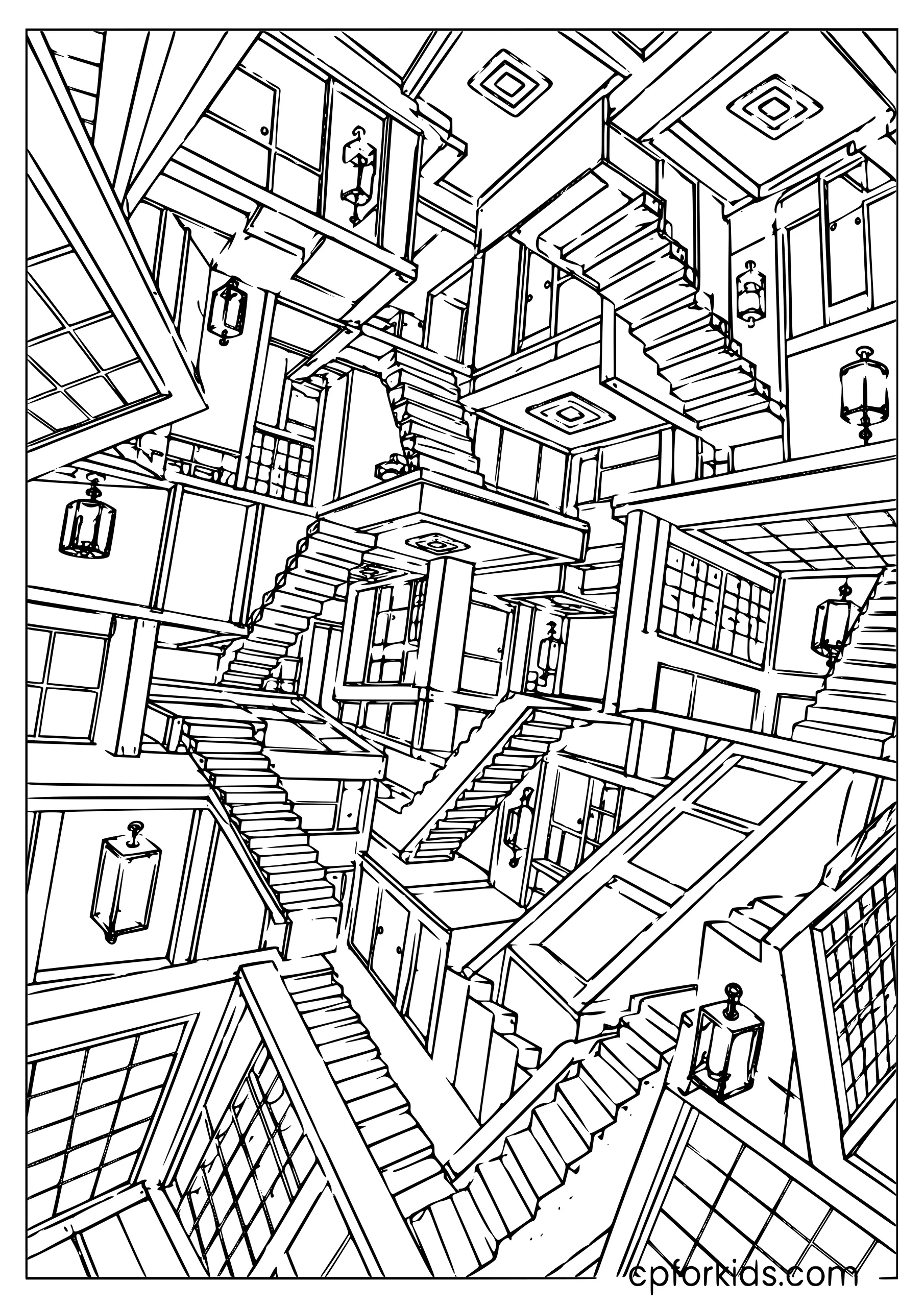
Infinity Castle — Interior Scene
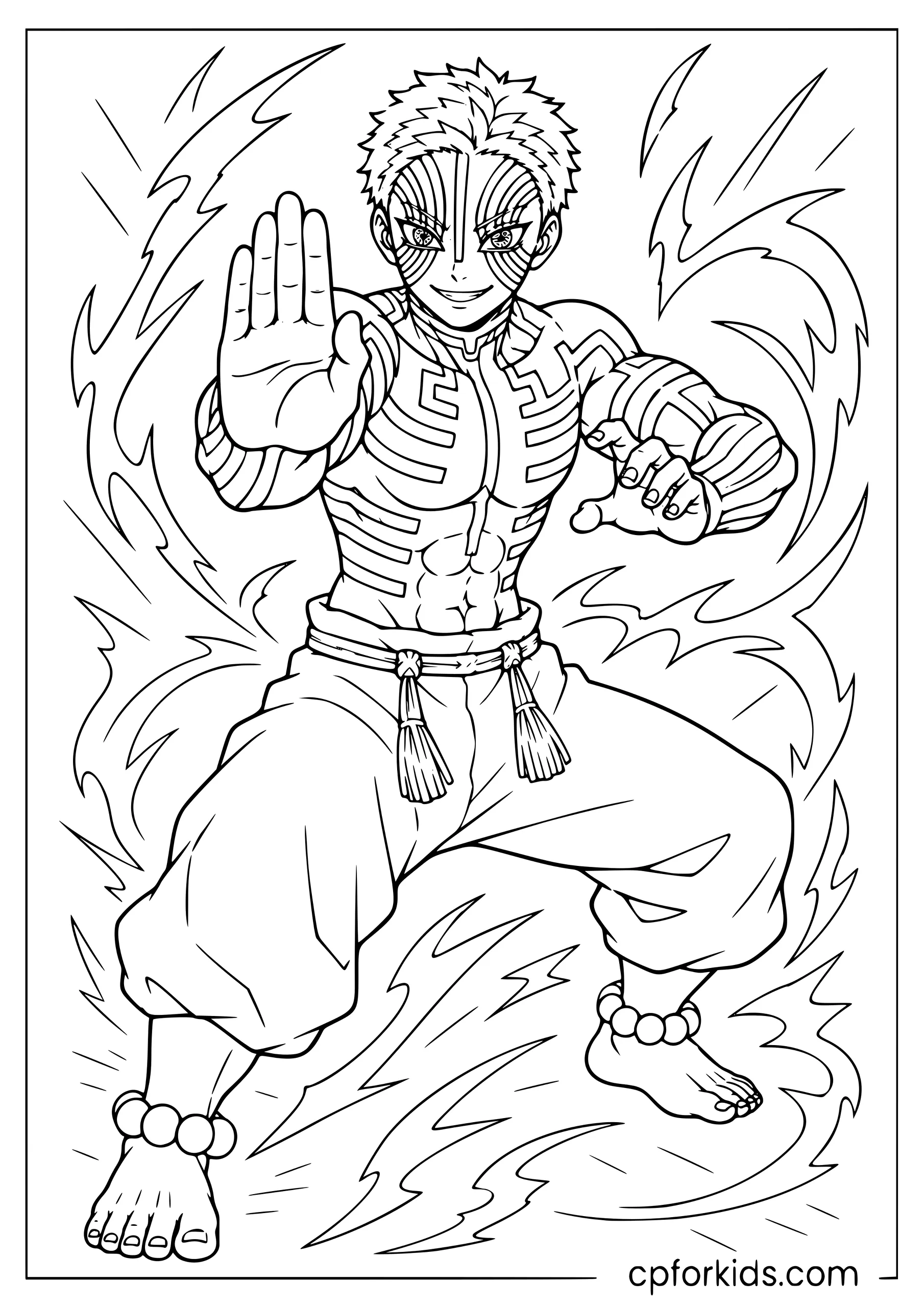
Akaza — Upper Moon 3
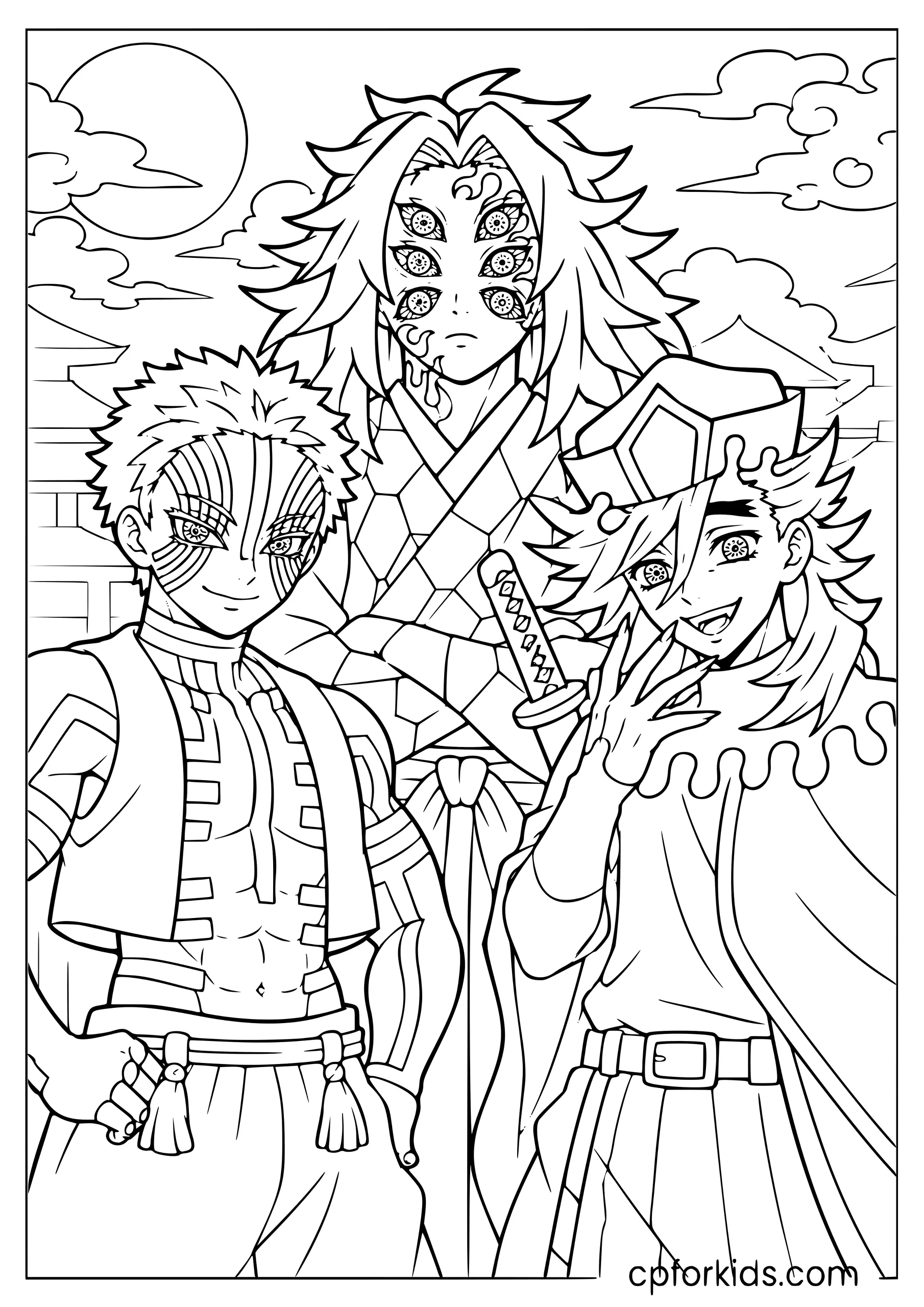
Upper Moons Trio
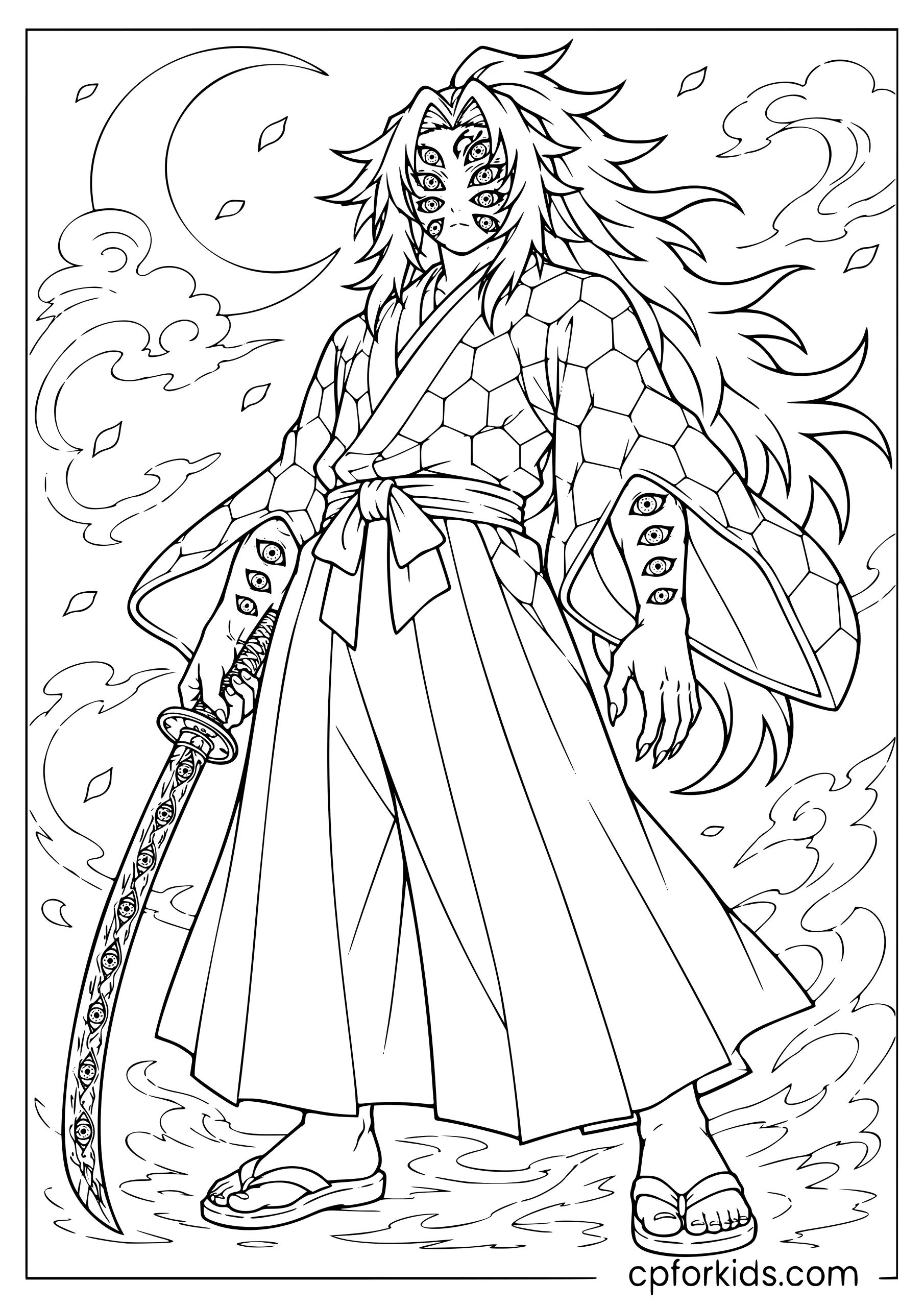
Kokushibo — Upper Moon 1
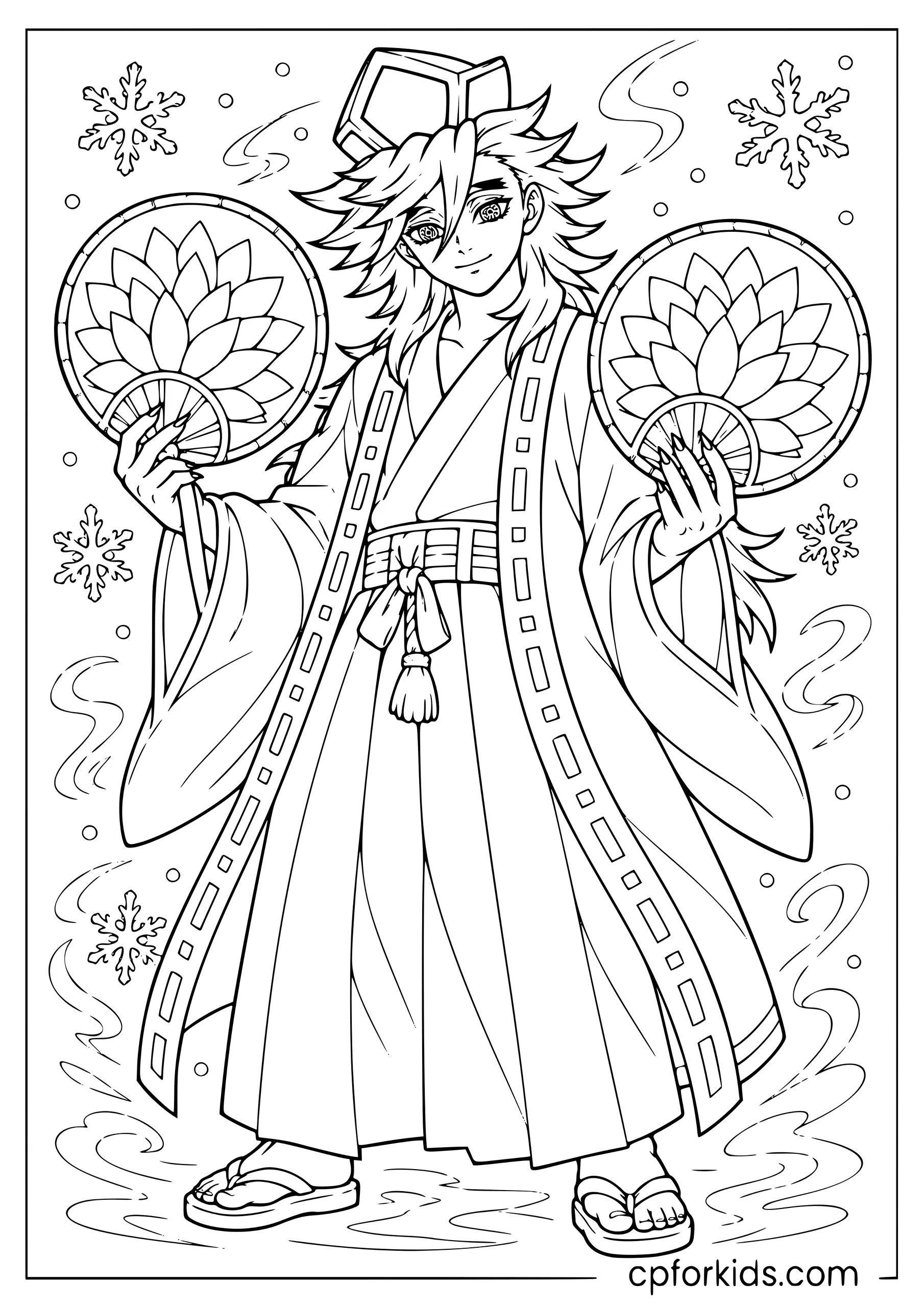
Doma — Upper Moon 2
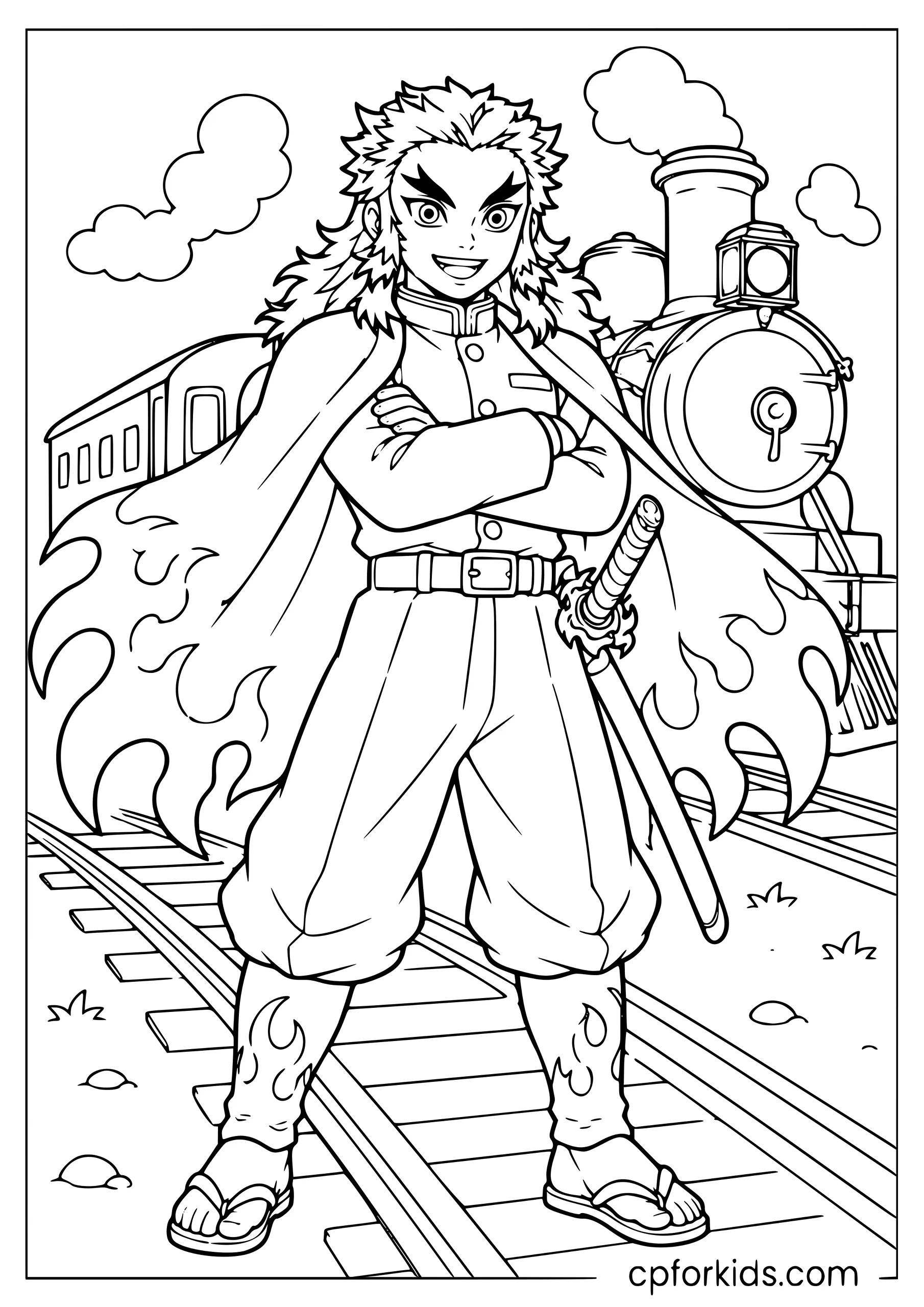
Rengoku — Mugen Train
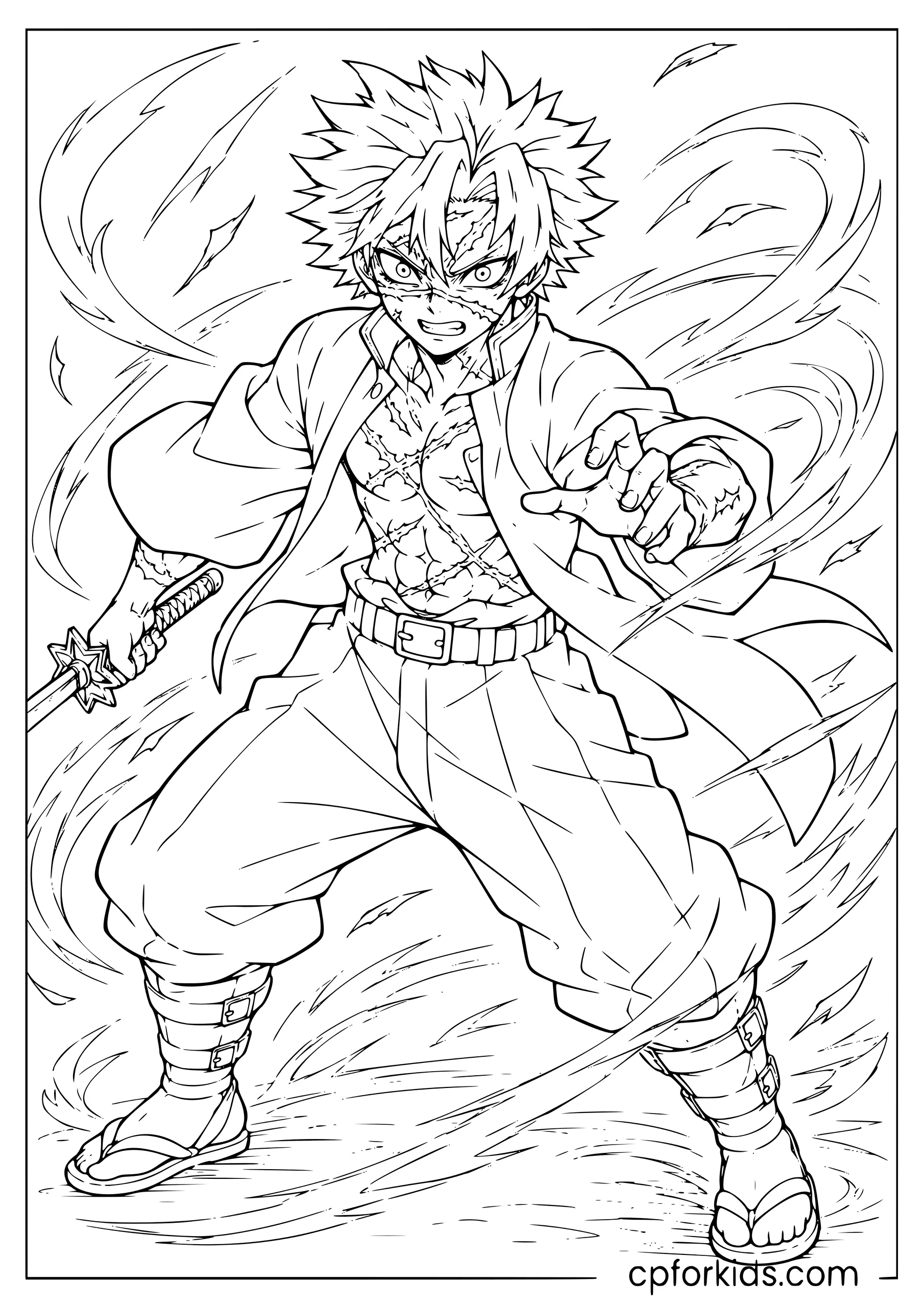
Sanemi — Wind Hashira
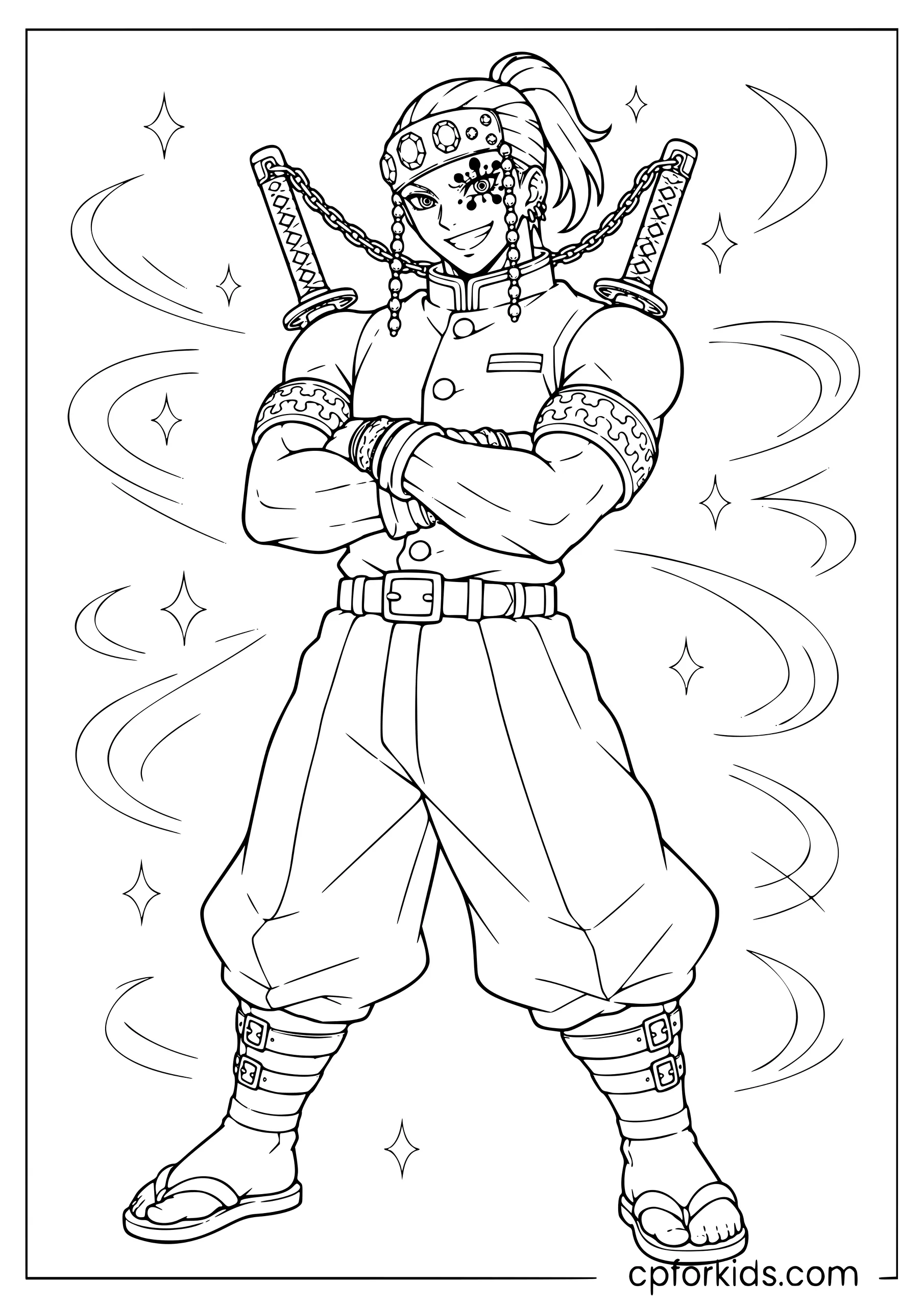
Tengen — Sound Hashira
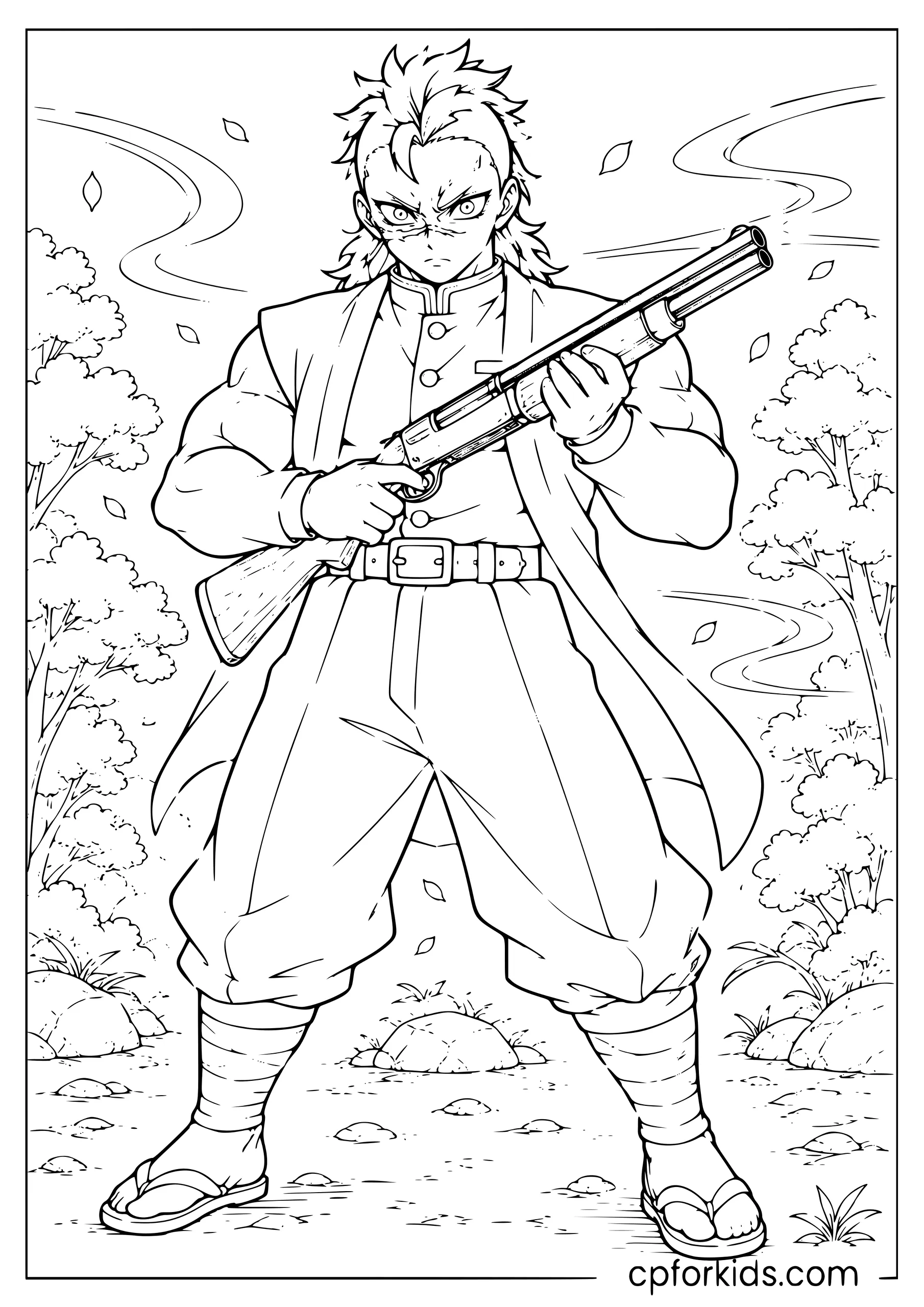
Genya Shinazugawa — Battle Ready
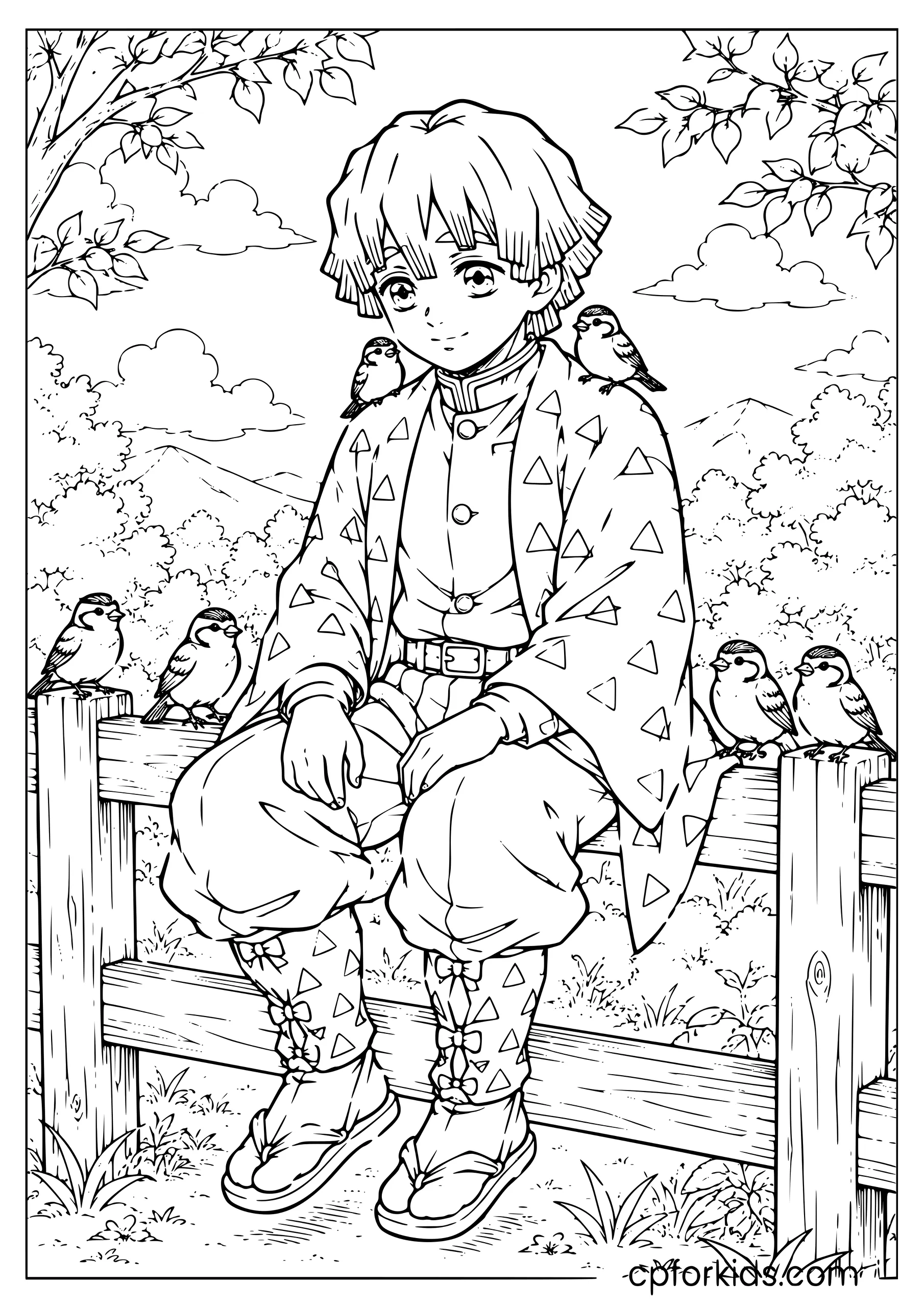
Zenitsu and Chuntaro
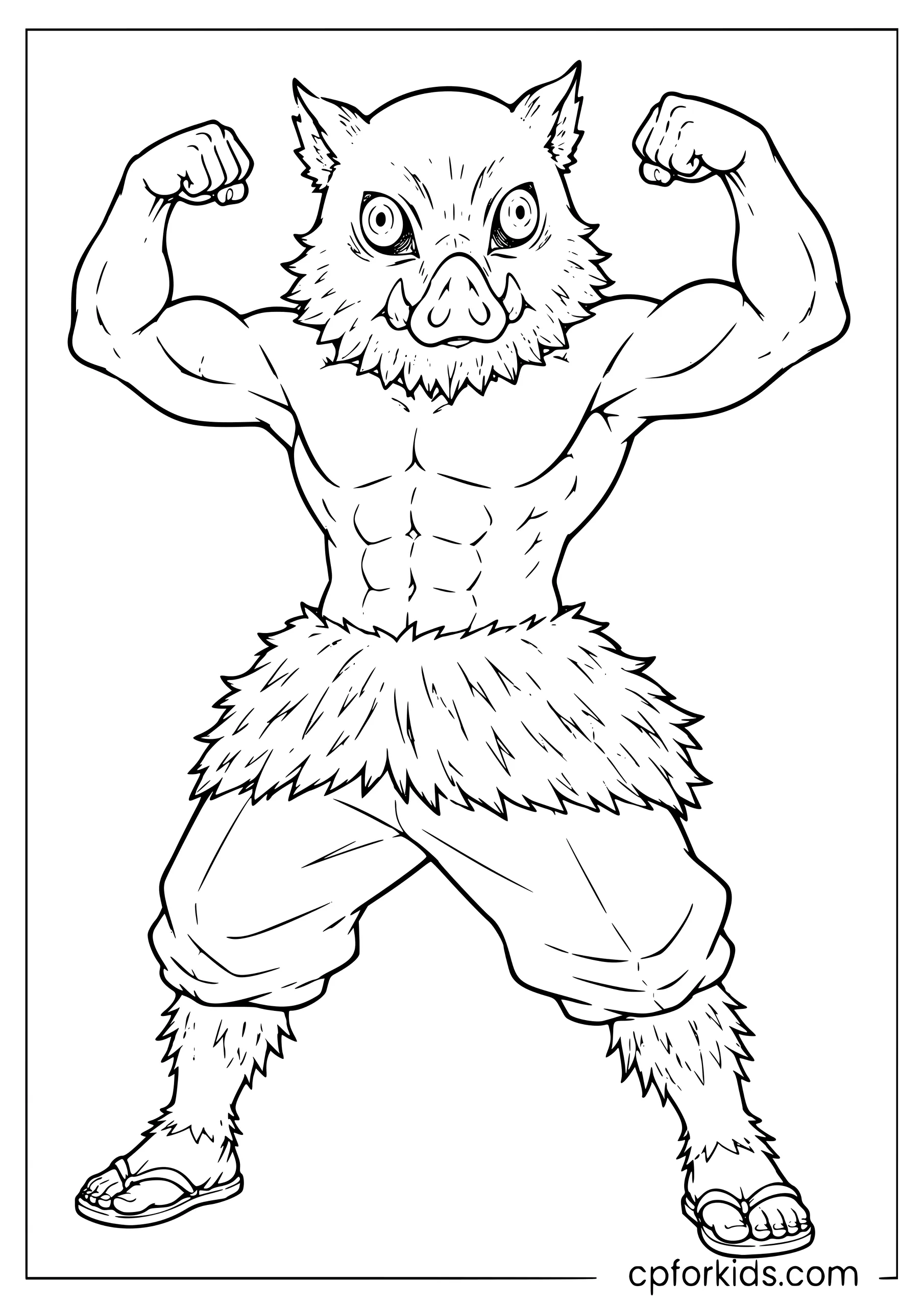
Inosuke — Flexing
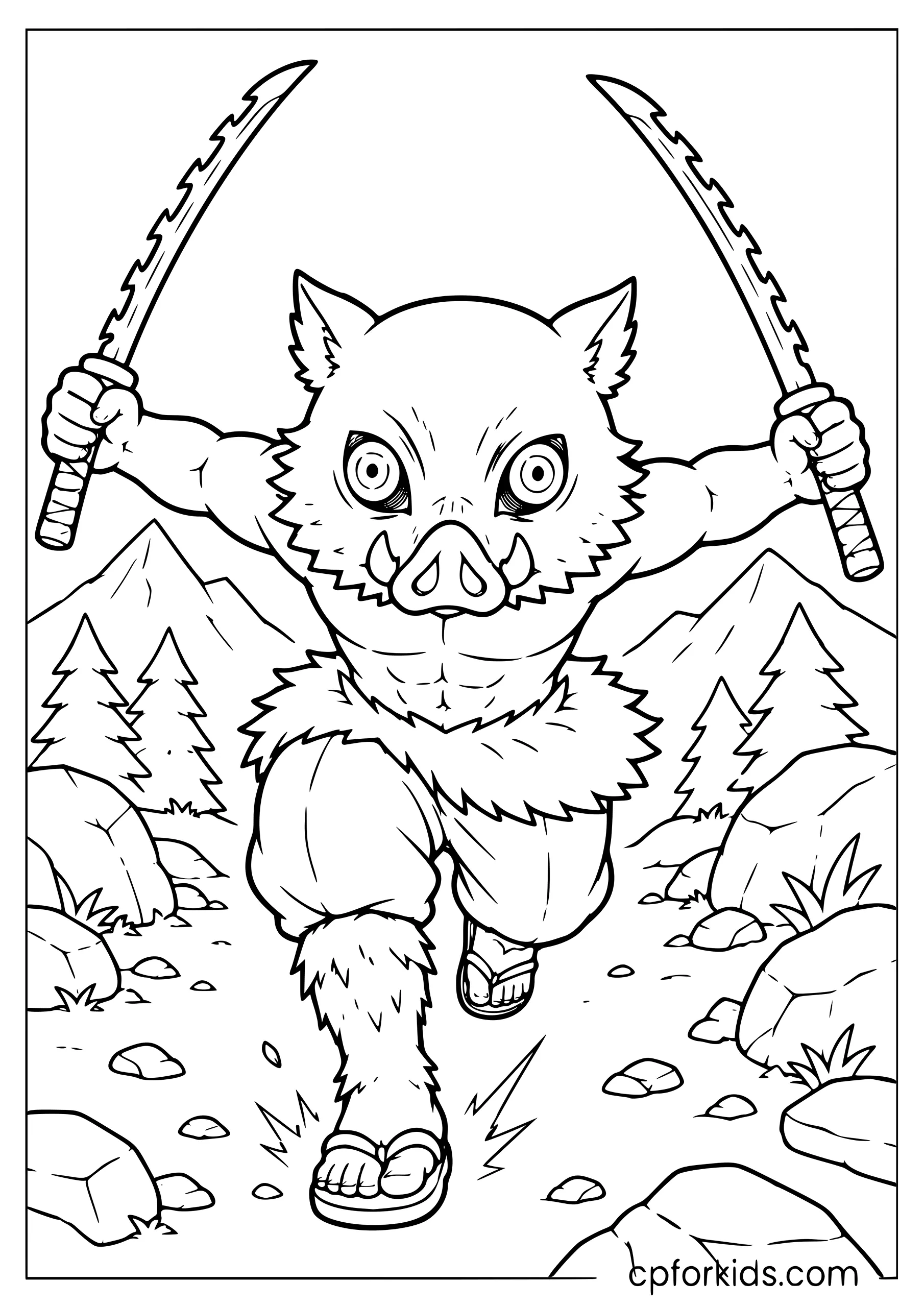
Inosuke — Dual Blades Charge
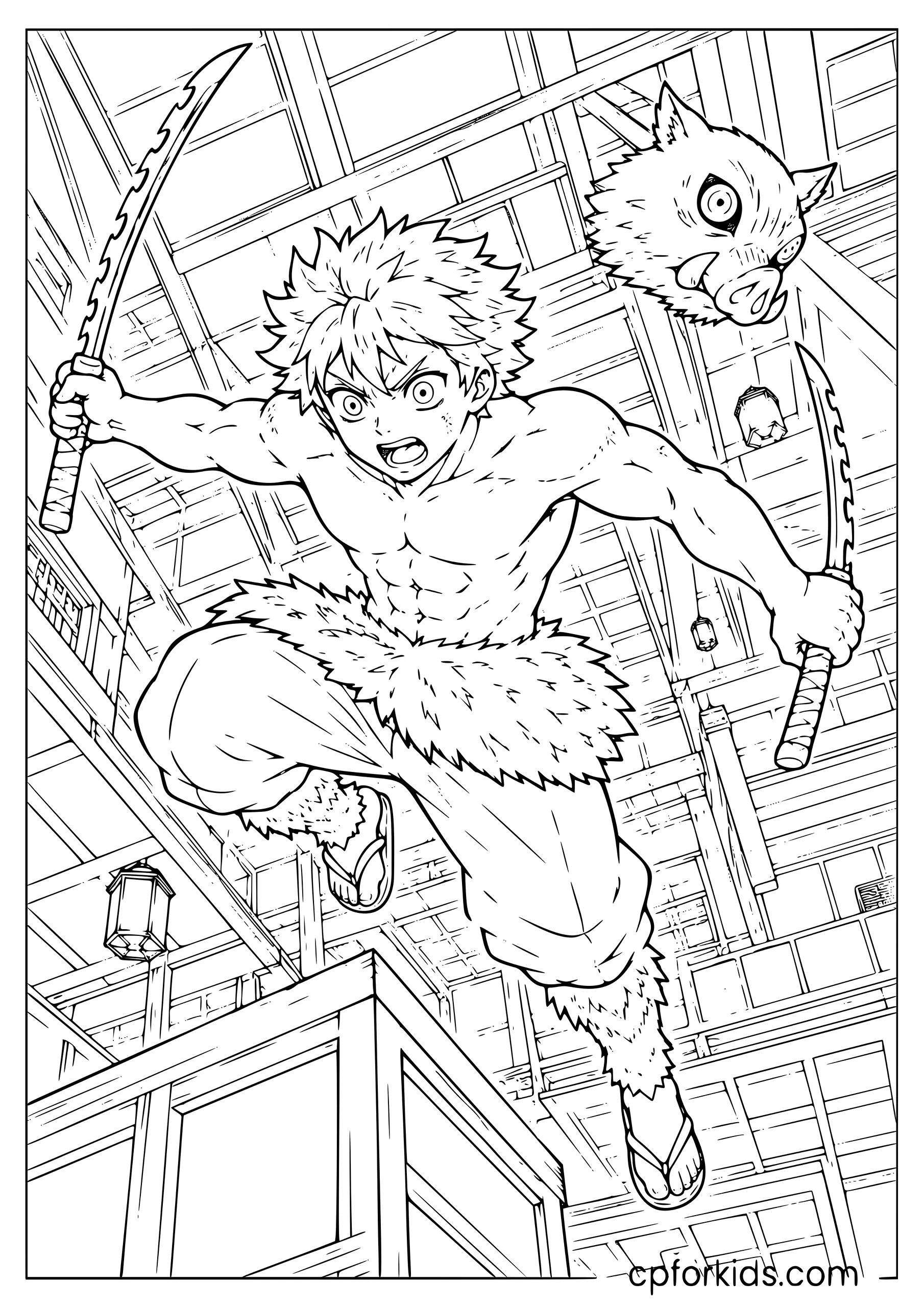
Inosuke in the Infinity Castle
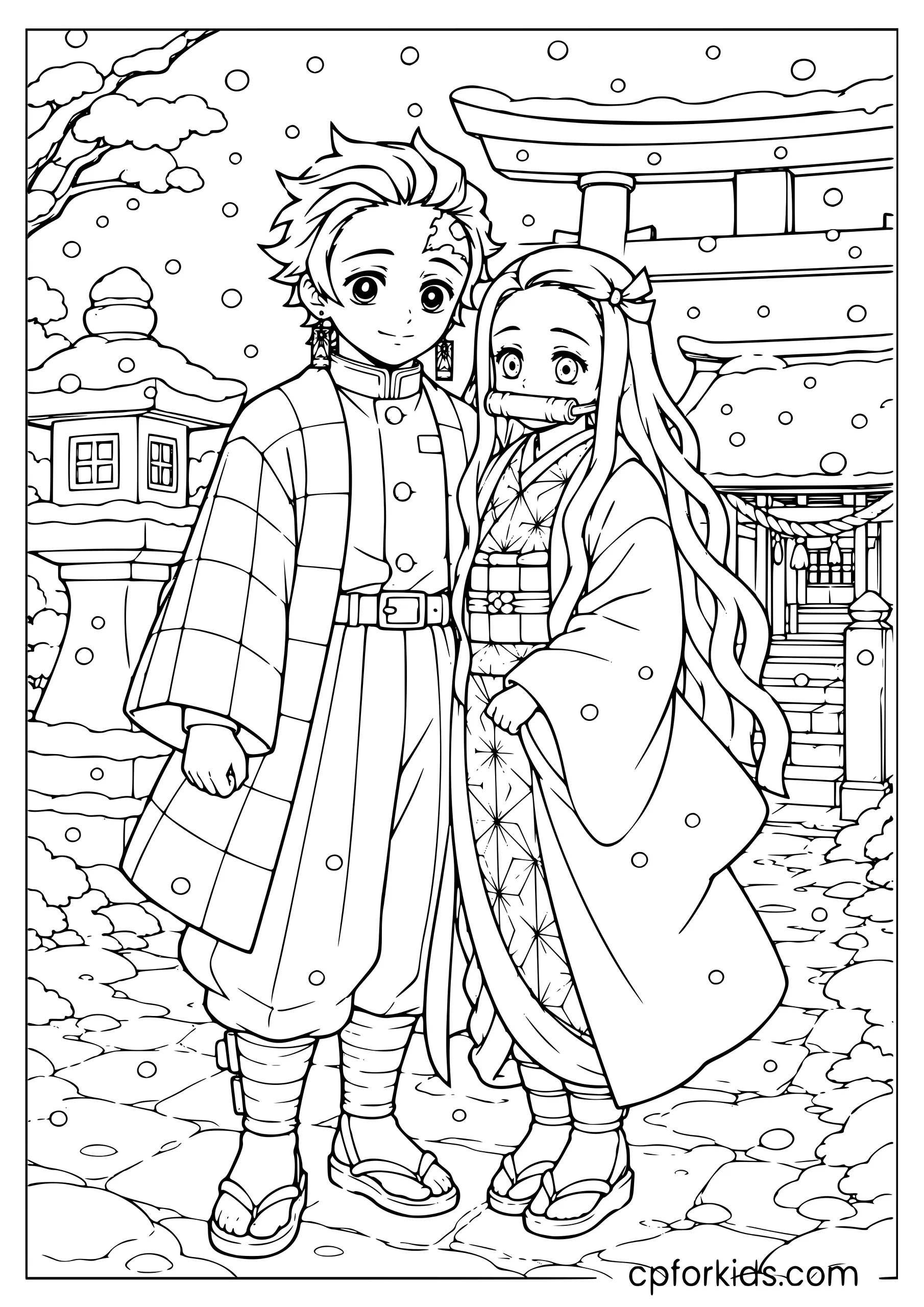
Tanjiro and Nezuko — Snowy Shrine
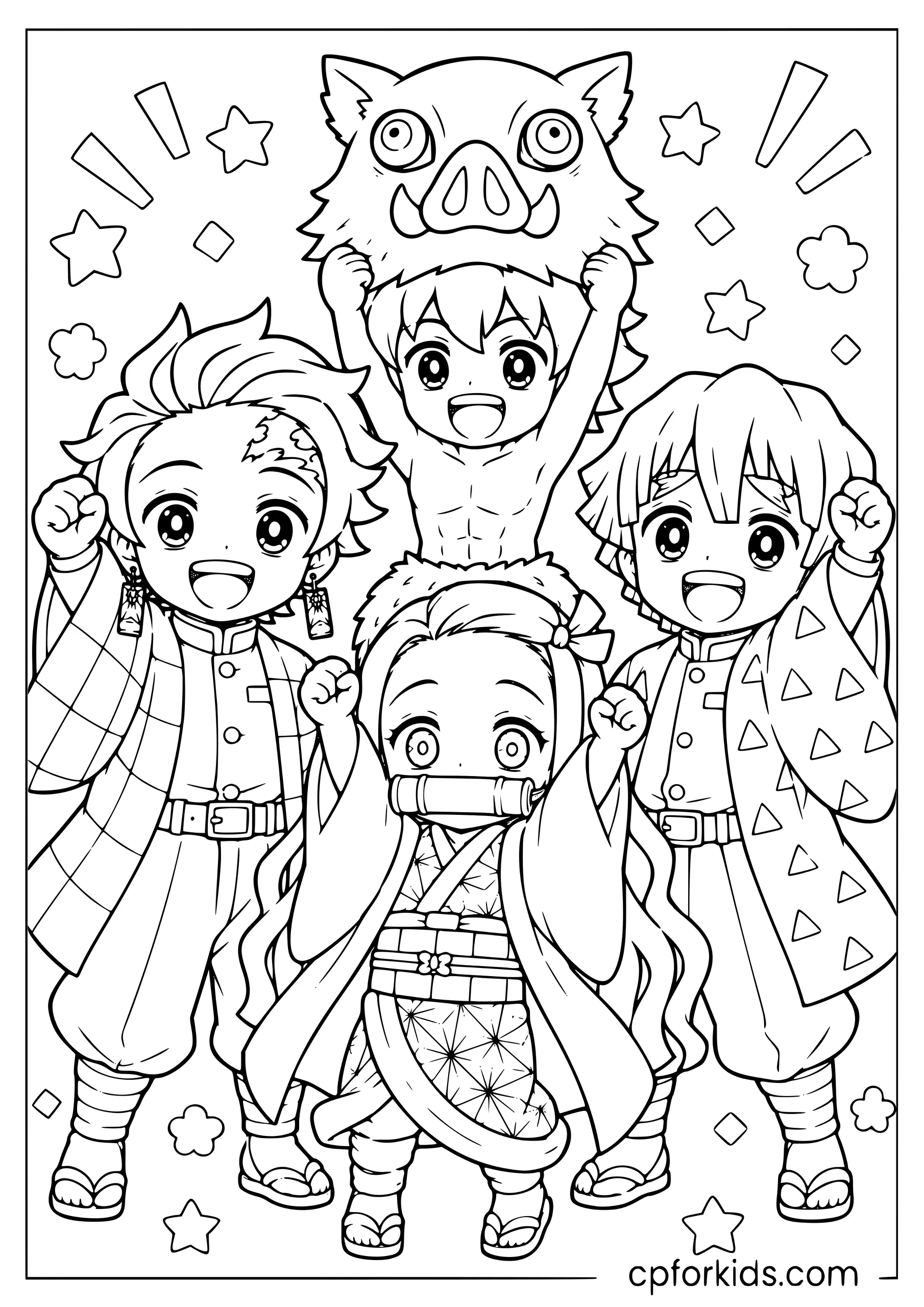
Chibi Demon Slayer — Cheering Together
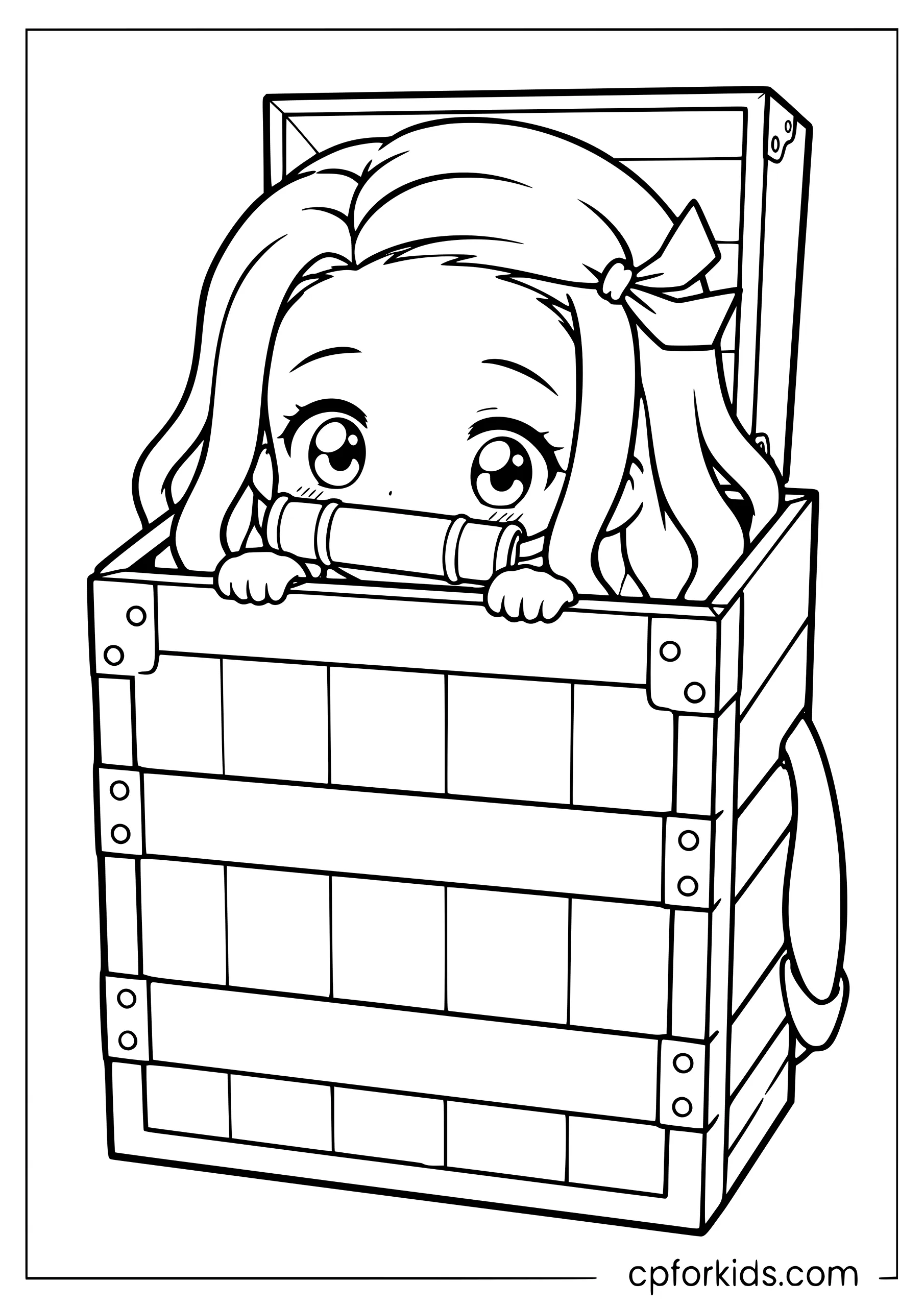
Chibi Nezuko in the Box
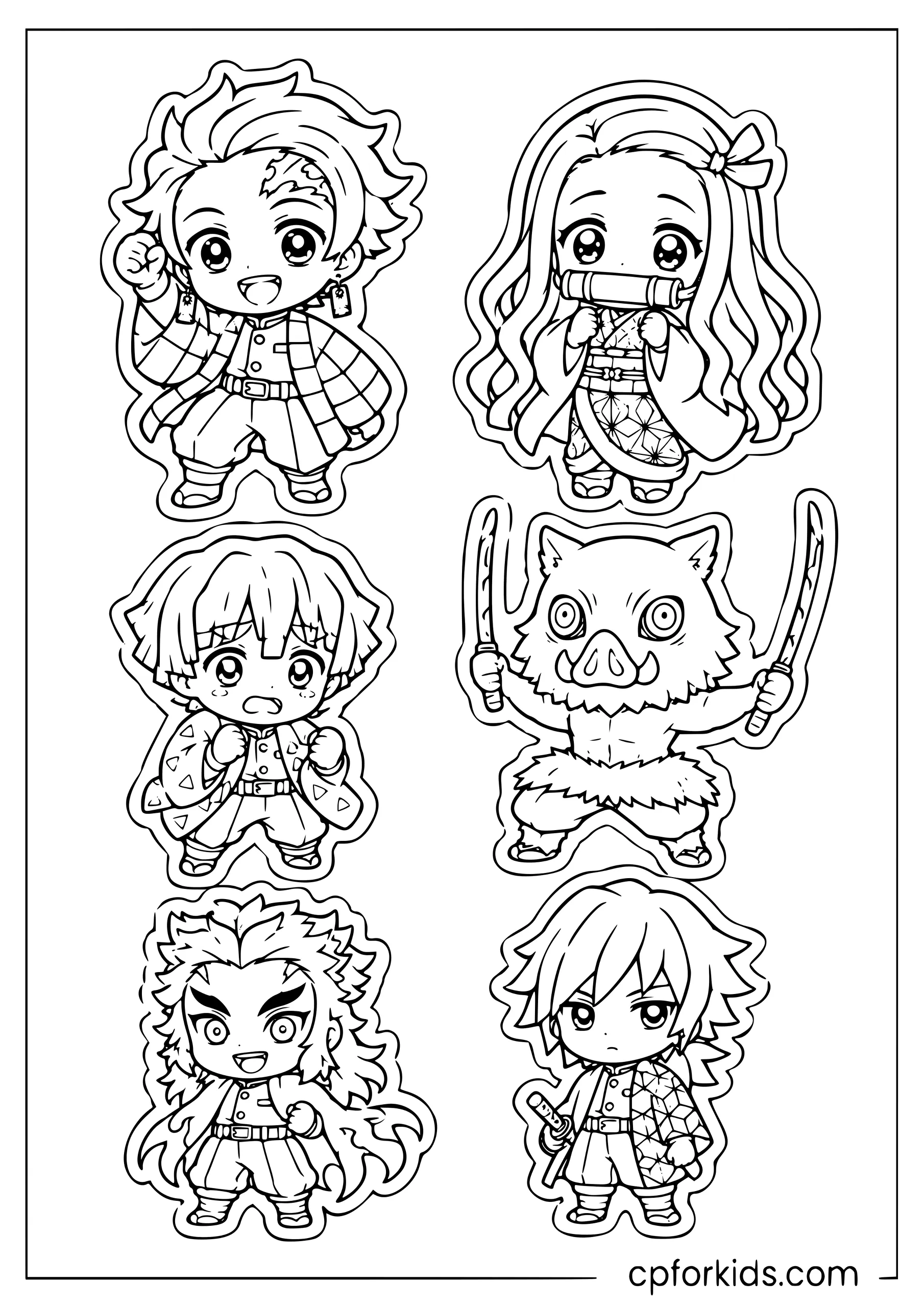
Chibi Demon Slayer Sticker Sheet
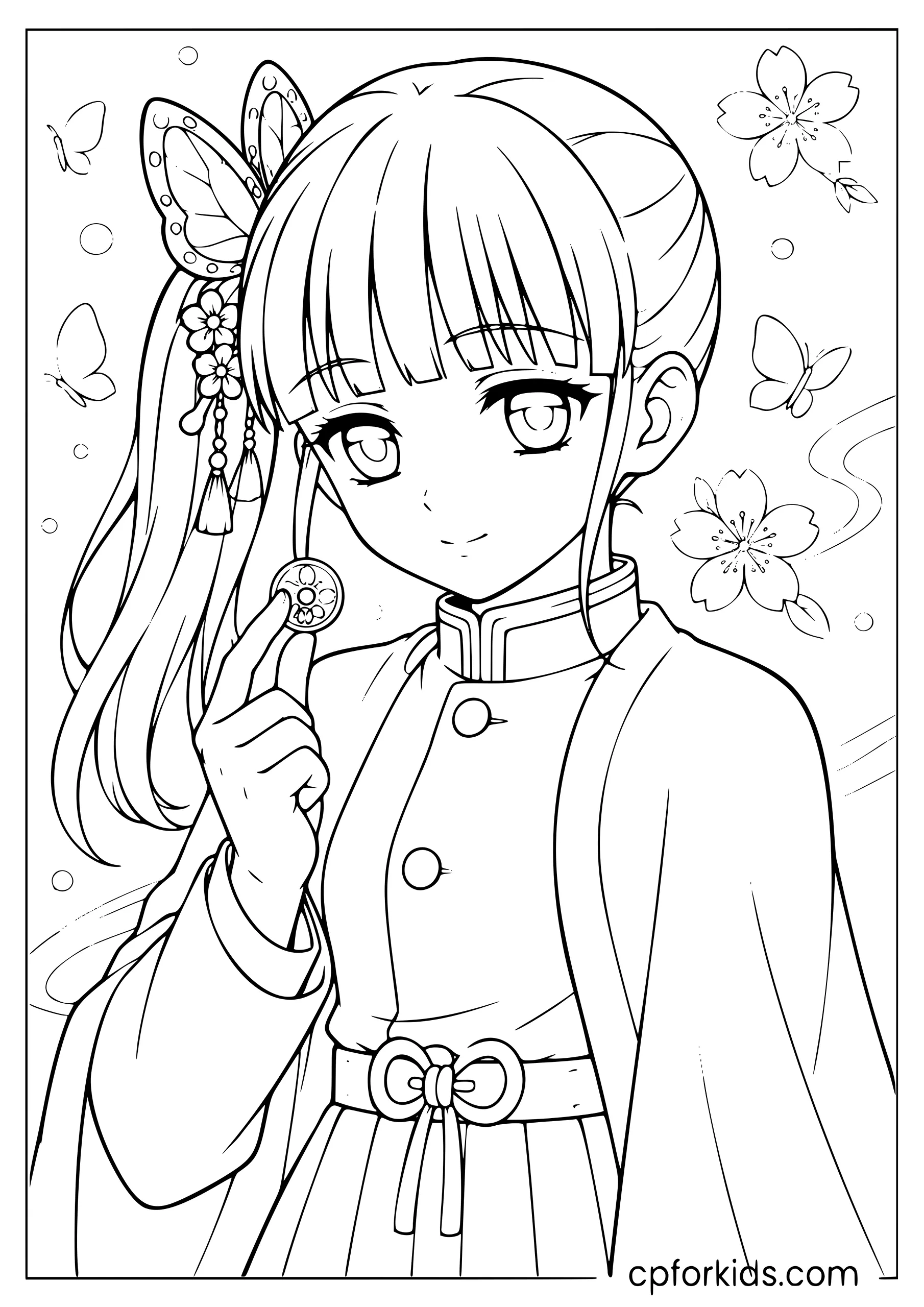
Kanao — Holding a Coin
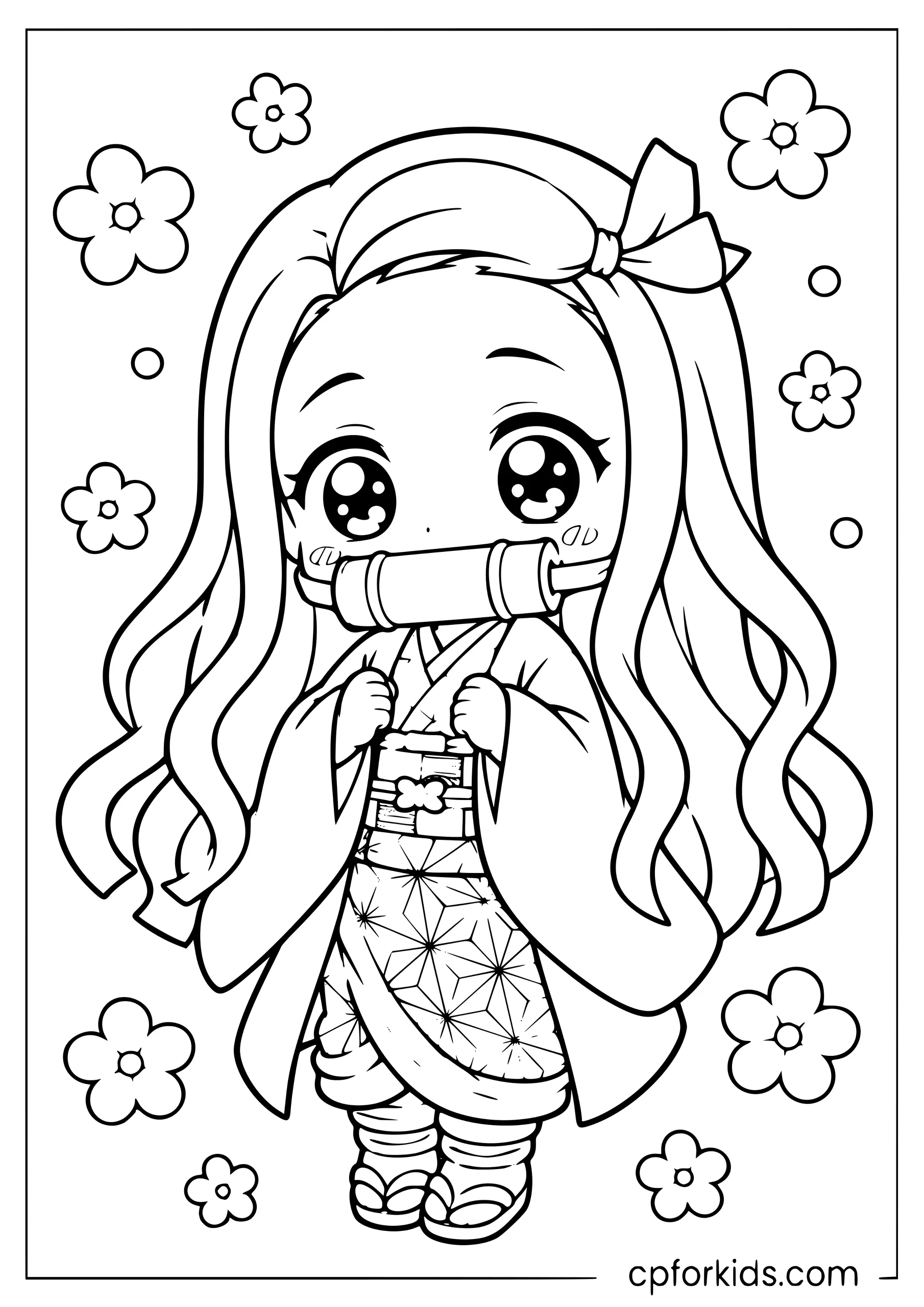
Kawaii Chibi Nezuko
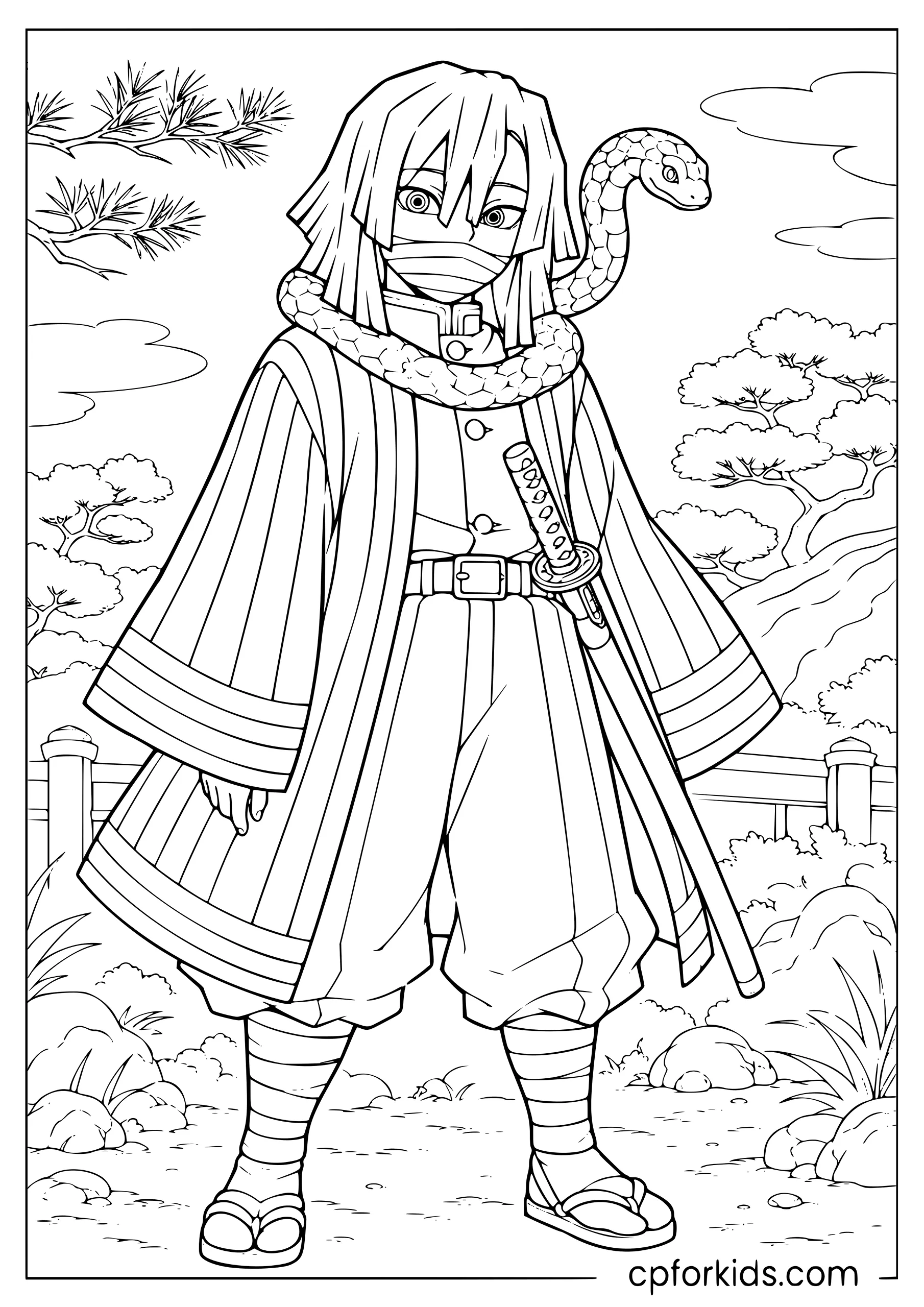
Obanai — With Kaburamaru
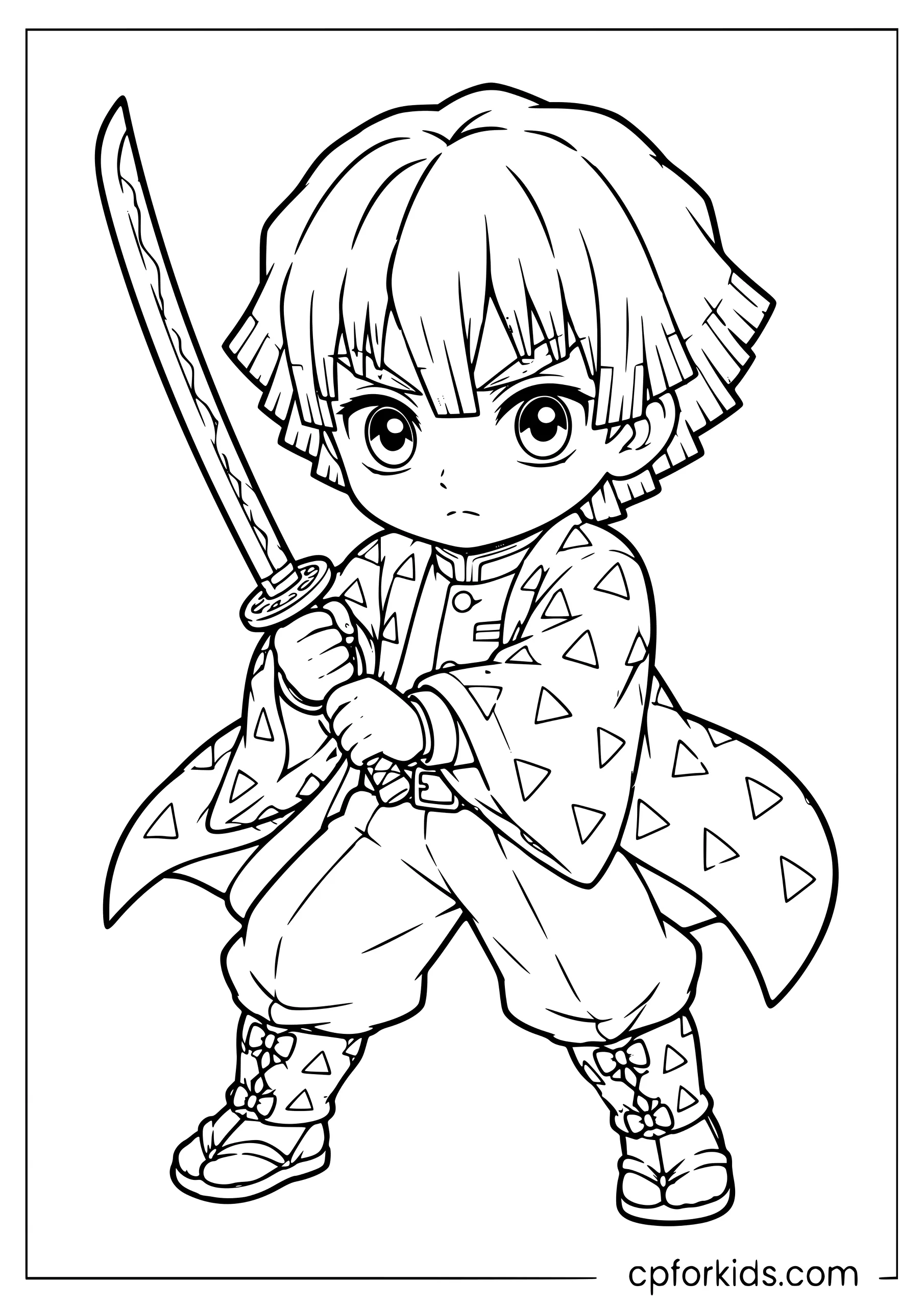
Chibi Zenitsu
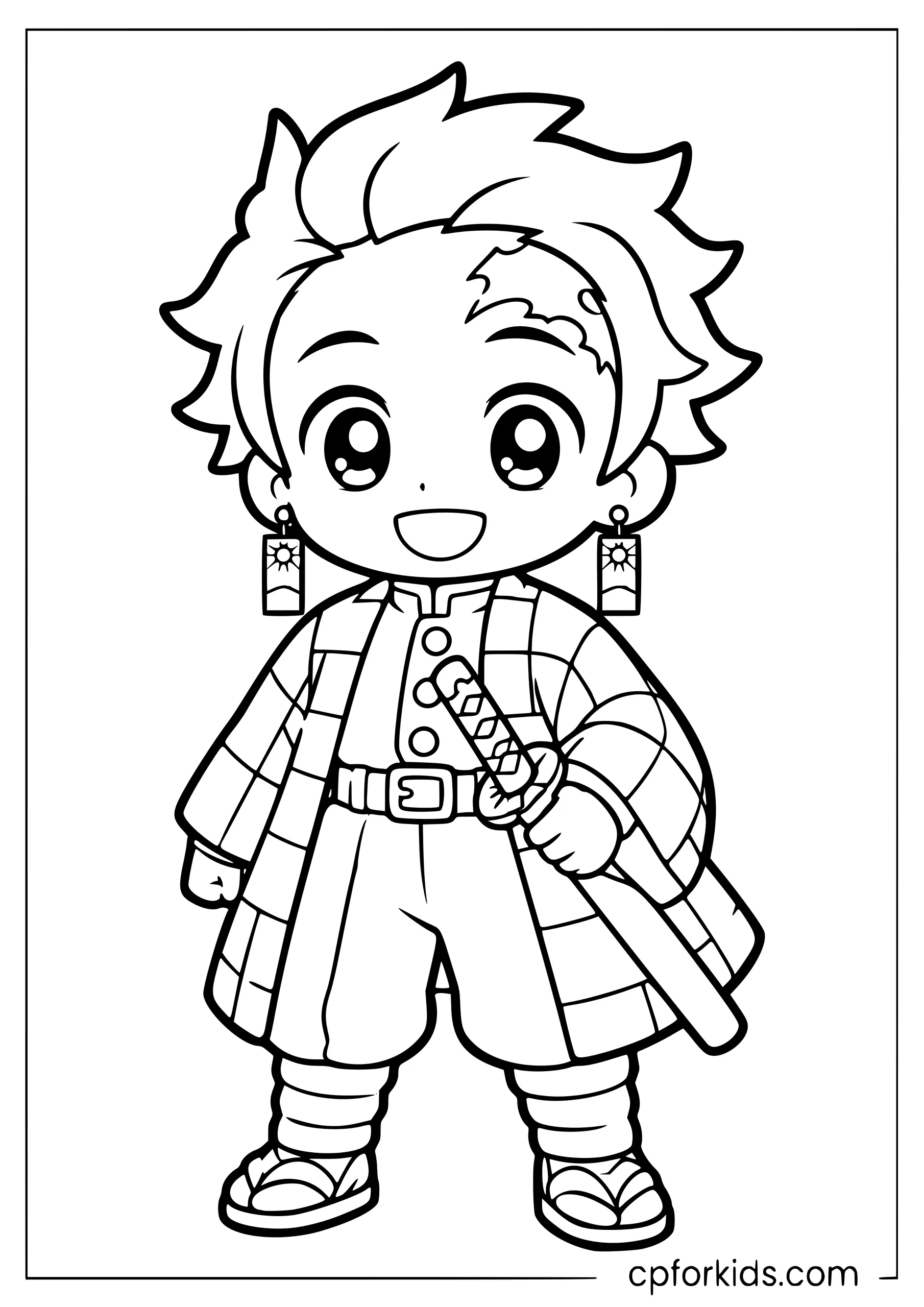
Easy Tanjiro — For Kids
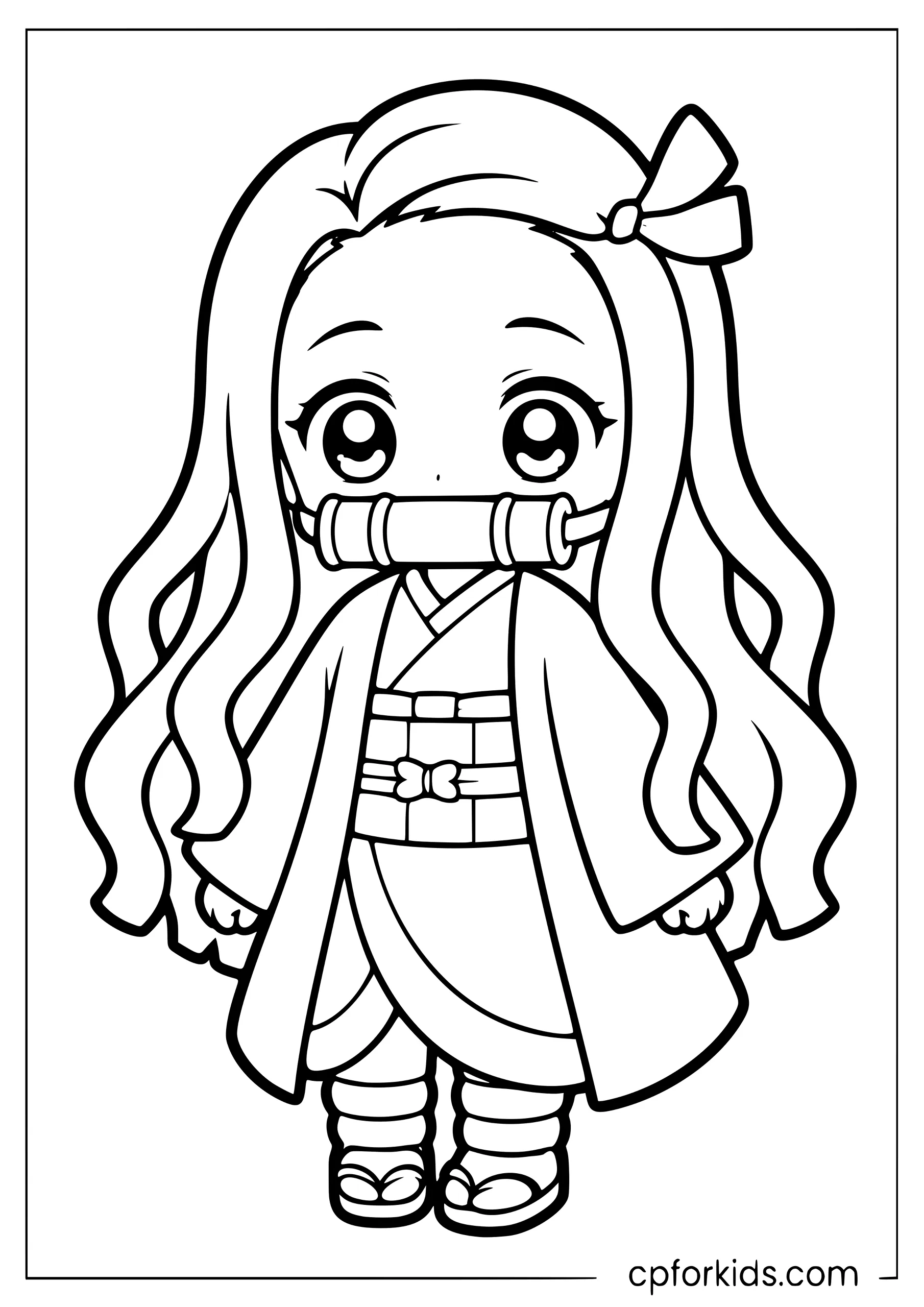
Easy Nezuko — For Kids
What Is Demon Slayer: Kimetsu no Yaiba?
Demon Slayer: Kimetsu no Yaiba is a manga series by Koyoharu Gotouge, first serialized in Weekly Shonen Jump in 2016 and adapted into an anime by ufotable in 2019. The story follows Tanjiro Kamado, a teenage boy who becomes a demon slayer after his family is killed and his younger sister Nezuko is transformed into a demon. Tanjiro joins the Demon Slayer Corps — a secret organization dedicated to protecting humanity — and trains to find a cure for Nezuko while hunting the demons responsible for his family’s deaths.
The manga has more than 150 million copies in circulation worldwide. The Mugen Train film, released in 2020, became Japan’s highest-grossing domestic film of all time. The Infinity Castle storyline — which covers the final battle between the Demon Slayer Corps and Muzan Kibutsuji — is being adapted as a three-film theatrical trilogy, with the first installment released in 2025.
The Main Characters
Tanjiro Kamado is the central character — a kind and determined young demon slayer recognized by his forehead scar, Hanafuda earrings, and black-and-green checkered haori. He uses Water Breathing and later Hinokami Kagura, a fire-based technique passed down through his family.
Nezuko Kamado is Tanjiro’s younger sister, transformed into a demon after the attack on their family but retaining her human emotions and sense of protectiveness. She is recognized by her pink kimono with a hemp leaf pattern, bamboo mouthpiece, and long black hair with pink-tipped ends.
Zenitsu Agatsuma is a fellow demon slayer and Tanjiro’s companion. He appears cowardly and anxious when conscious but becomes extraordinarily powerful when asleep, using his mastery of Thunder Breathing — specifically the Thunderclap and Flash technique — to devastating effect.
Inosuke Hashibira grew up in the mountains and fights with two serrated Nichirin blades, wearing a boar’s head mask he refuses to remove. He developed his own Beast Breathing style independently and is one of the most physically aggressive fighters in the Corps.
Kanao Tsuyuri is a Demon Slayer Corps member trained under Shinobu Kocho. She is known for carrying a coin she uses to make decisions — a habit that developed during a difficult childhood — and for her exceptional visual acuity.
Genya Shinazugawa is Sanemi’s younger brother and a member of the Demon Slayer Corps. Unlike other Corps members, he cannot use Breathing techniques, but compensates with raw physical strength and a shotgun. He has the rare ability to temporarily gain demon-like powers by consuming demon flesh.
The Nine Hashira
The Hashira are the nine most powerful members of the Demon Slayer Corps, each named after the Breathing Style they have mastered. In the series, becoming a Hashira requires either killing fifty demons or a single member of the Twelve Kizuki.
Giyu Tomioka is the Water Hashira — quiet, expressionless, and deeply principled. He is the first Hashira Tanjiro encounters and is recognized by his distinctive split haori, half red and half green.
Kyojuro Rengoku is the Flame Hashira, known for his fierce loyalty, relentless optimism, and his role in the Mugen Train arc. His death against Akaza is one of the most emotionally significant moments in the series.
Tengen Uzui is the Sound Hashira — a former shinobi with a theatrical personality, jeweled accessories, and an explosive combat style centered on rhythm and sound waves.
Muichiro Tokito is the Mist Hashira and the youngest of the nine, with long teal hair and a detached, vacant demeanor that conceals a complicated past.
Shinobu Kocho is the Insect Hashira. Her blade is too thin to decapitate demons, so she uses precisely calculated poisons instead. Her butterfly-pattern haori and soft smile make her one of the most visually distinctive characters in the series.
Mitsuri Kanroji is the Love Hashira, known for her pink and green braided hair and a flexible whip-like Nichirin sword that only she has the physical constitution to wield effectively.
Sanemi Shinazugawa is the Wind Hashira — aggressive, heavily scarred, and openly hostile toward demons. He is Genya’s older brother.
Obanai Iguro is the Serpent Hashira, recognized by his black snake Kaburamaru who coils around his shoulders, his heterochromatic eyes, and the bandages covering the lower half of his face.
Gyomei Himejima is the Stone Hashira and widely considered the most powerful member of the Hashira. He fights with a hand-axe and spiked flail connected by a chain rather than a traditional Nichirin sword.
Upper Rank Demons and the Infinity Castle
The Twelve Kizuki are the twelve most powerful demons under Muzan Kibutsuji, divided into Upper Ranks and Lower Ranks. The three Upper Ranks who appear in this collection are among the most formidable antagonists in the series.
Akaza is Upper Rank Three and fights purely with martial arts, using a technique called Destructive Death. He regenerates from nearly any wound and has a long history with the Demon Slayer Corps.
Doma is Upper Rank Two — cold, serene, and permanently pleasant in a way that makes him deeply unsettling. He wields circular fans and uses ice-based techniques.
Kokushibo is Upper Rank One, the most powerful demon beneath Muzan himself. He was once a human demon slayer who developed Moon Breathing, and he retains the ability to use it as a demon. Multiple eyes appear across his face and body.
Muzan Kibutsuji is the original demon and the central antagonist — the source of all demonkind and the target of the Demon Slayer Corps.
The Infinity Castle is a shifting dimensional fortress controlled by the biwa-playing demon Nakime on Muzan’s behalf. Its rooms, corridors, and staircases move at impossible angles, making orientation difficult and creating the disorienting battle conditions that define the series’ final arc. The Infinity Castle storyline is being adapted as a theatrical trilogy beginning with the first film released in 2025.
Printing Tips
Every page in this collection is a PDF formatted for US Letter (8.5 × 11 inches). Select “Fit to printable area” in your print dialog if your printer adds margins — this applies for both US Letter and A4. Standard 75–80 gsm printer paper works well with colored pencils. For markers or fine-tip pens, 90–100 gsm holds up better and reduces bleed-through. The Infinity Castle interior page has smaller architectural detail than most pages in the set — fine-tip markers or colored pencils give better control in the narrower areas.
Frequently Asked Questions
Are all 44 pages free to download?
Yes — every page in this collection is completely free. No subscription, no account, and no fees at any stage.
What is the Infinity Castle?
The Infinity Castle is a shifting dimensional fortress used as Muzan Kibutsuji’s stronghold, controlled by an Upper Rank demon named Nakime who plays a biwa to reshape its interior. The Infinity Castle storyline is being adapted as a three-film theatrical trilogy, with the first installment released in 2025.
Which Hashira are included?
The collection includes all nine: Giyu Tomioka, Kyojuro Rengoku, Tengen Uzui, Muichiro Tokito, Shinobu Kocho, Mitsuri Kanroji, Sanemi Shinazugawa, Obanai Iguro, and Gyomei Himejima. Genya Shinazugawa also has his own page as a Demon Slayer Corps member — he is Sanemi’s brother but is not one of the nine Hashira.
Are there simpler pages for younger or beginner colorists?
Yes — the easy Tanjiro and Nezuko pages use simplified shapes and extra-thick outlines. The chibi group pages are also beginner-friendly with large open areas and minimal detail.
Do the PDFs work on A4 paper?
Every page is designed to print on both US Letter and A4. Select “Fit to printable area” in your print dialog to adjust for your paper size.
Do I need special paper?
No. Standard printer paper works well for most pages. If you’re using markers, slightly heavier paper can help prevent bleed-through.
Can I use these at a fan event or anime club?
Yes — all pages are free for personal and non-commercial use including fan meetups and club activities.
Looking for more anime coloring pages? Explore our Naruto, Dragon Ball Z, Pokémon, and Anime collections for more free printable PDFs. Happy coloring!