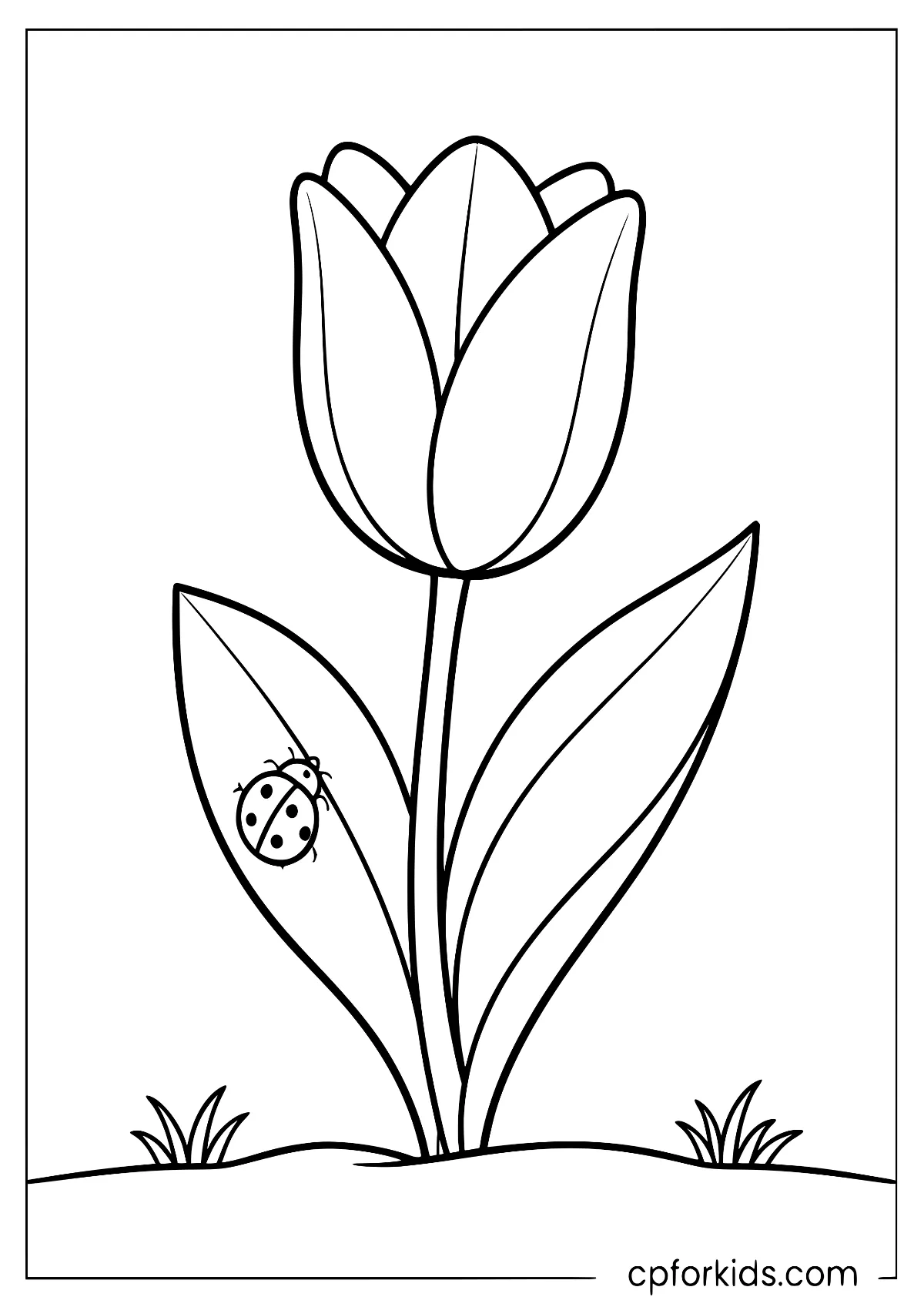
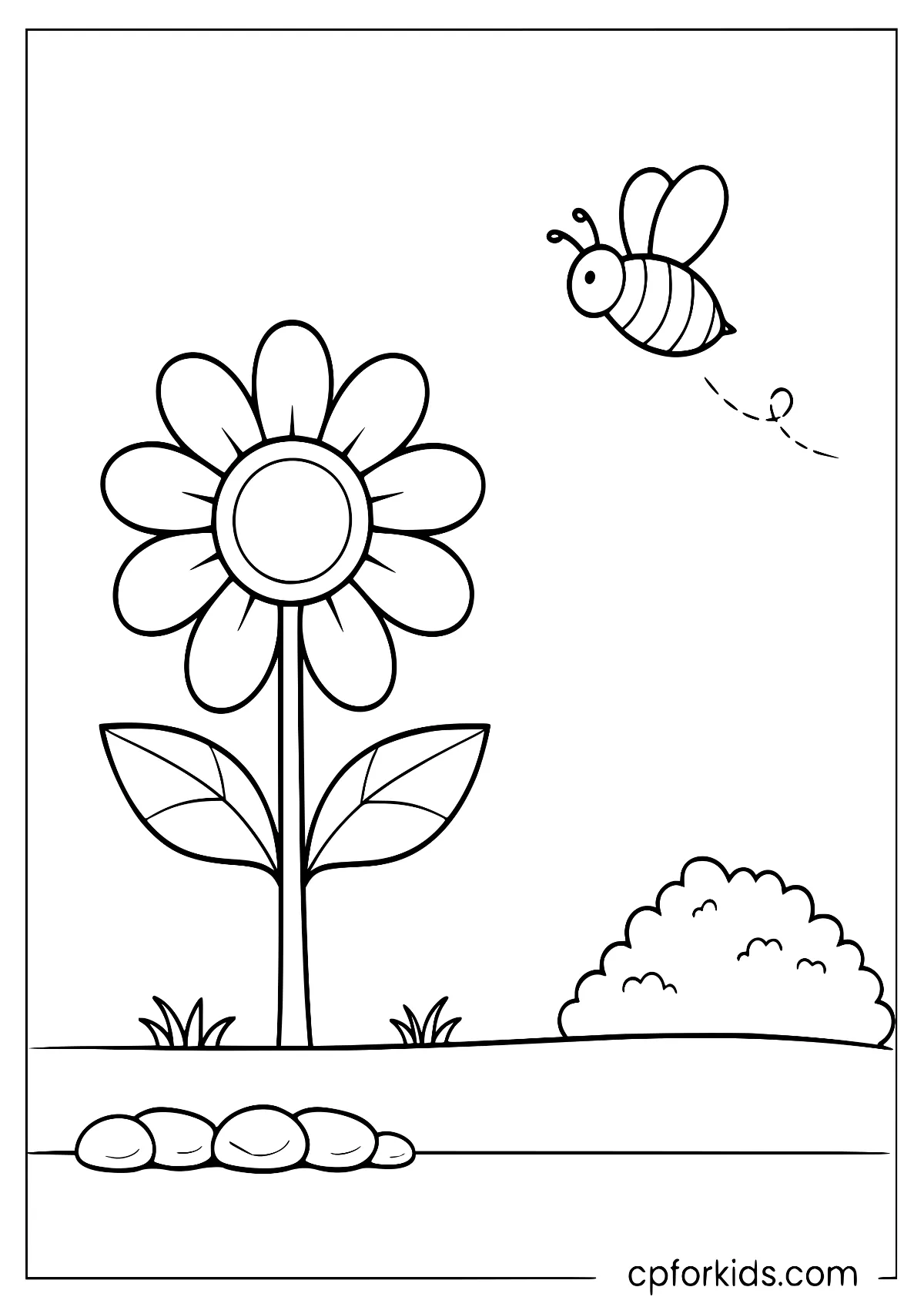
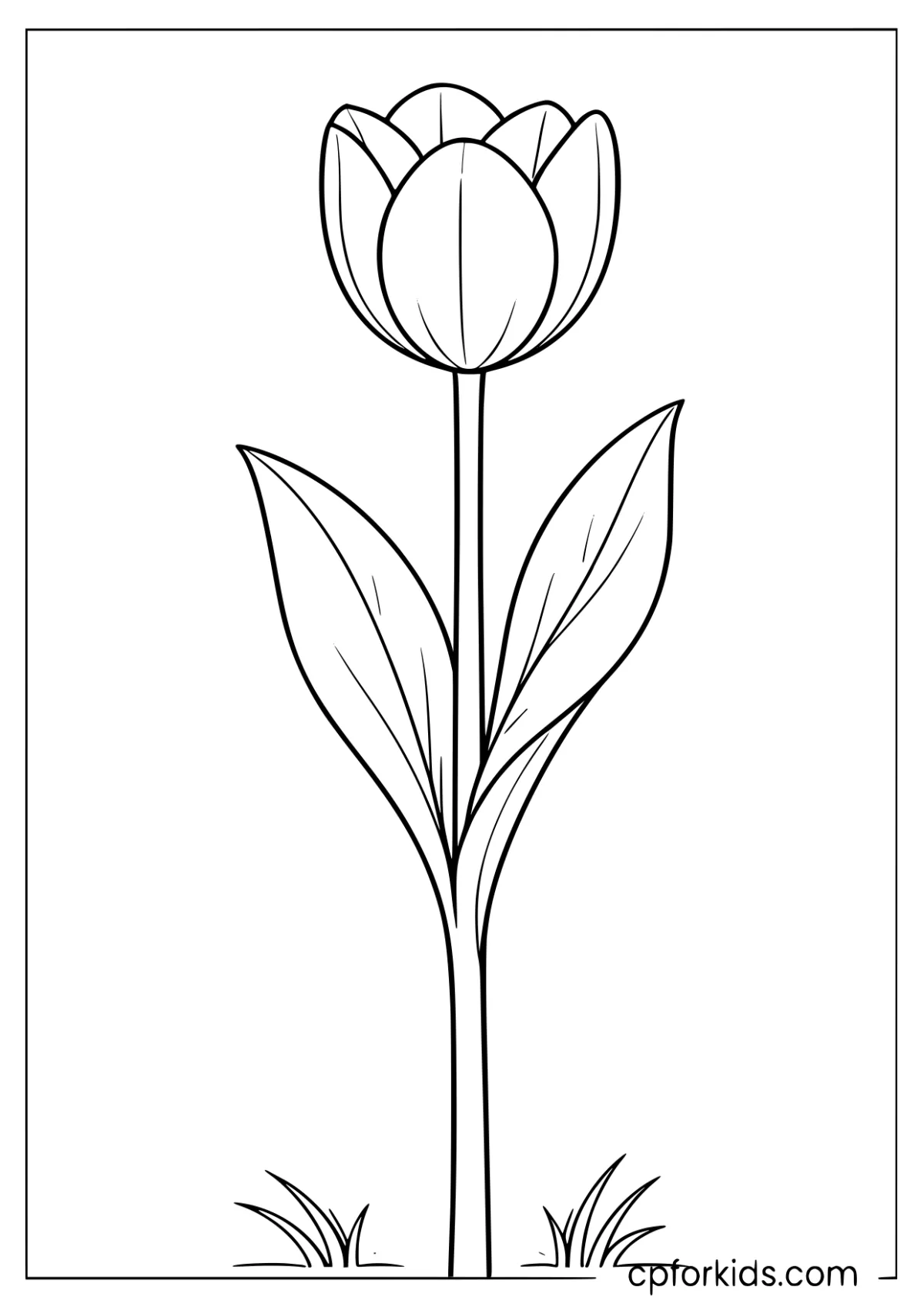
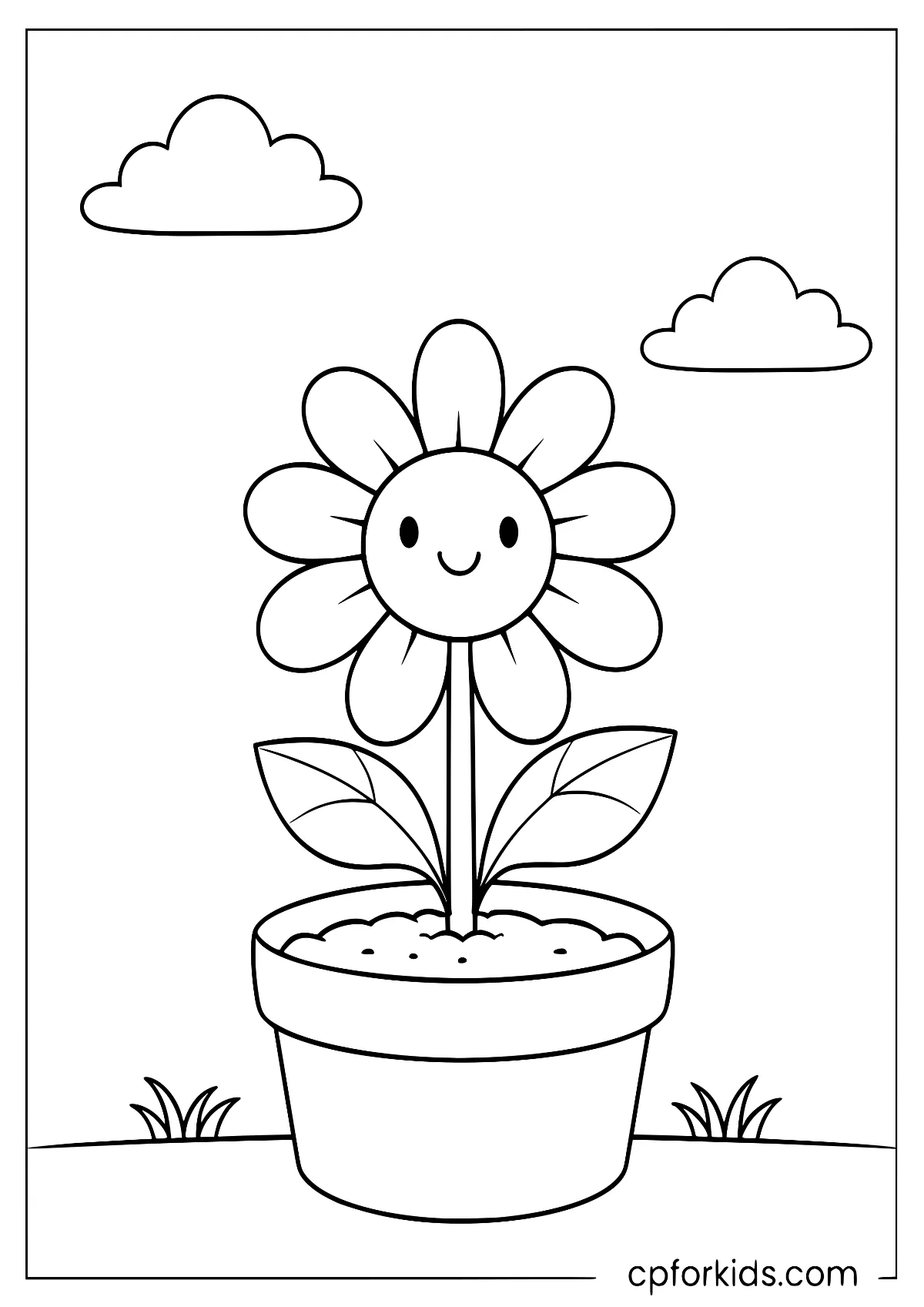
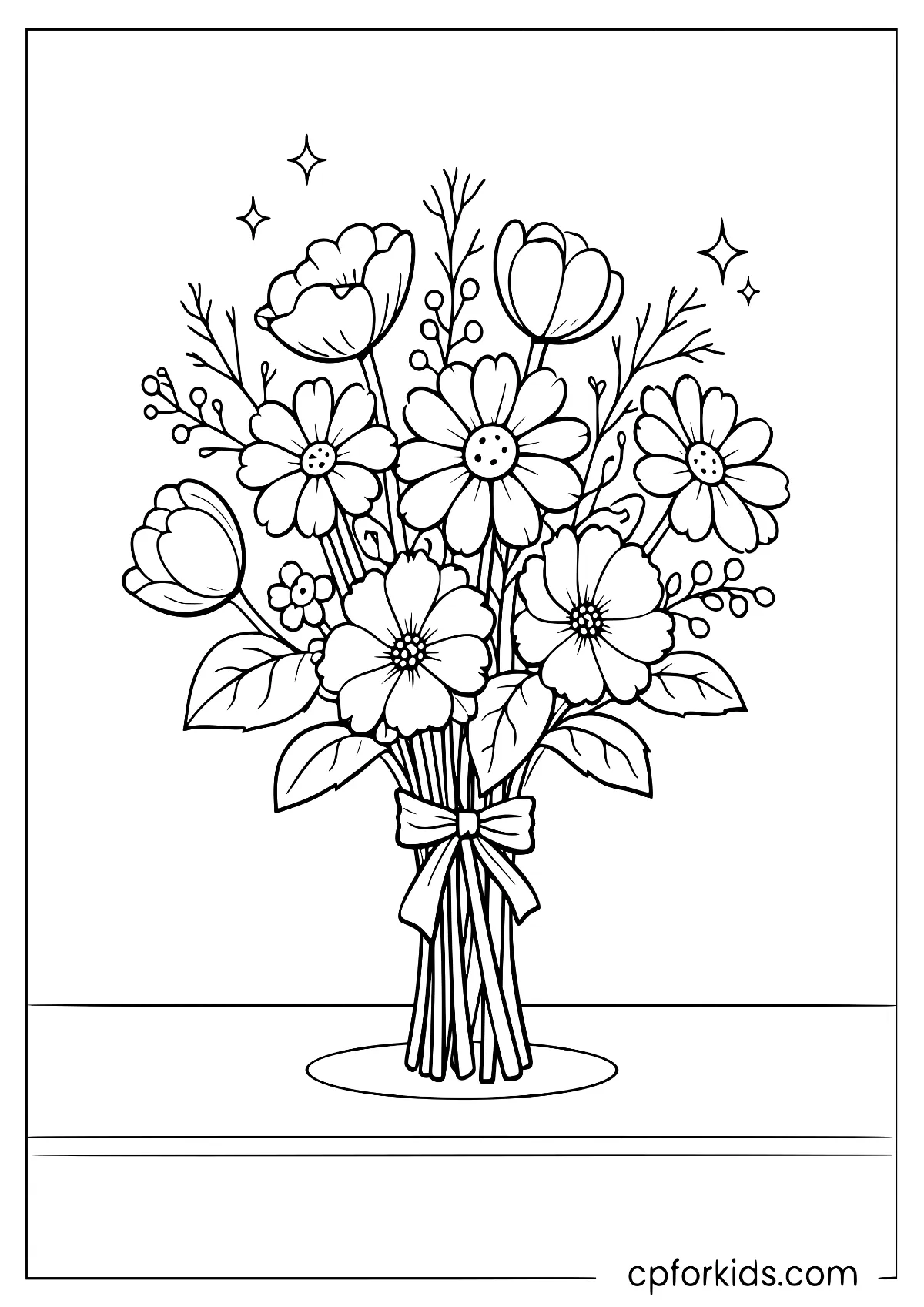
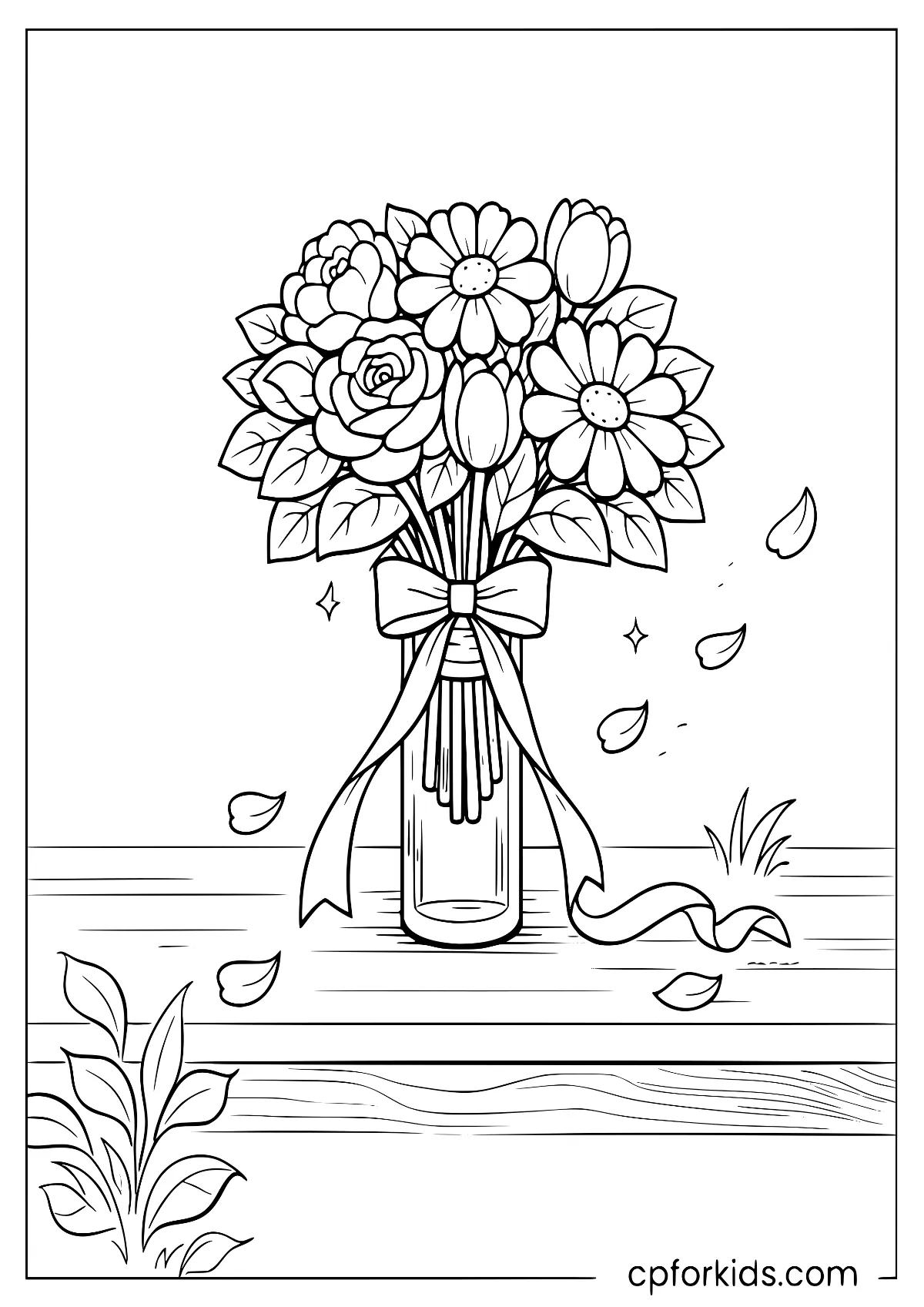
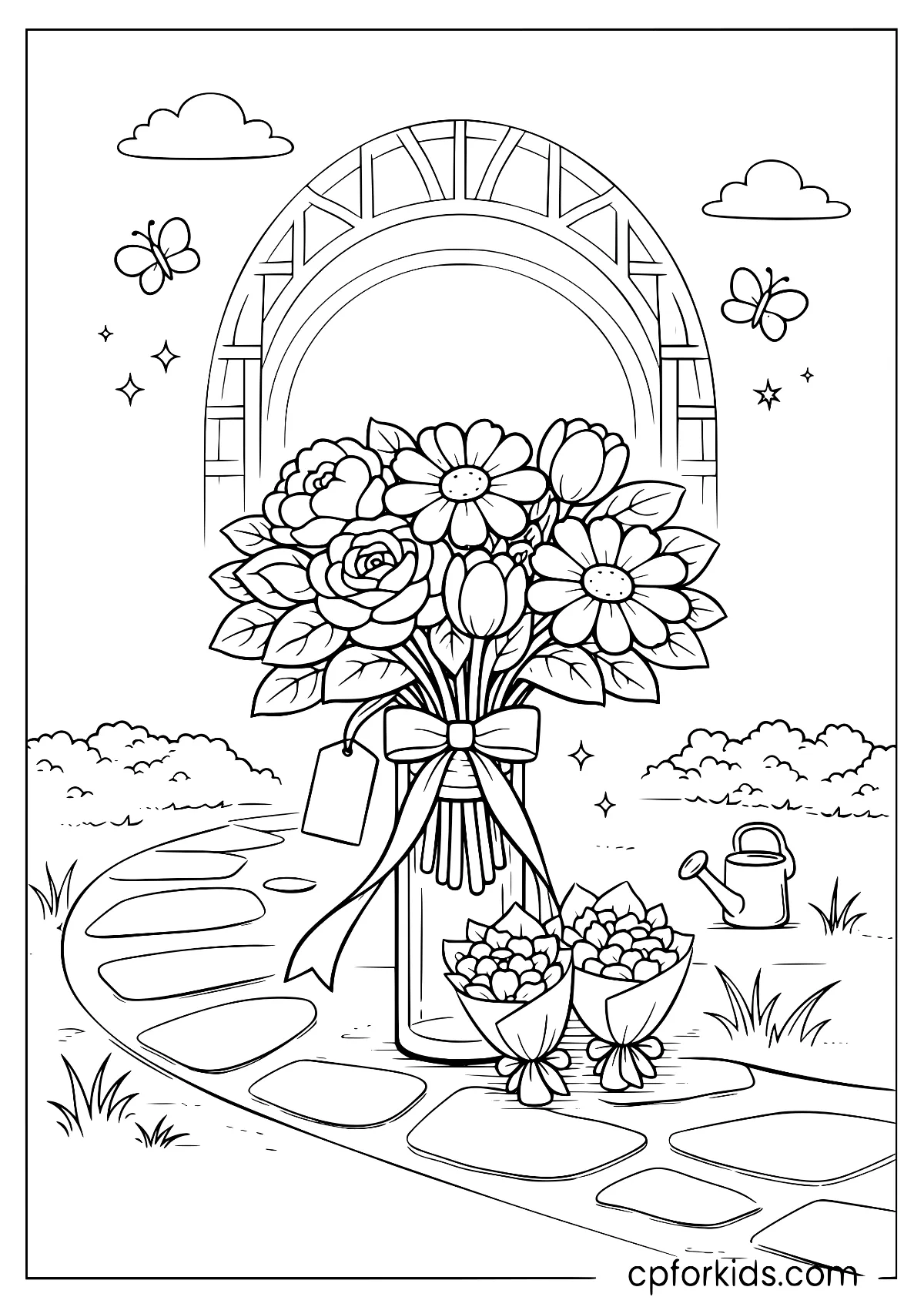
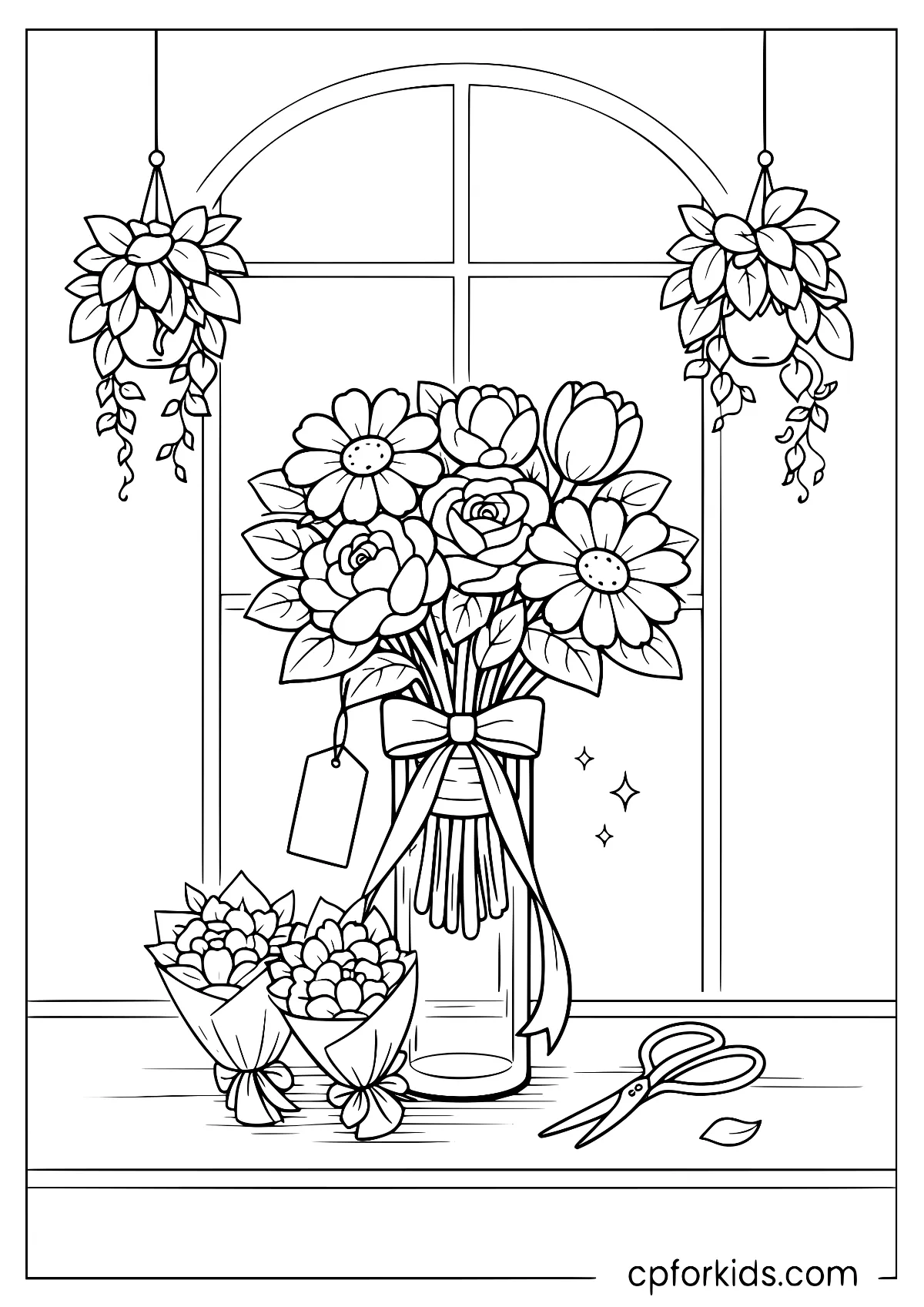
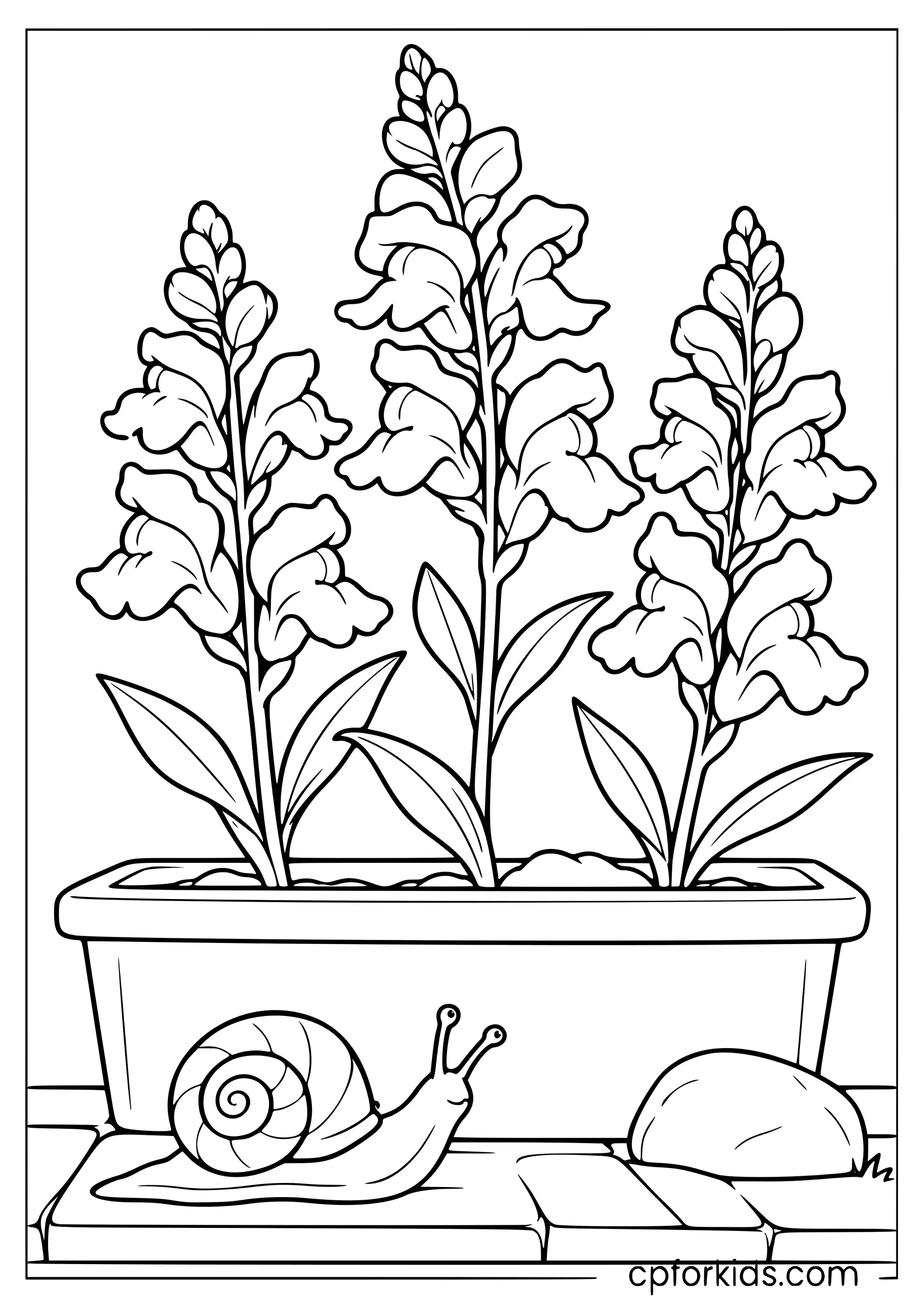
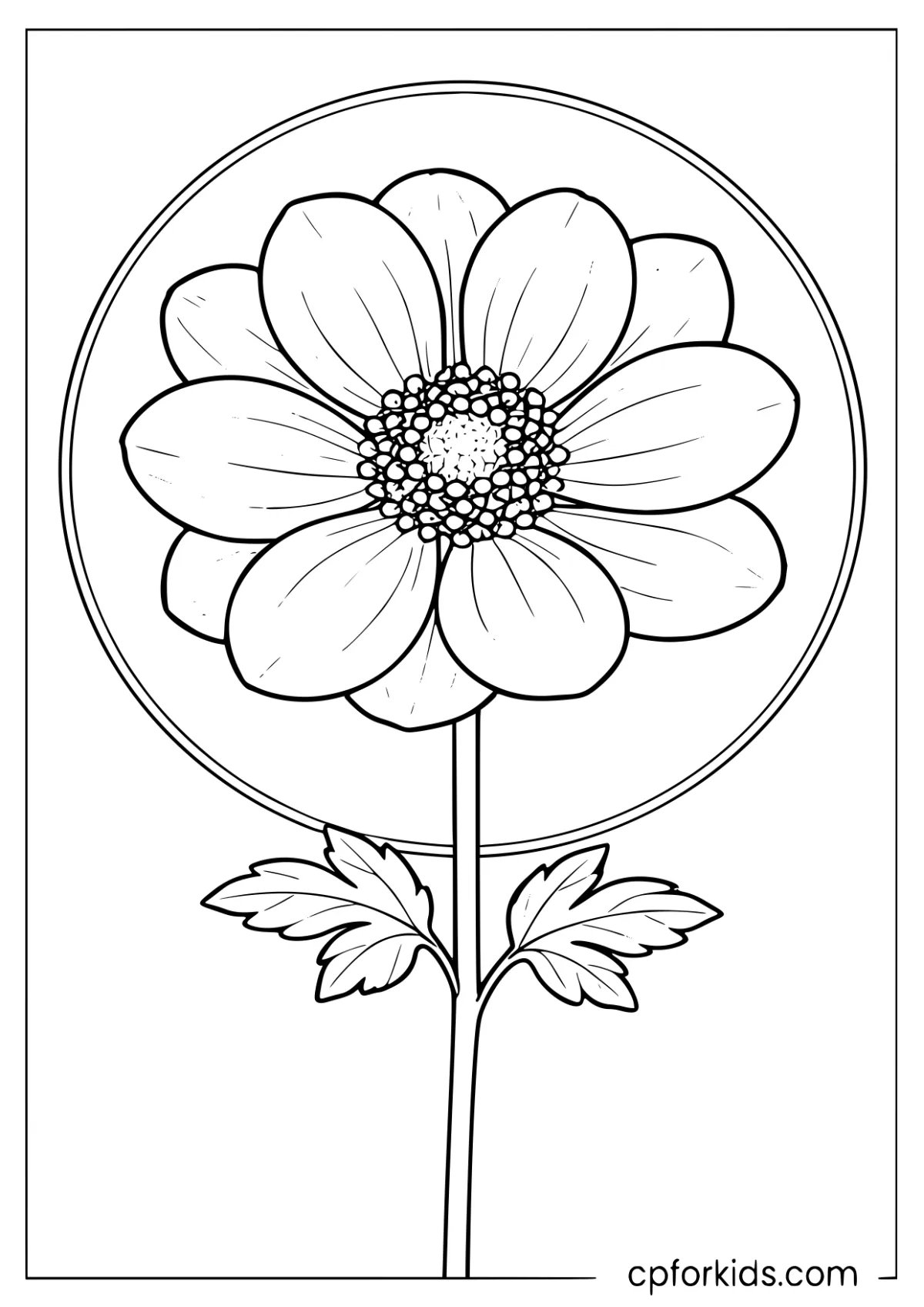
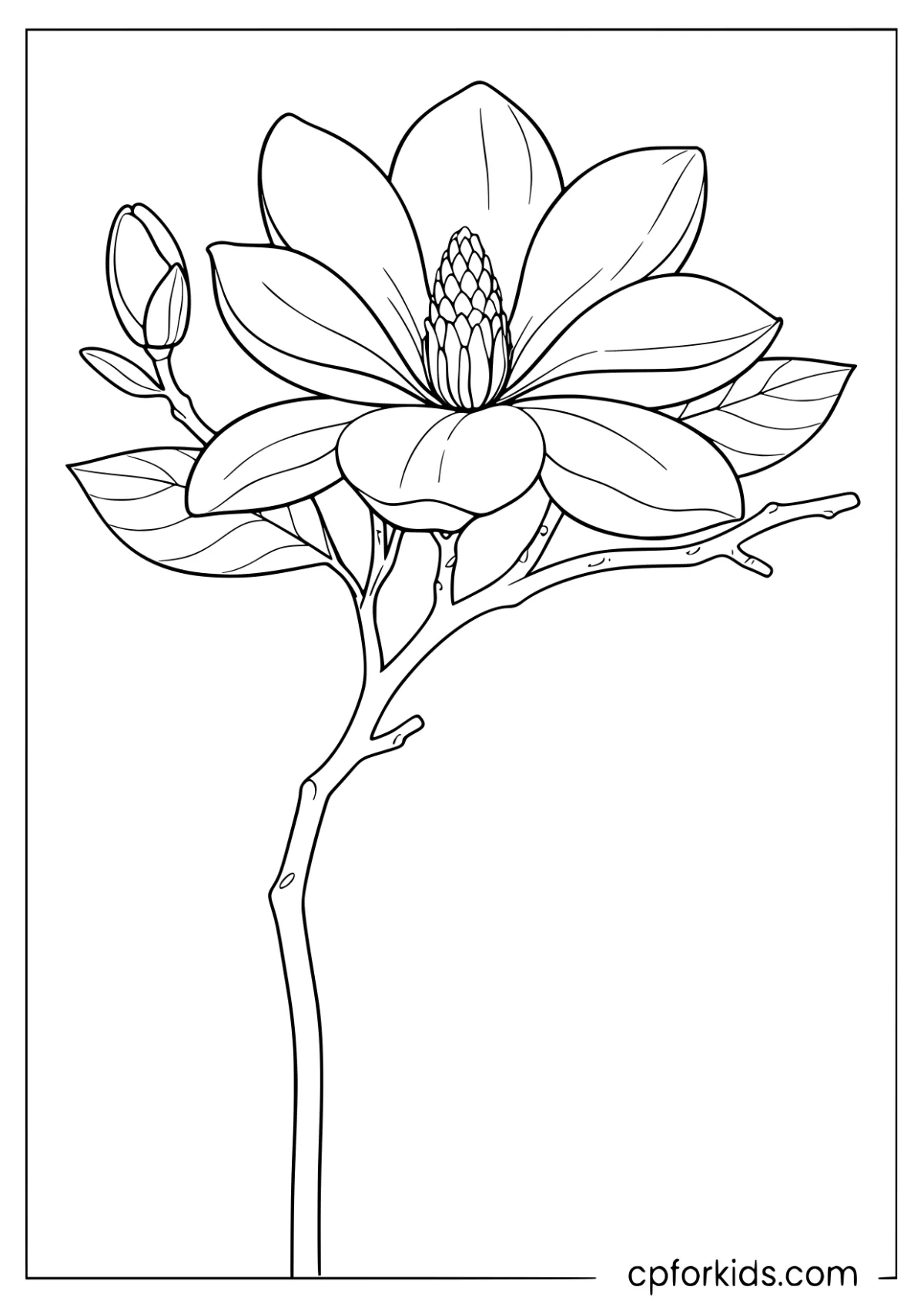
Choose a big open bloom, a ribbon-tied bouquet, or a garden full of butterflies from these 106 free flower coloring pages. The collection includes easy outlines for kids, smiling flowers, realistic floral designs, and mandalas for anyone who enjoys more detail.
Browse roses, sunflowers, daisies, tulips, hibiscus, lotus, and other flower types, or pick a scene with a hummingbird, bunny, or fairy. The worksheets combine plant labels, seed-to-flower growth, flower counting, and color-by-number activities.
Open a picture or its Download PDF button to save or print the page. The printables are prepared for U.S. Letter and A4 paper. Use the section links to find a style, then choose a single bloom for a short coloring session or a fuller scene to spend more time on.
Free Printable Flower Coloring Pages
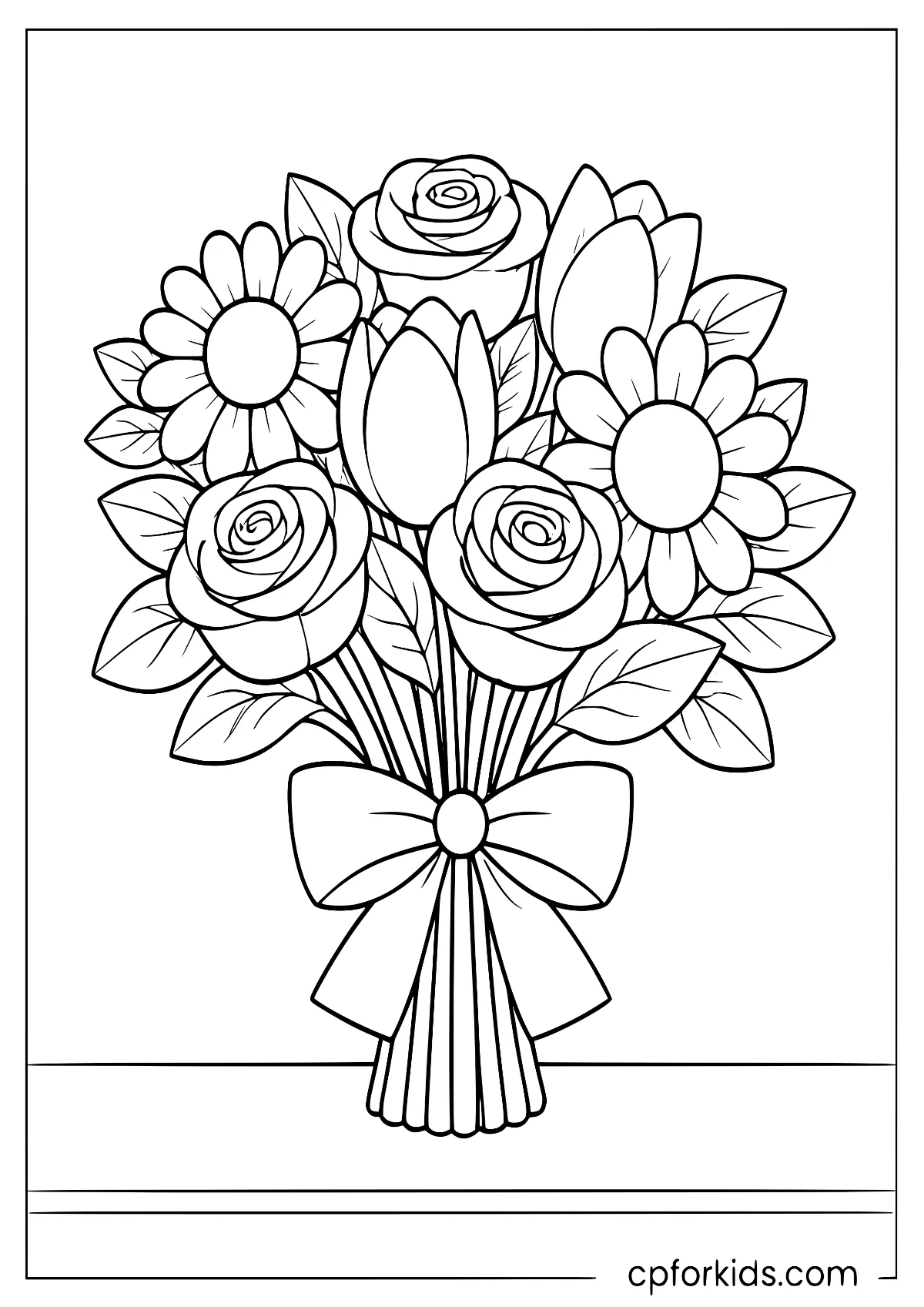
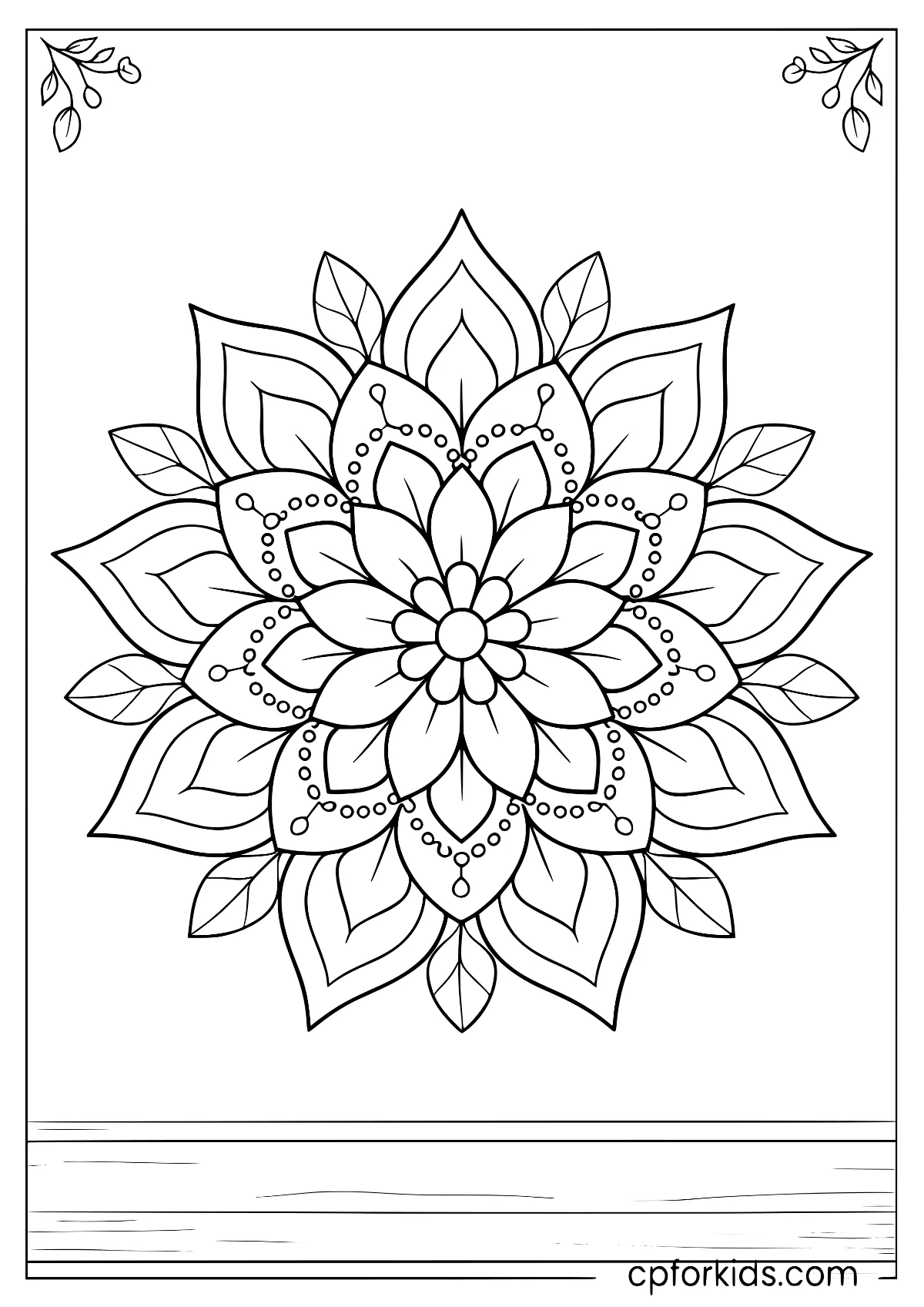
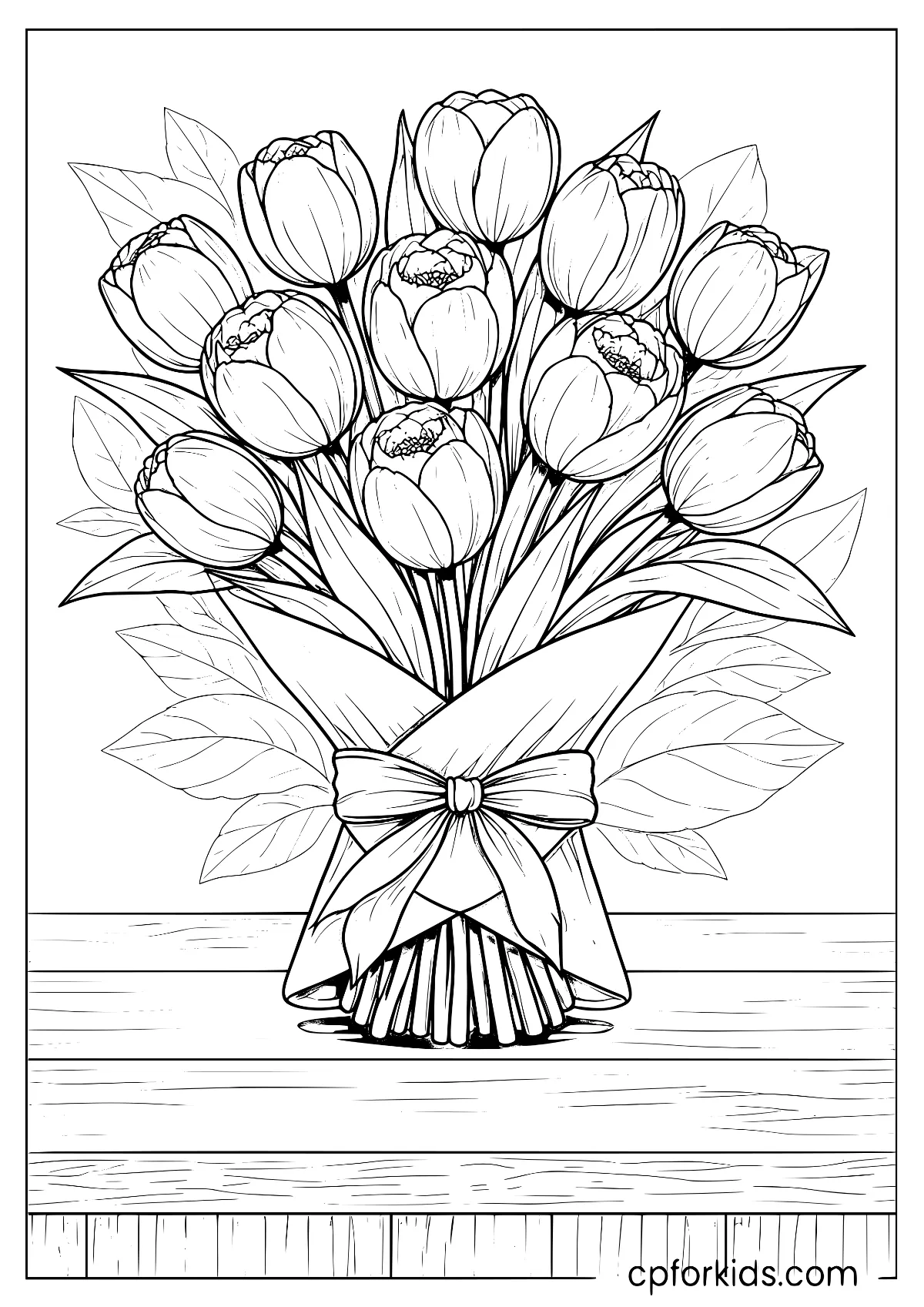
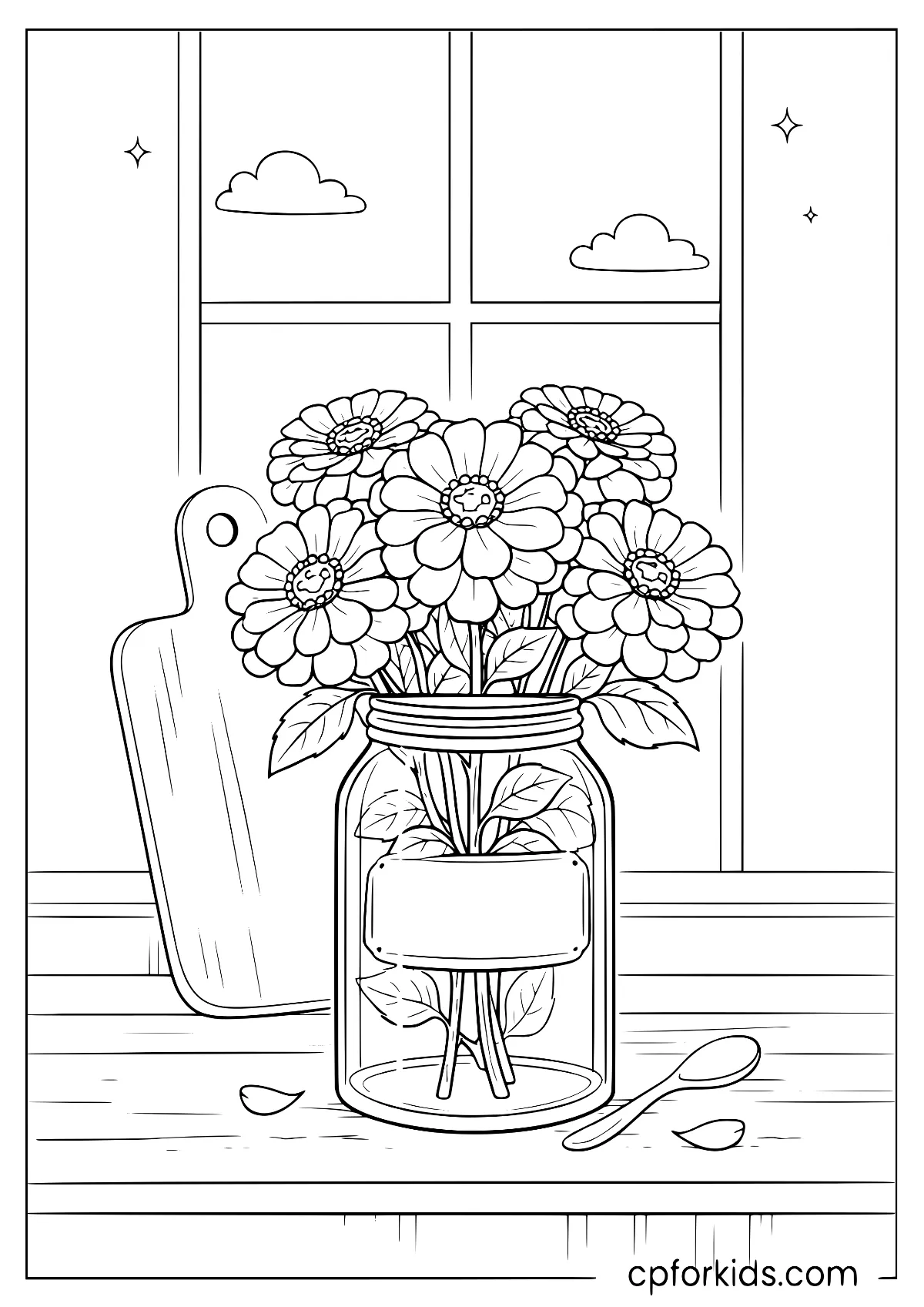
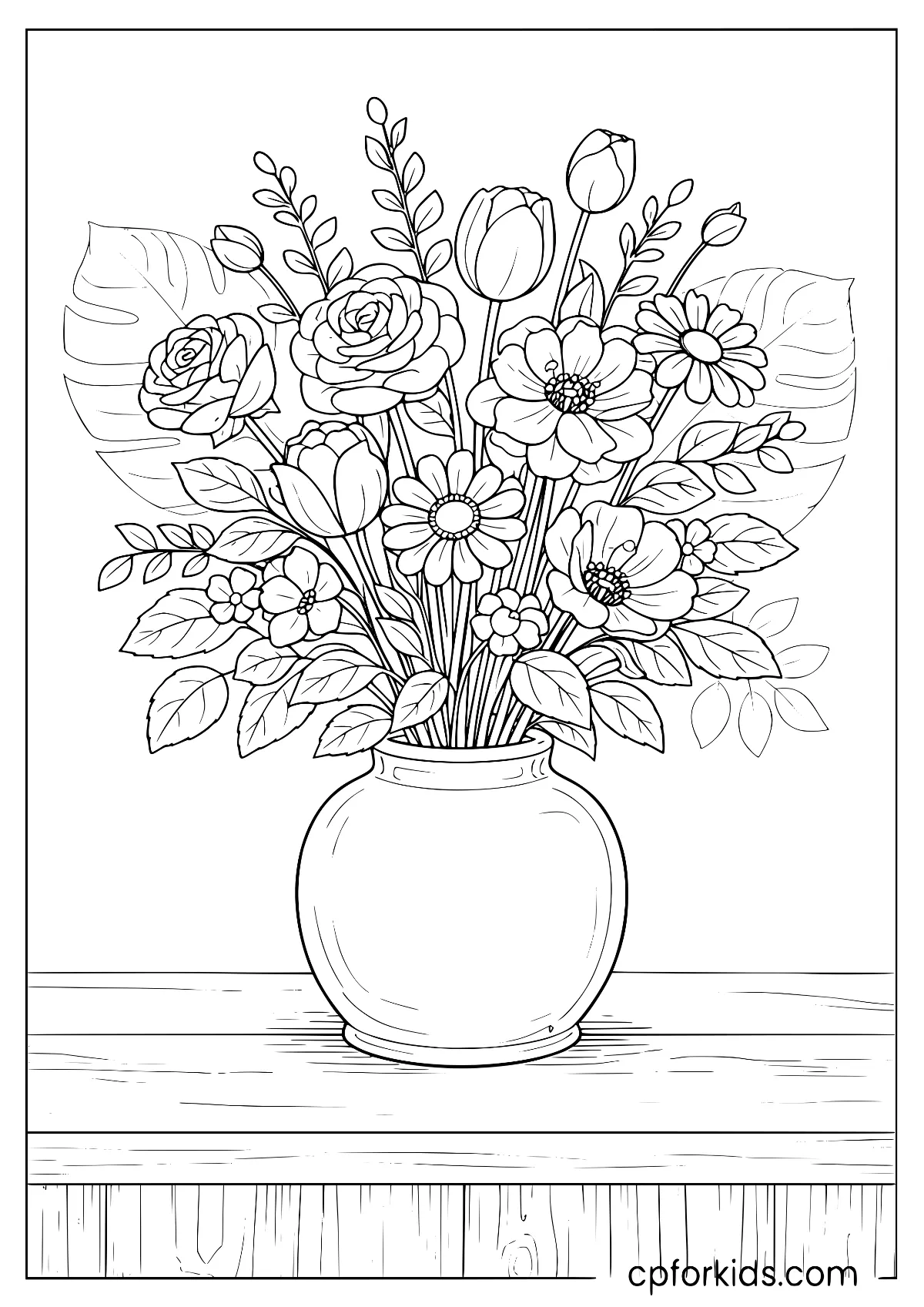
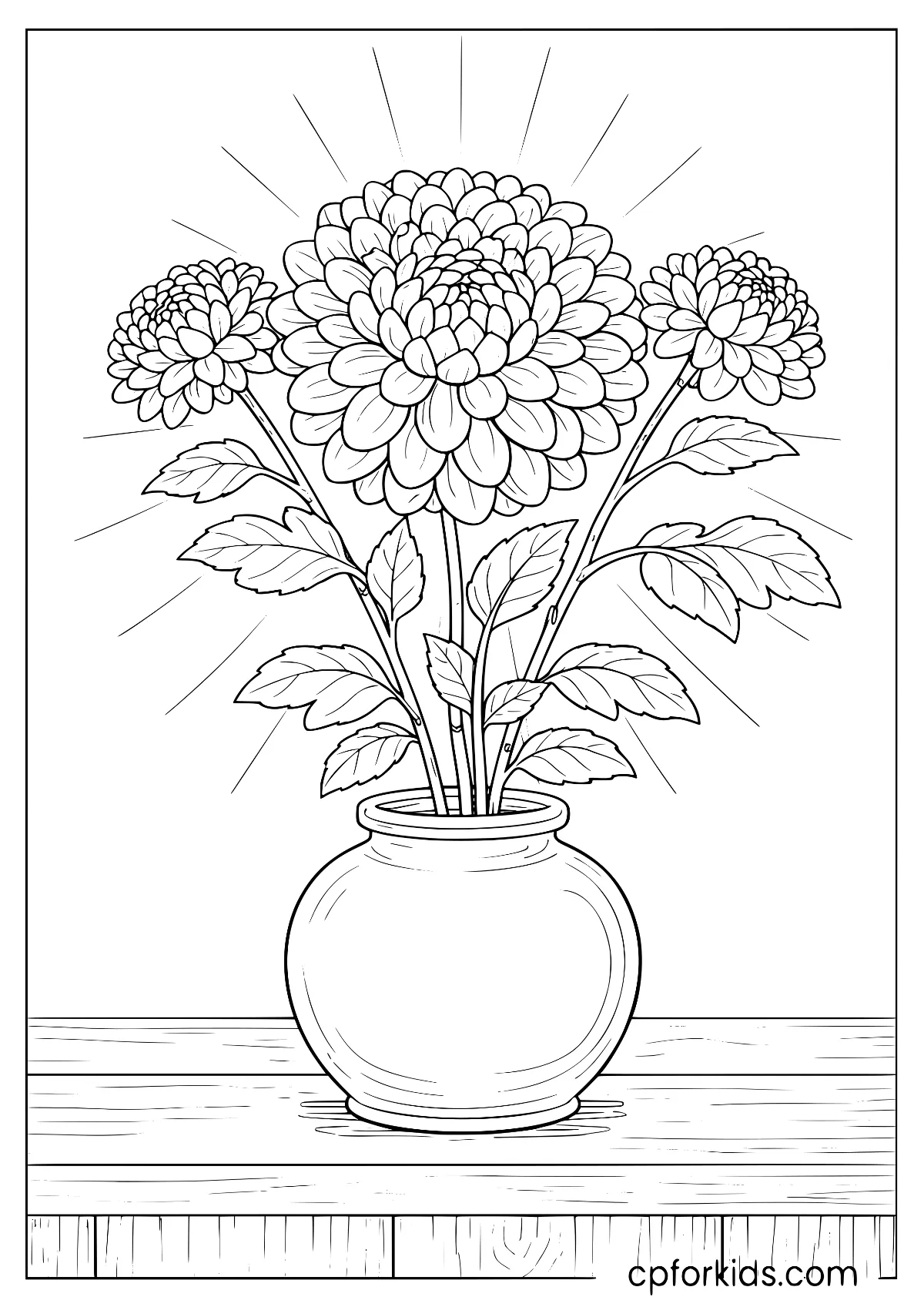
Start with a mix of large flowers, cute blooms, bouquets, a mandala, and a hummingbird scene. Every picture links to its printable PDF.
Advertisements
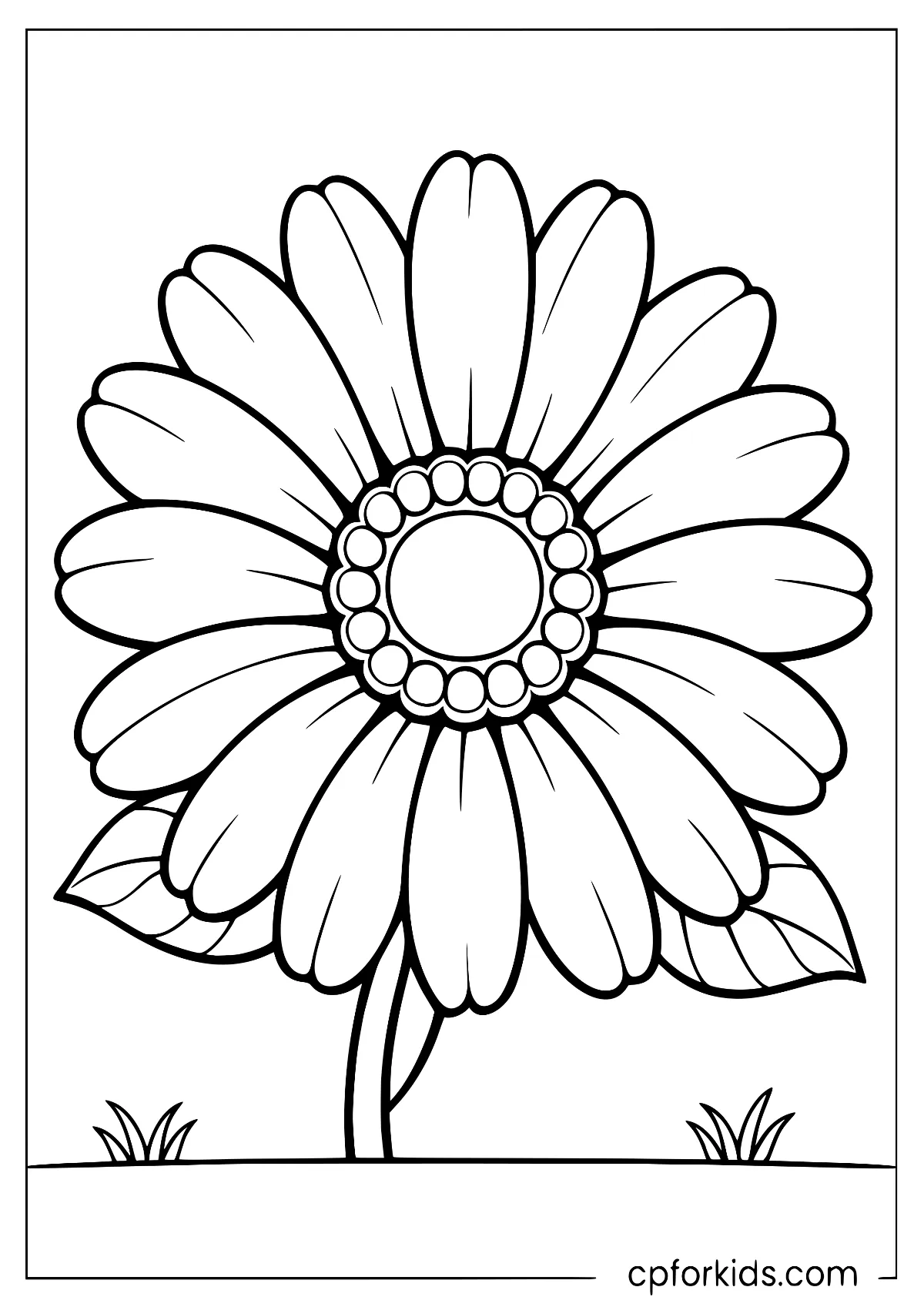
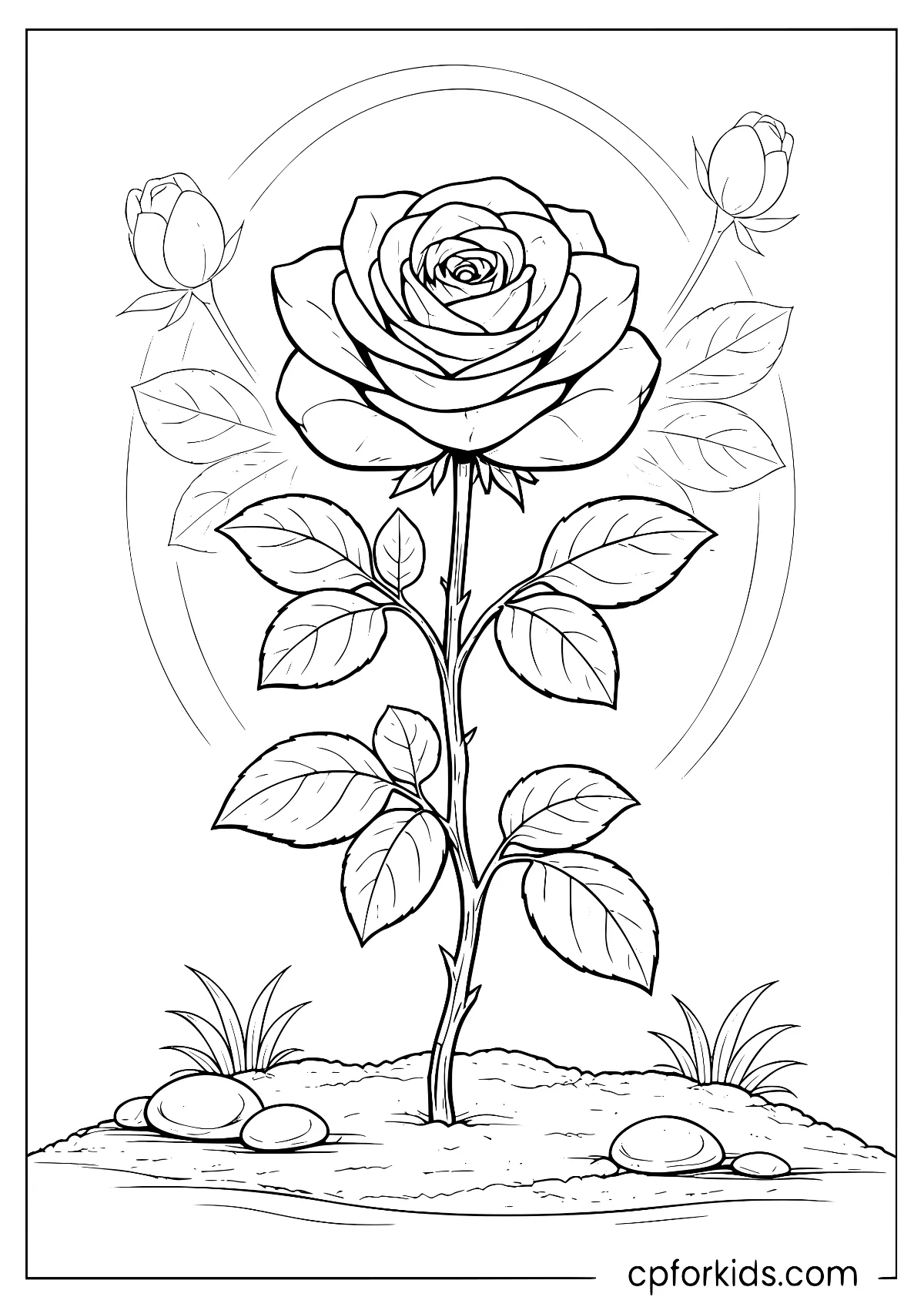
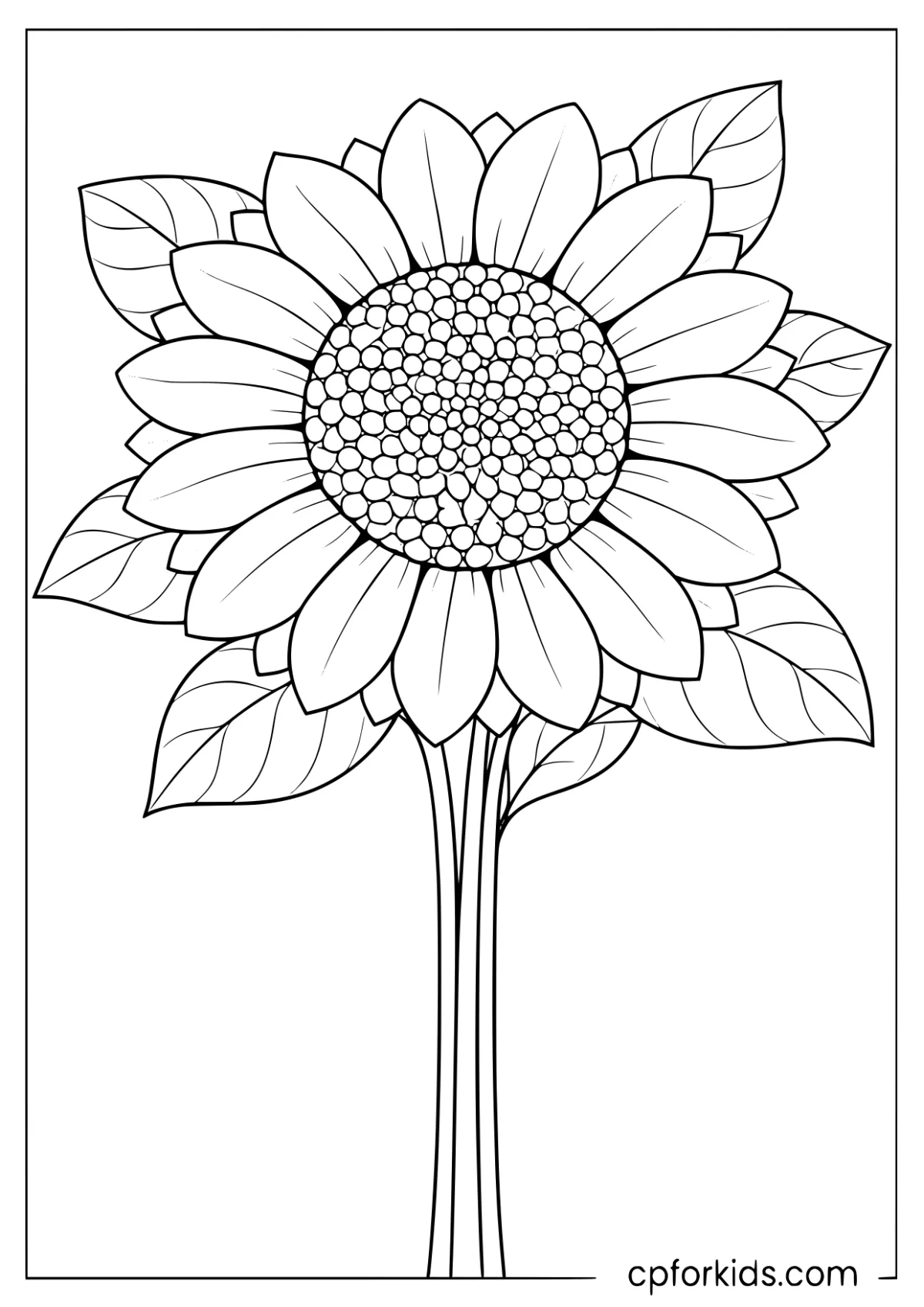
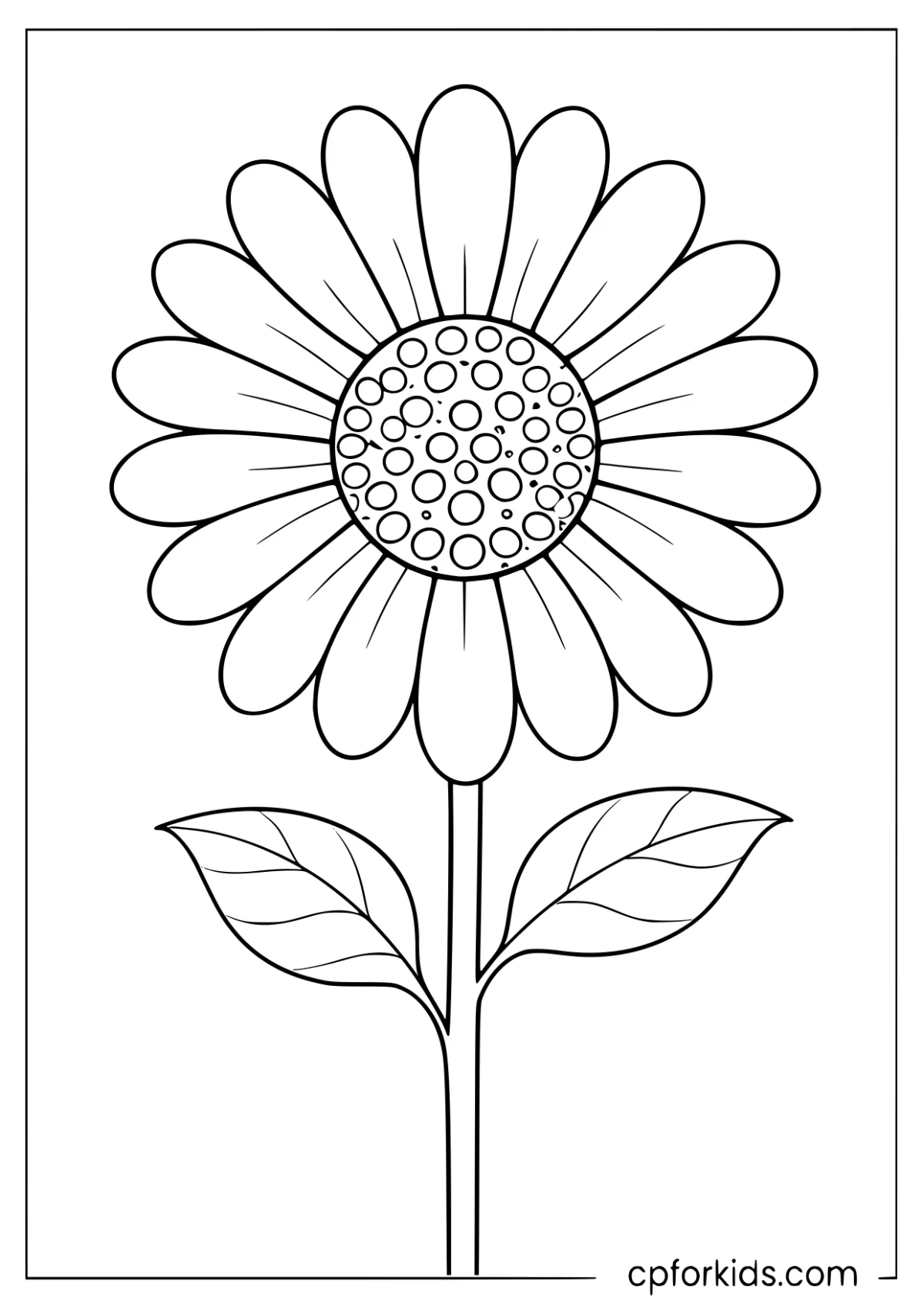
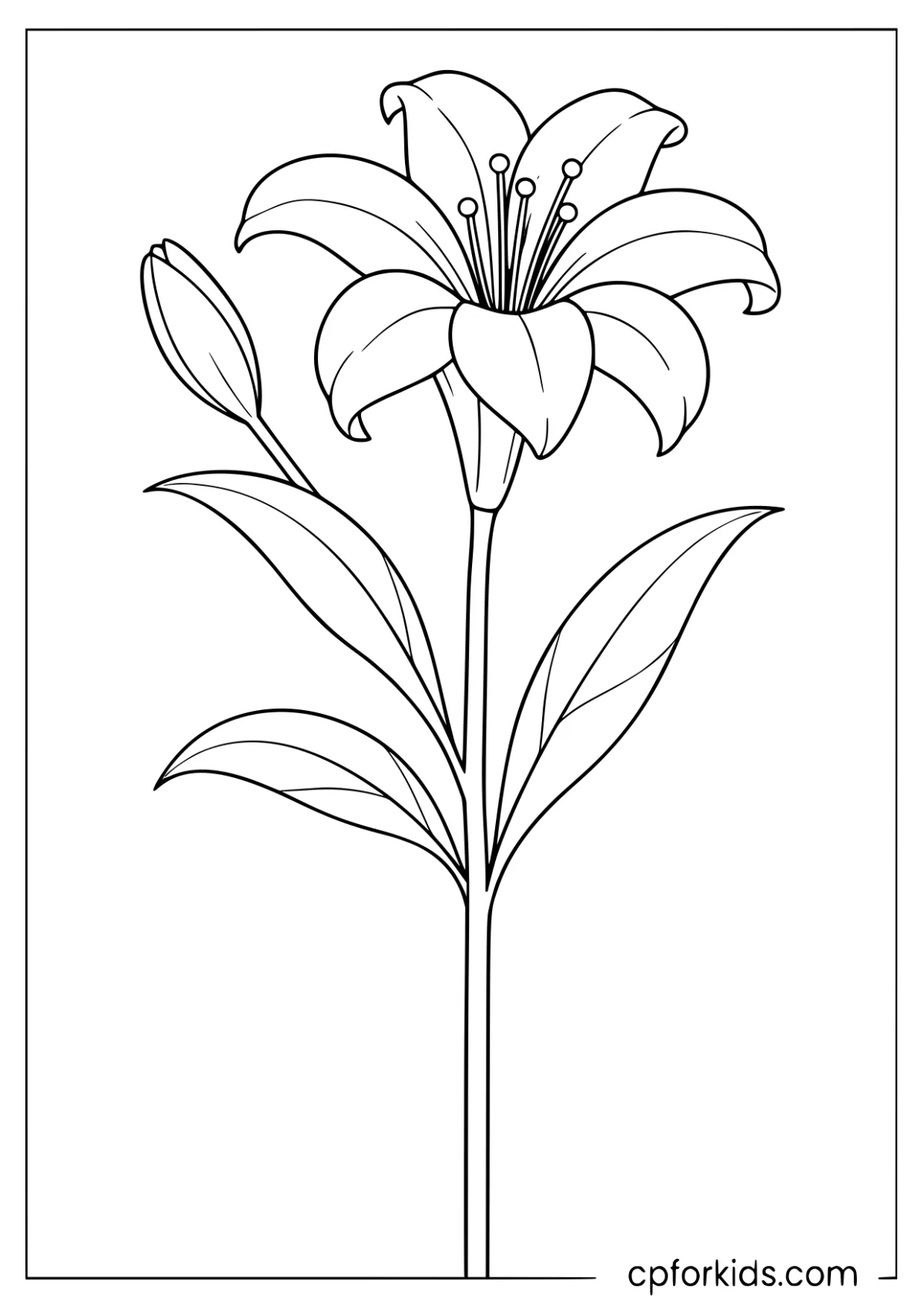
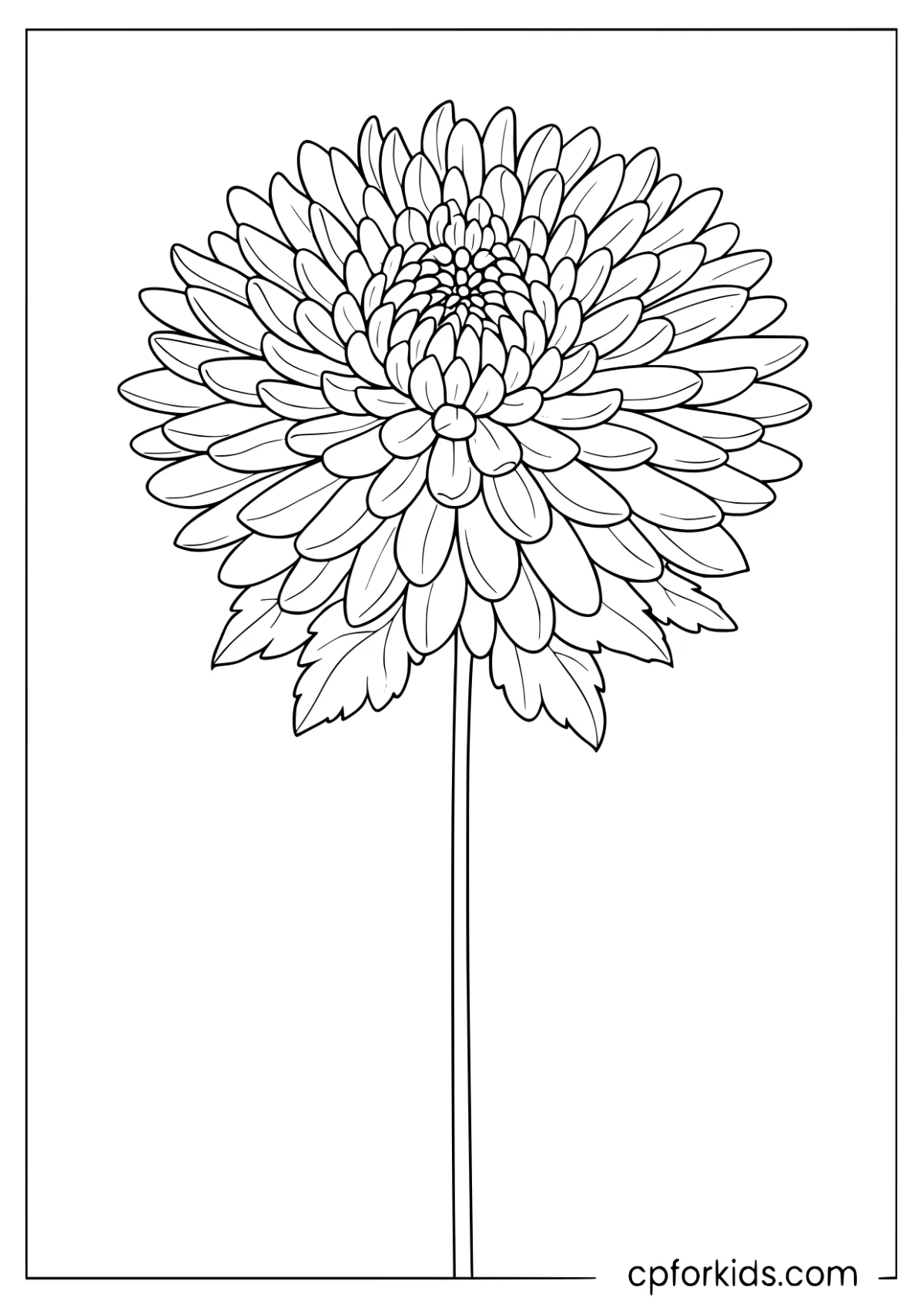
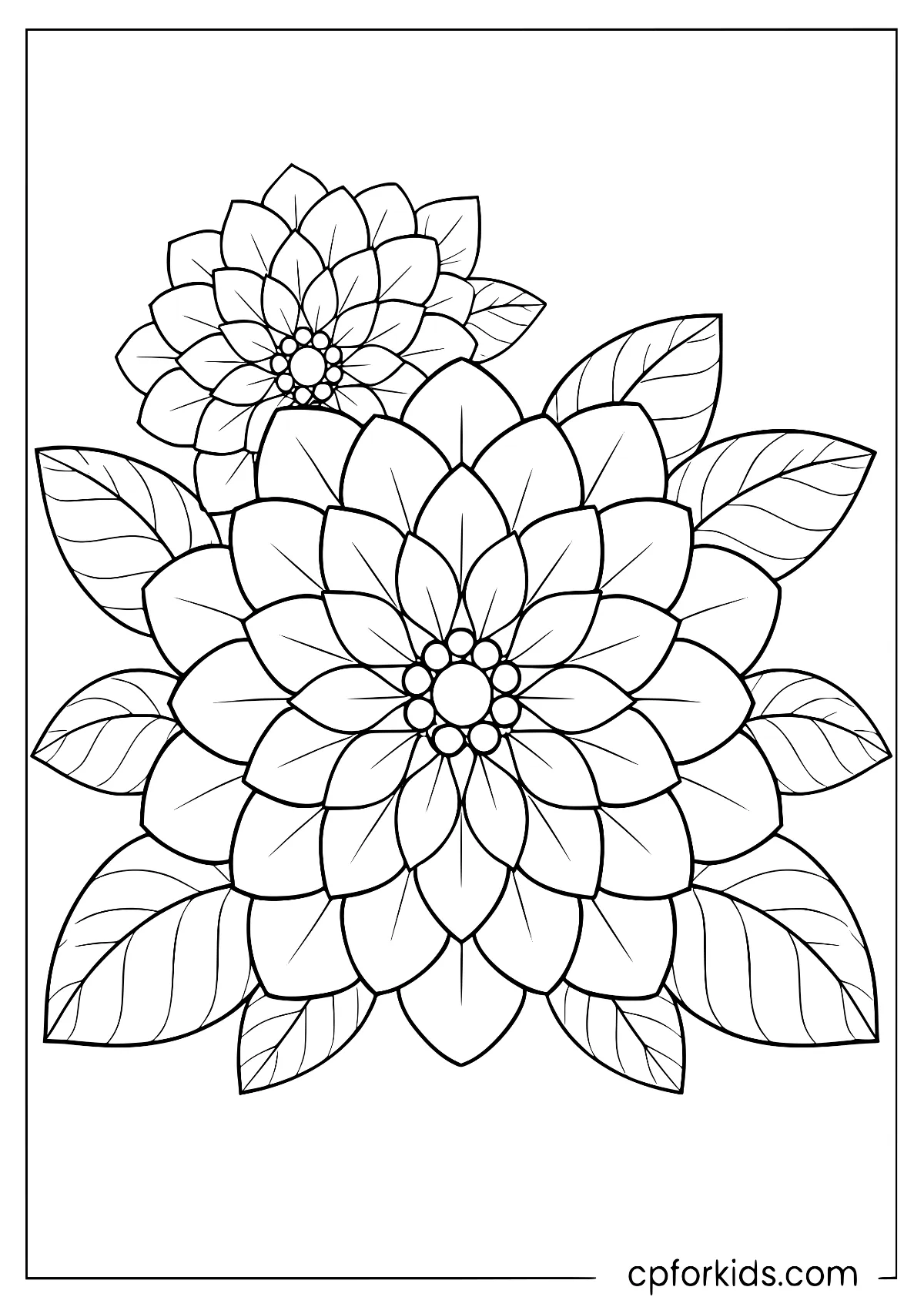
Large Flower Close-Up
One broad layered flower head fills the page above a short stem.
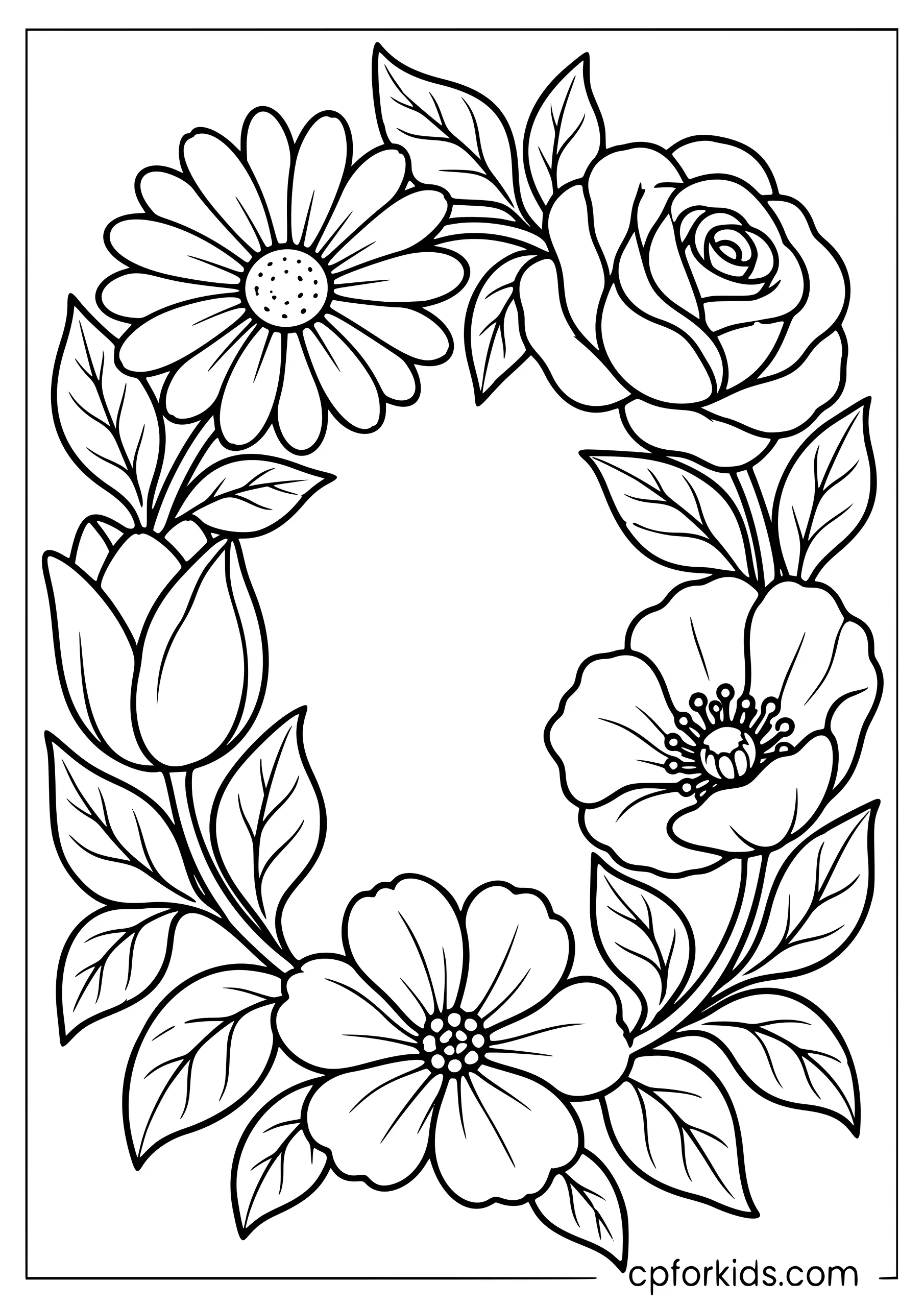
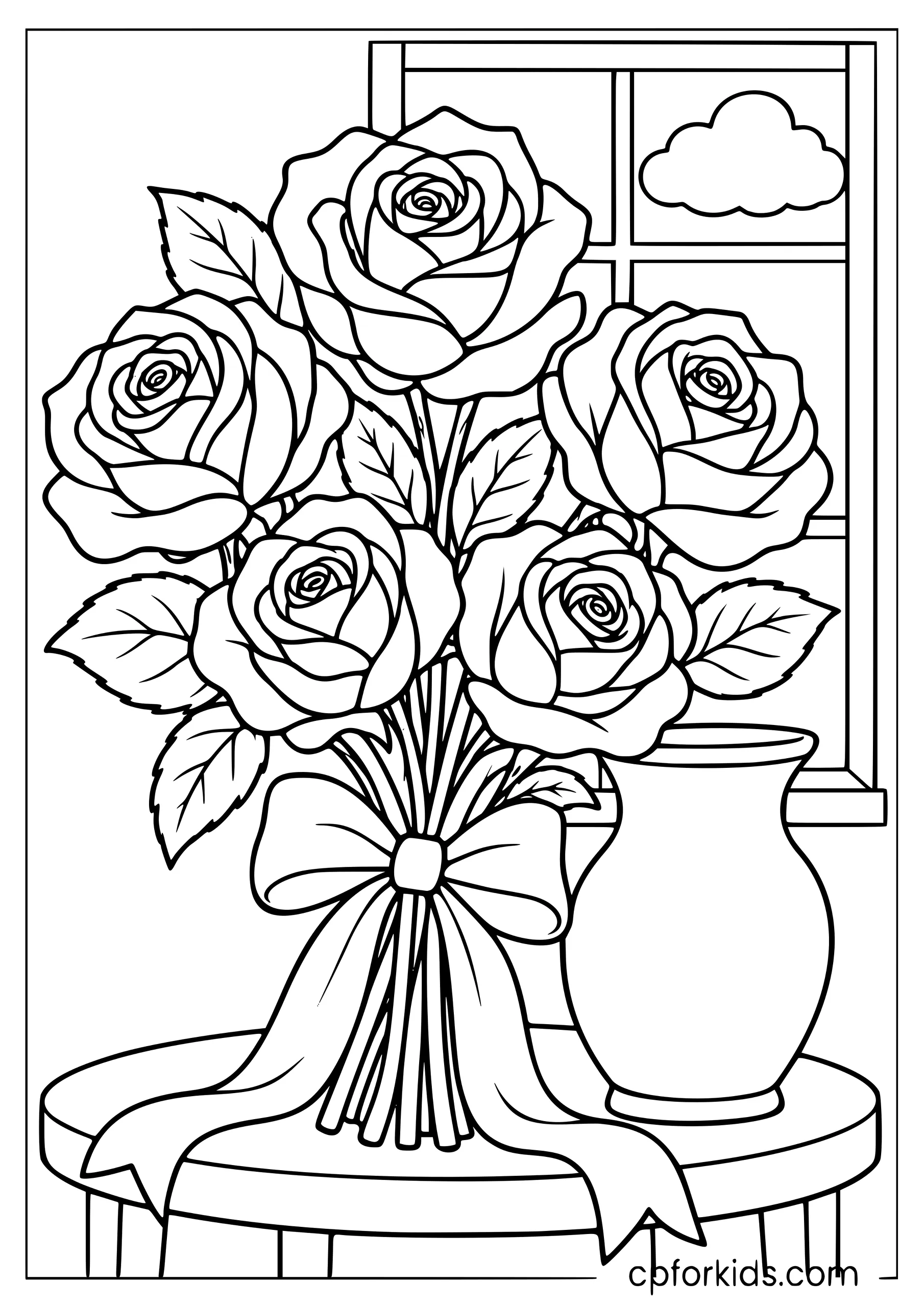
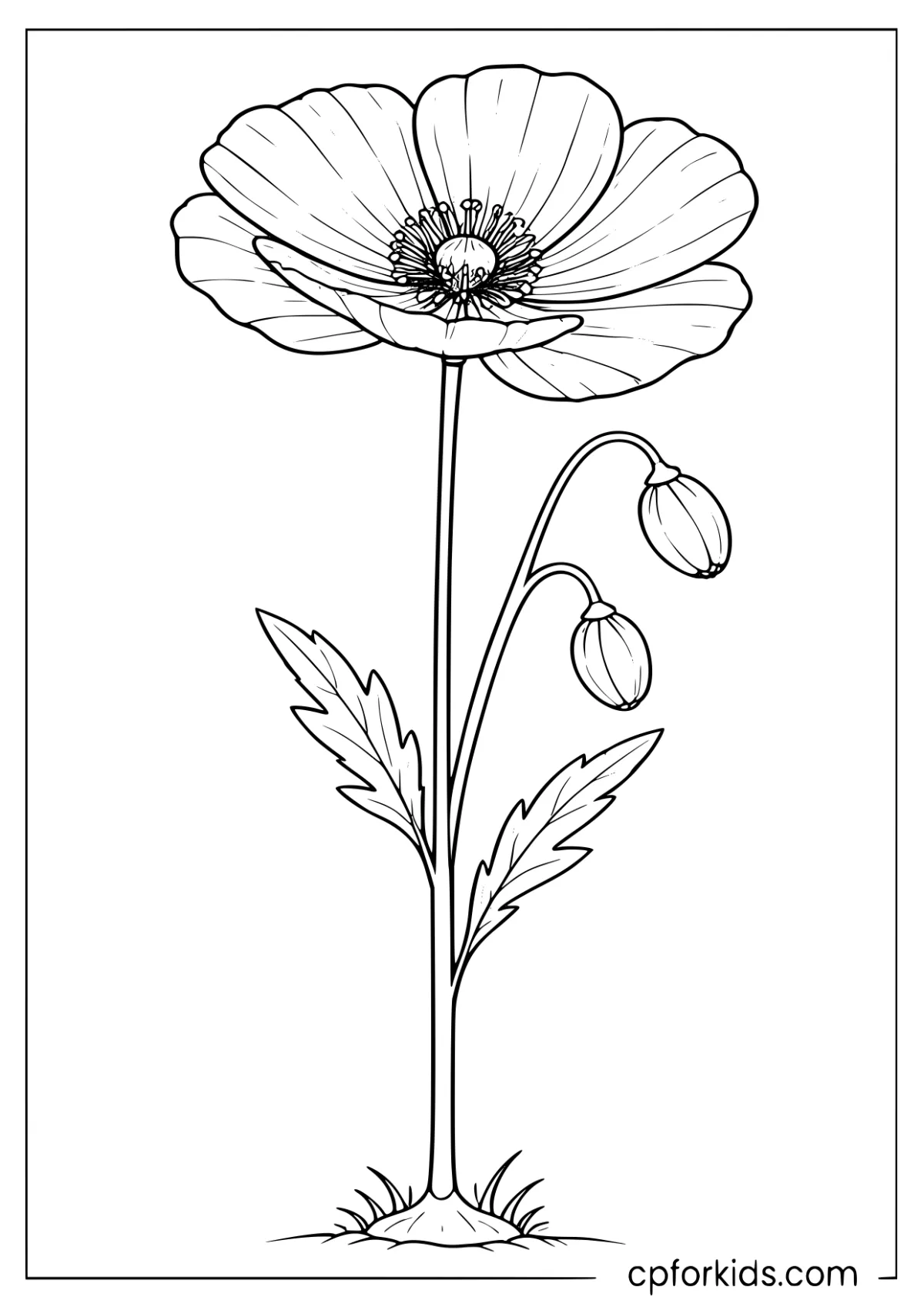
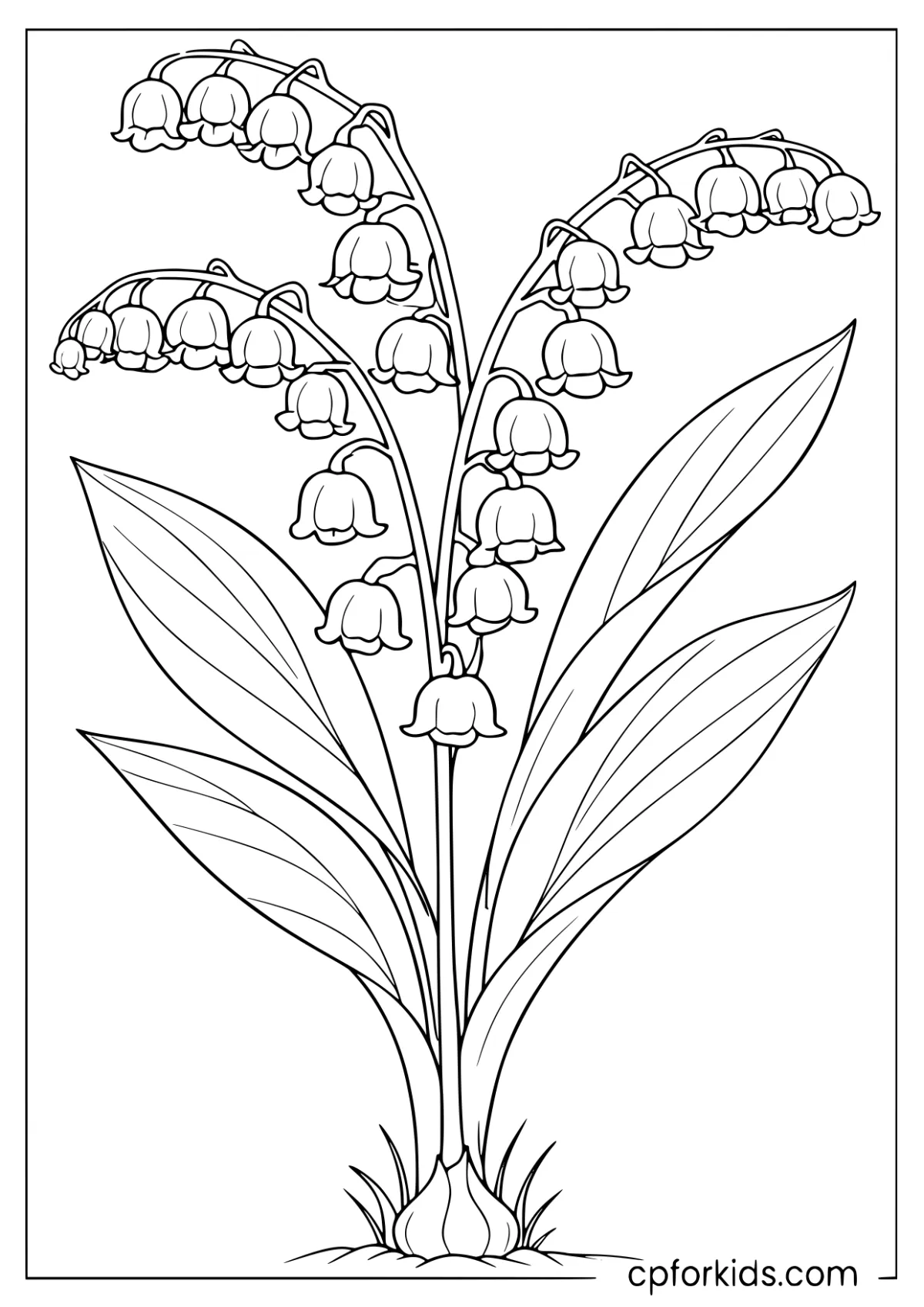
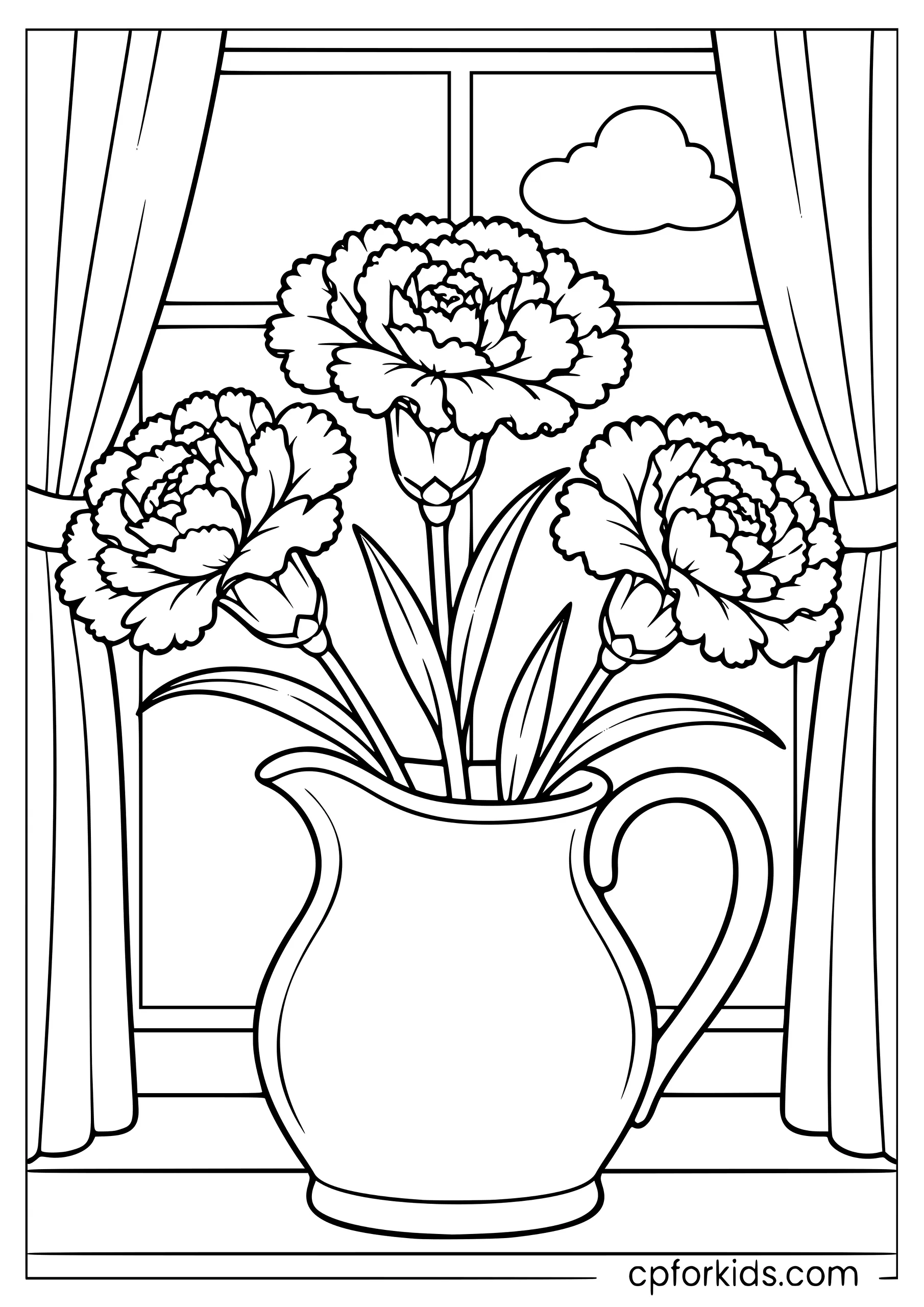
Layered petals, branching stems, and fuller arrangements offer more detail. These realistic-style flowers suit older kids and adults who enjoy smaller coloring spaces.
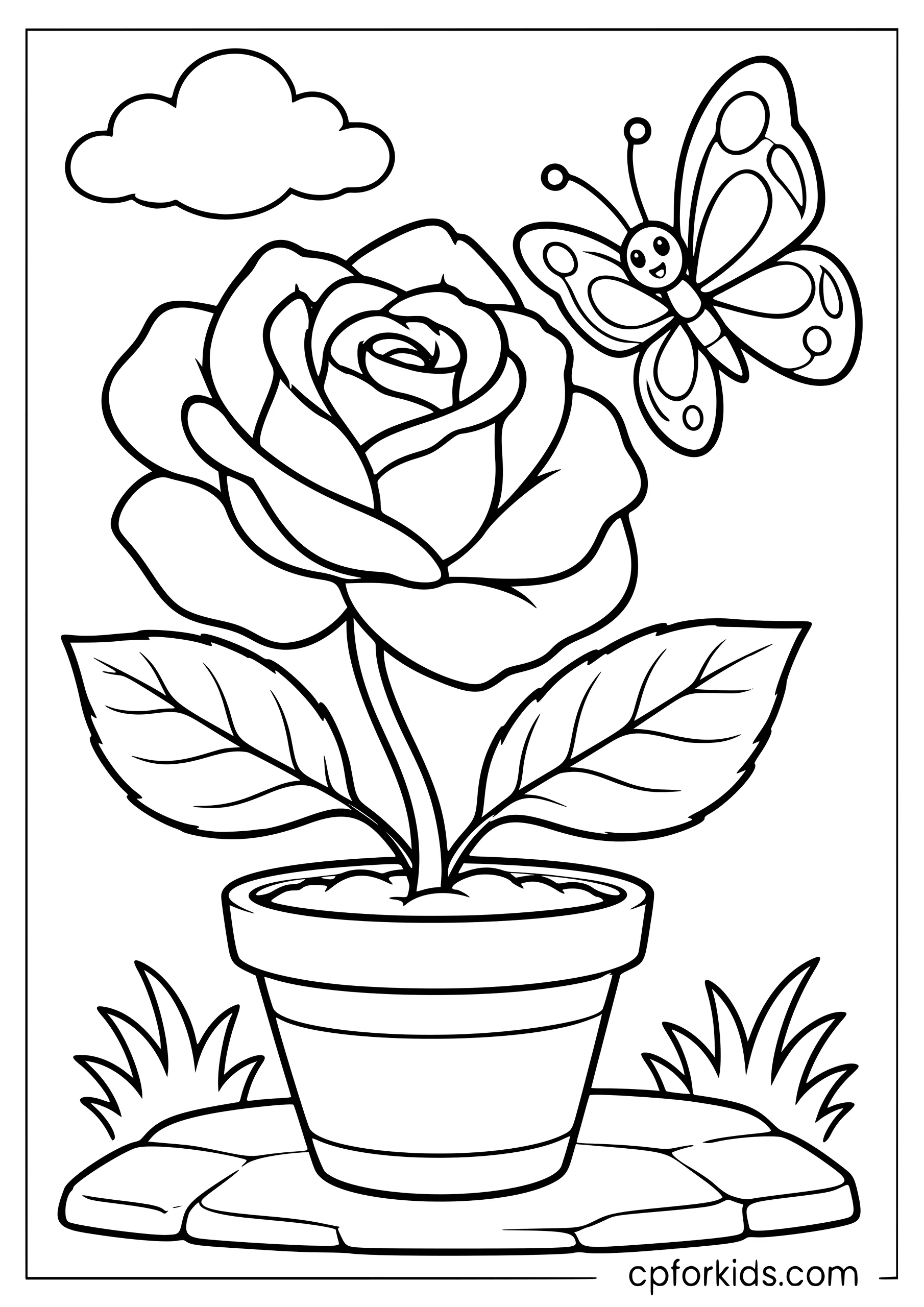
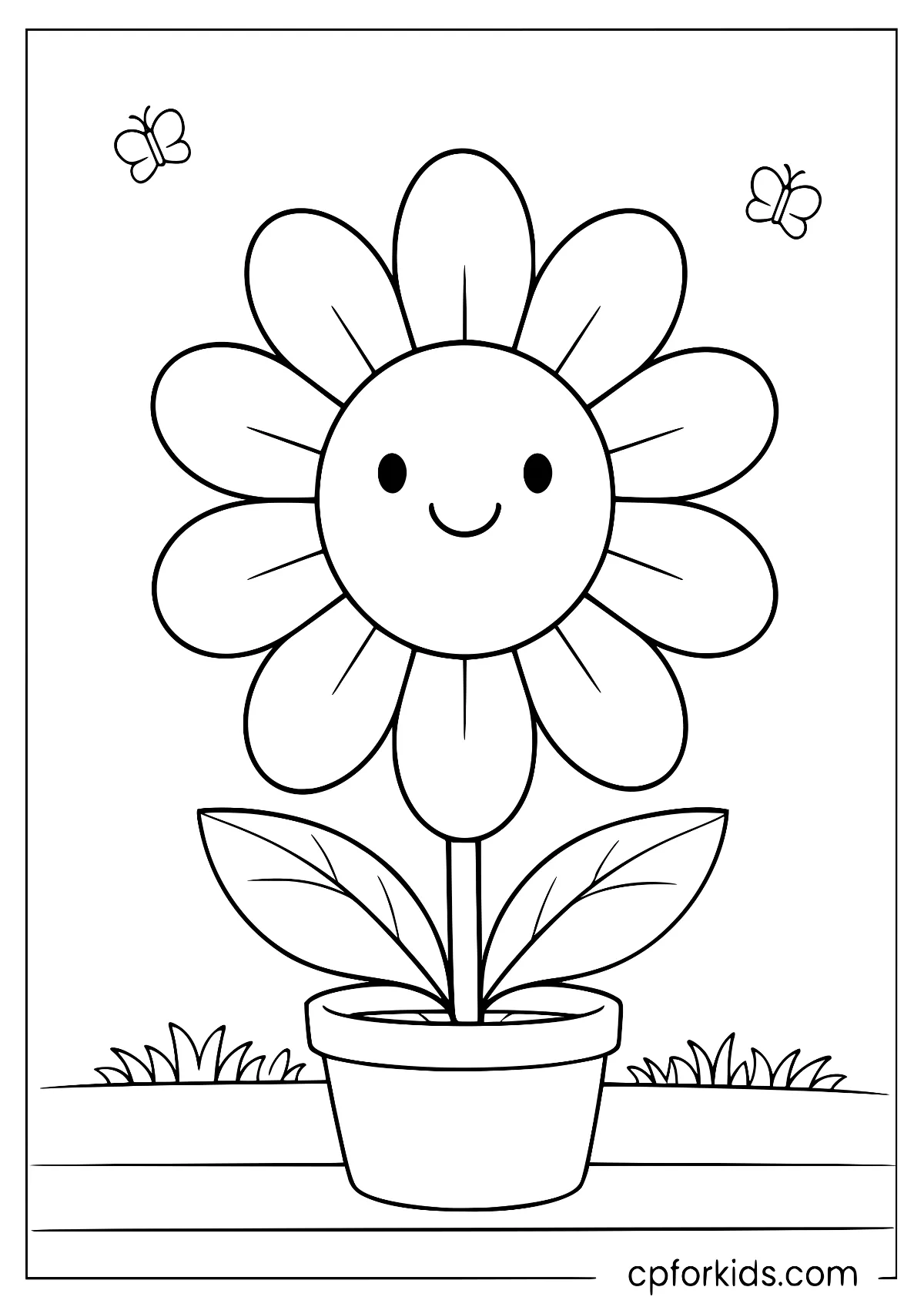
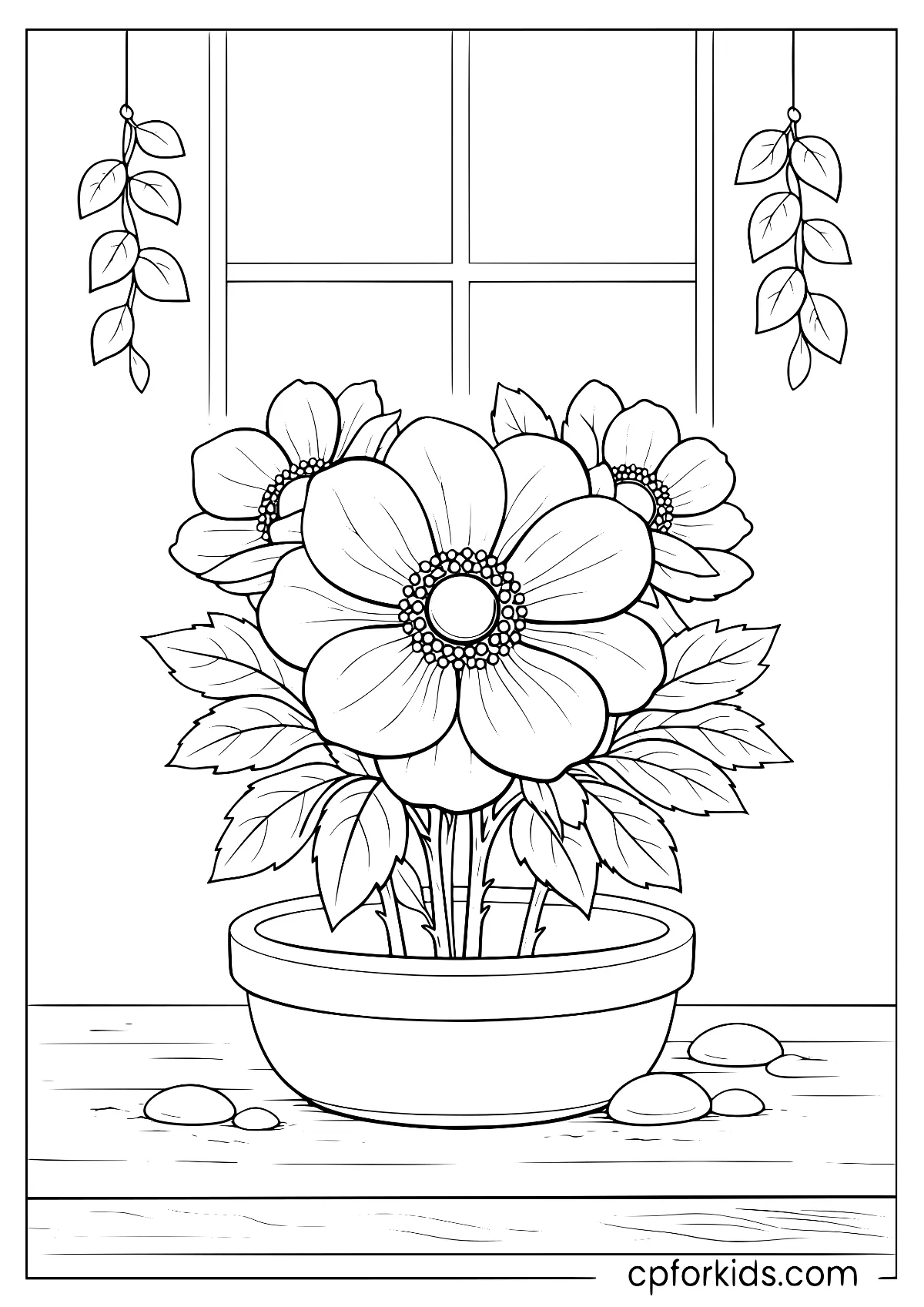
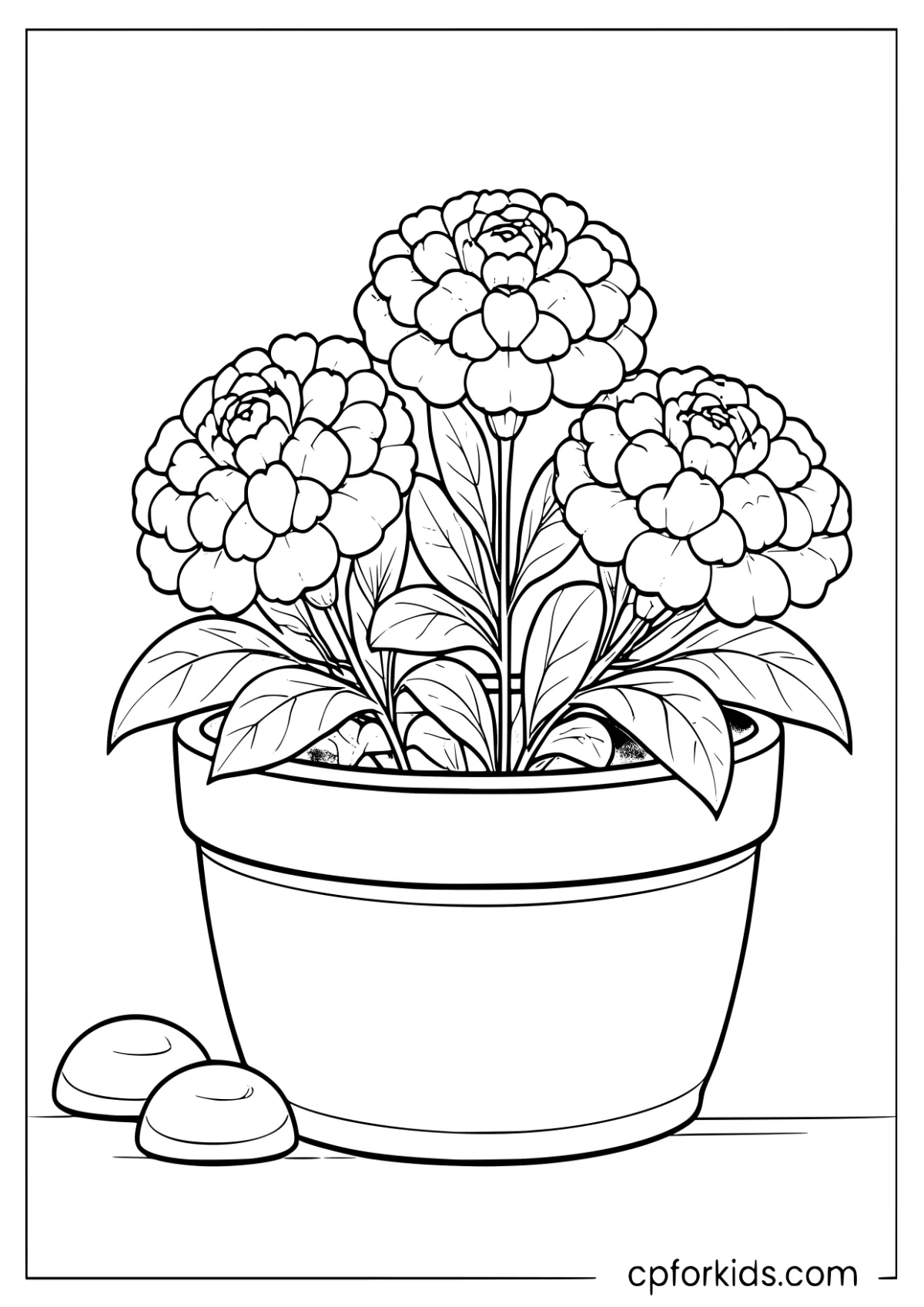
Potted Peony Blossom
A layered peony-like bloom grows from a wide pot beside small stones.
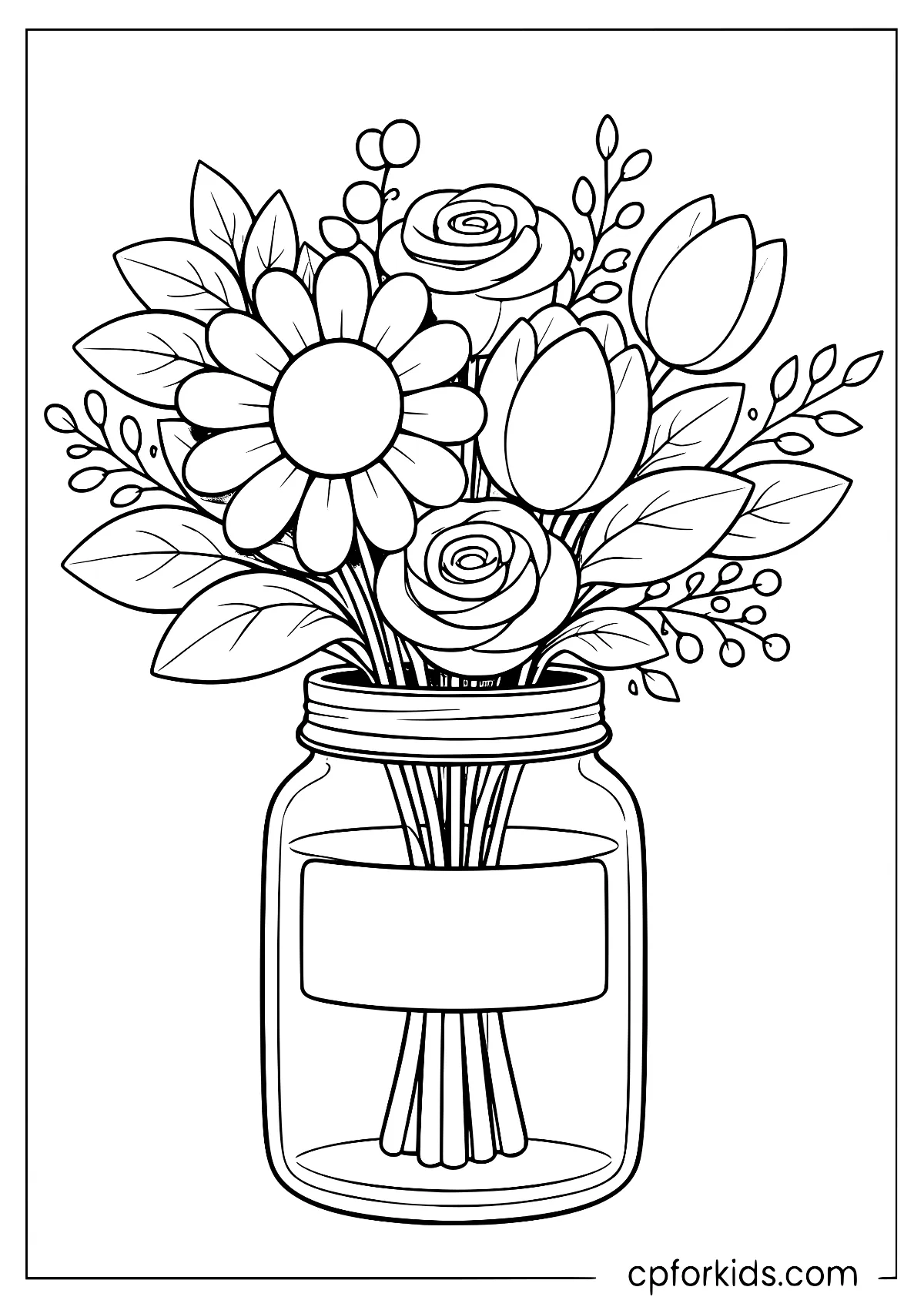
Choose scattered flower doodles, layered rosettes, stained-glass-style leaves, or a patterned bouquet. Larger and smaller sections offer different levels of detail.
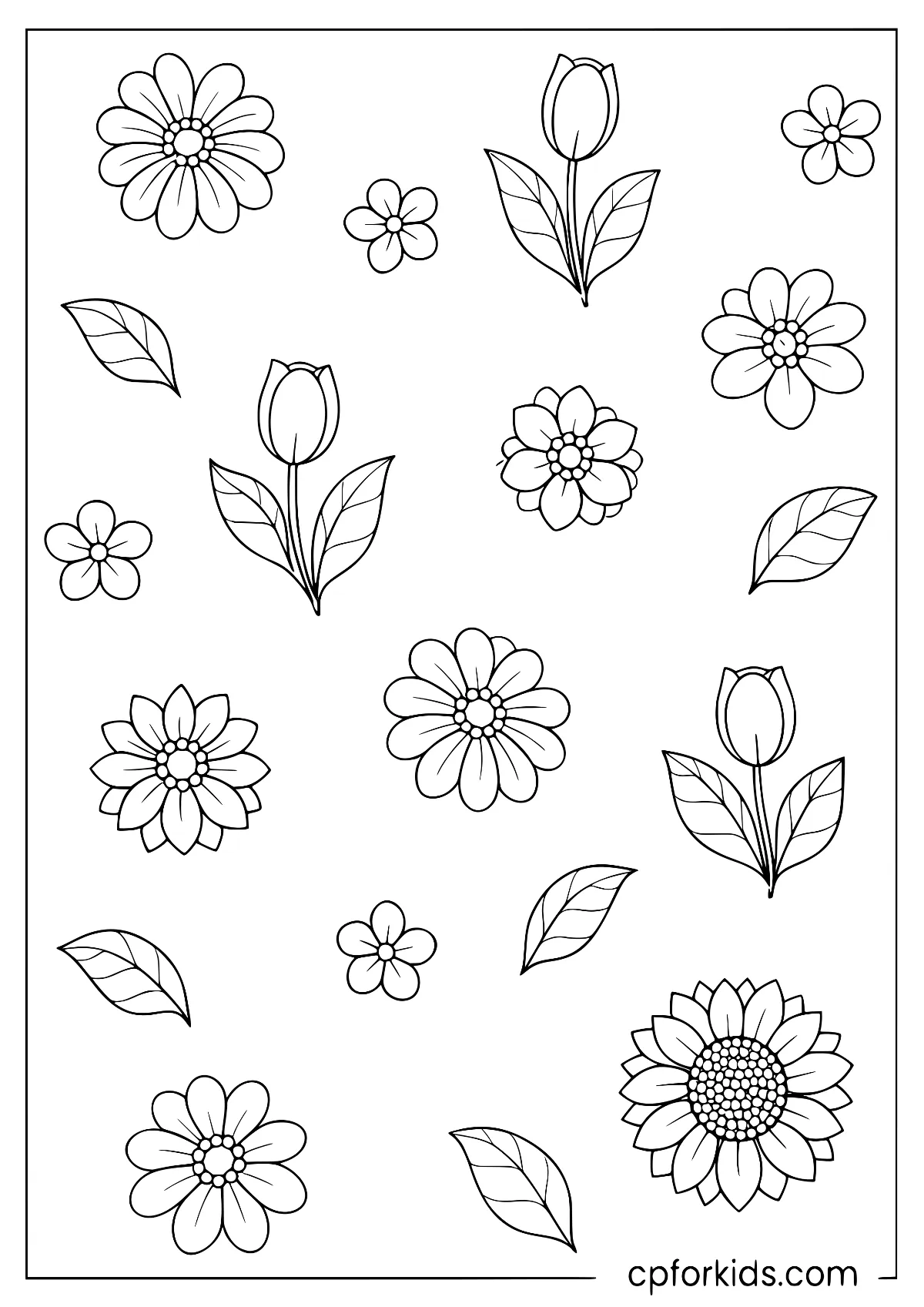
Scattered Flower Doodles
Separate flower heads, tulips and leaves form a loose page-wide pattern.
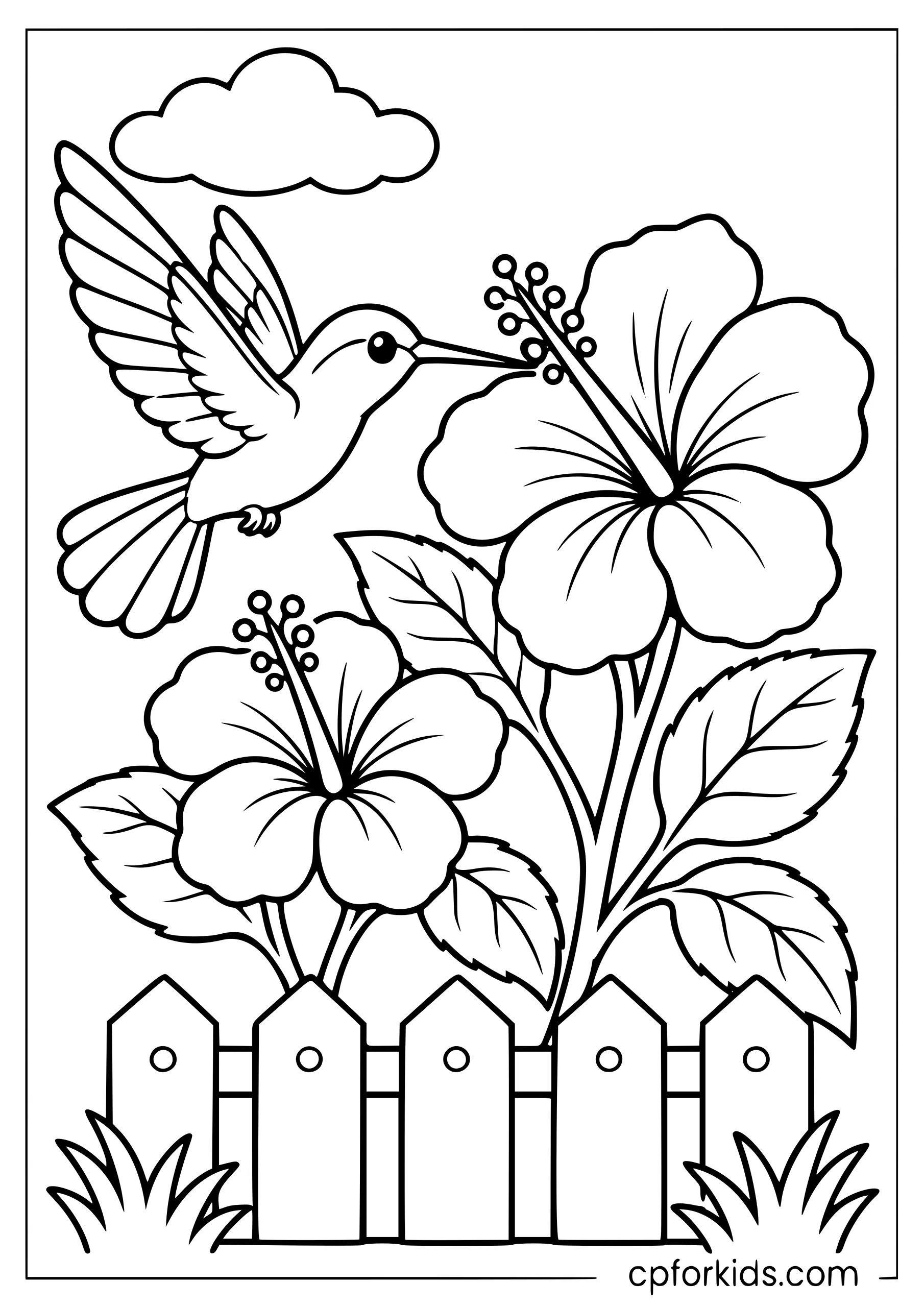
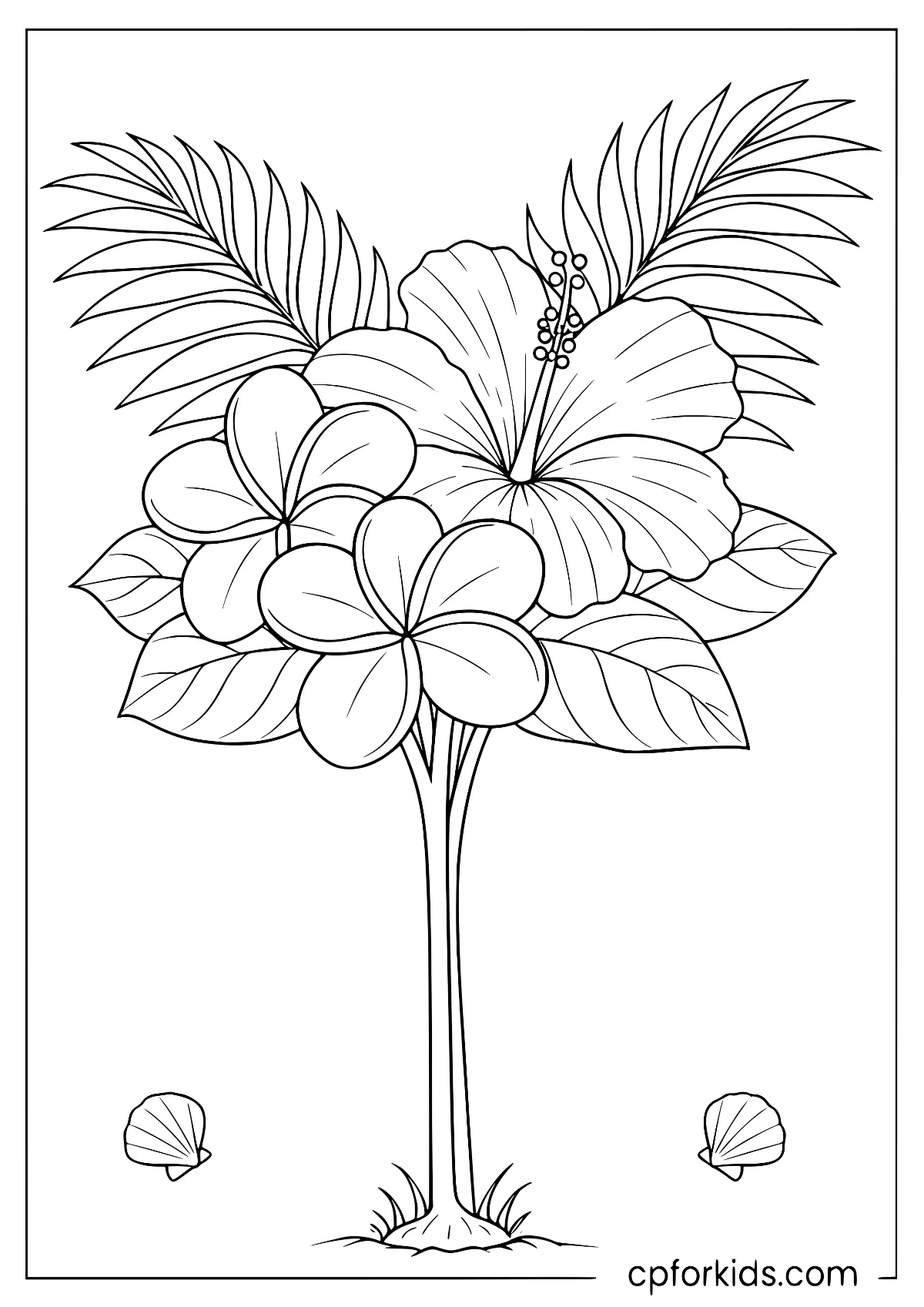
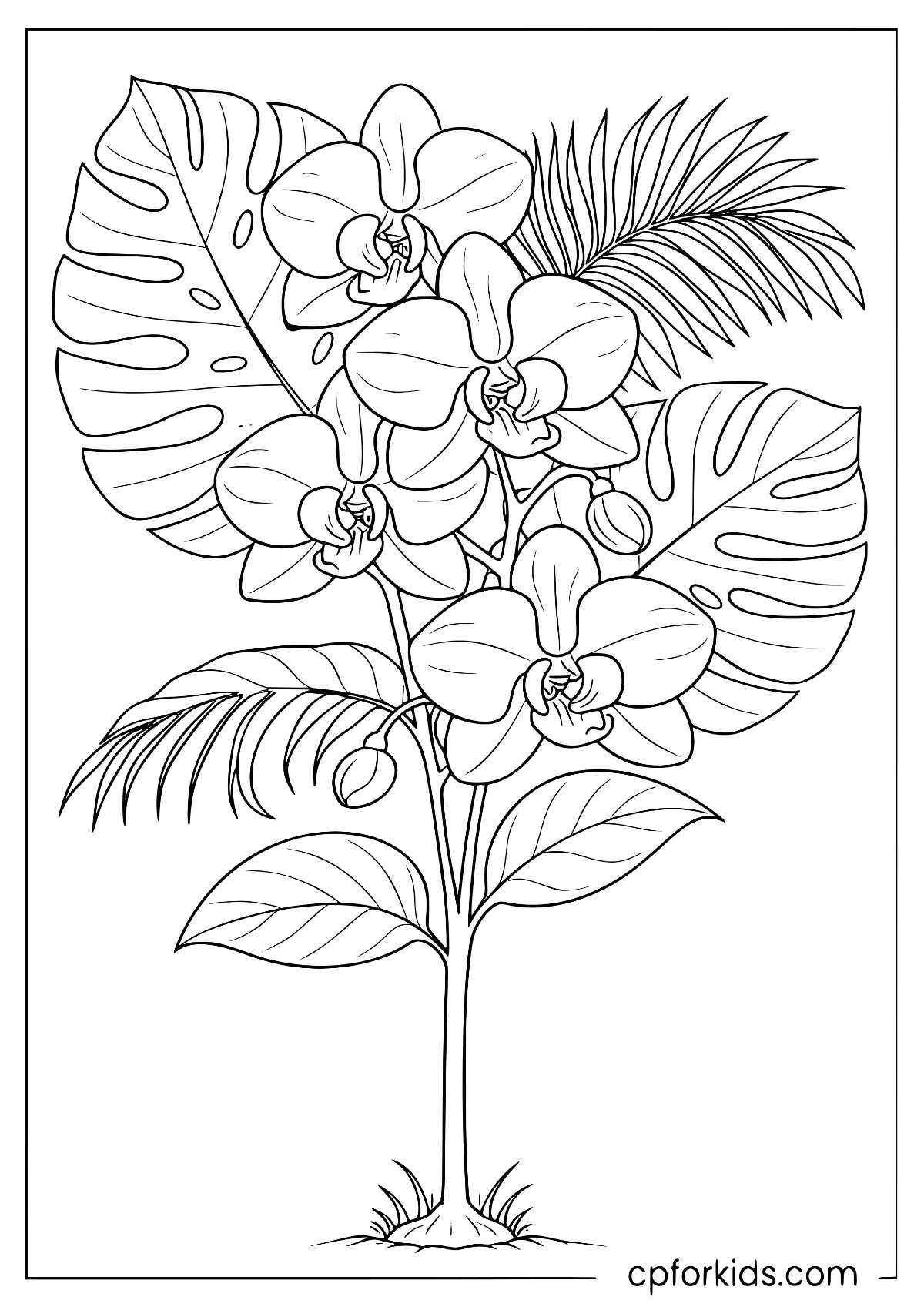
Hibiscus, plumeria, orchids, and bird of paradise bring broad blooms and tropical leaves. The Hawaiian-style arrangement combines several flower shapes.
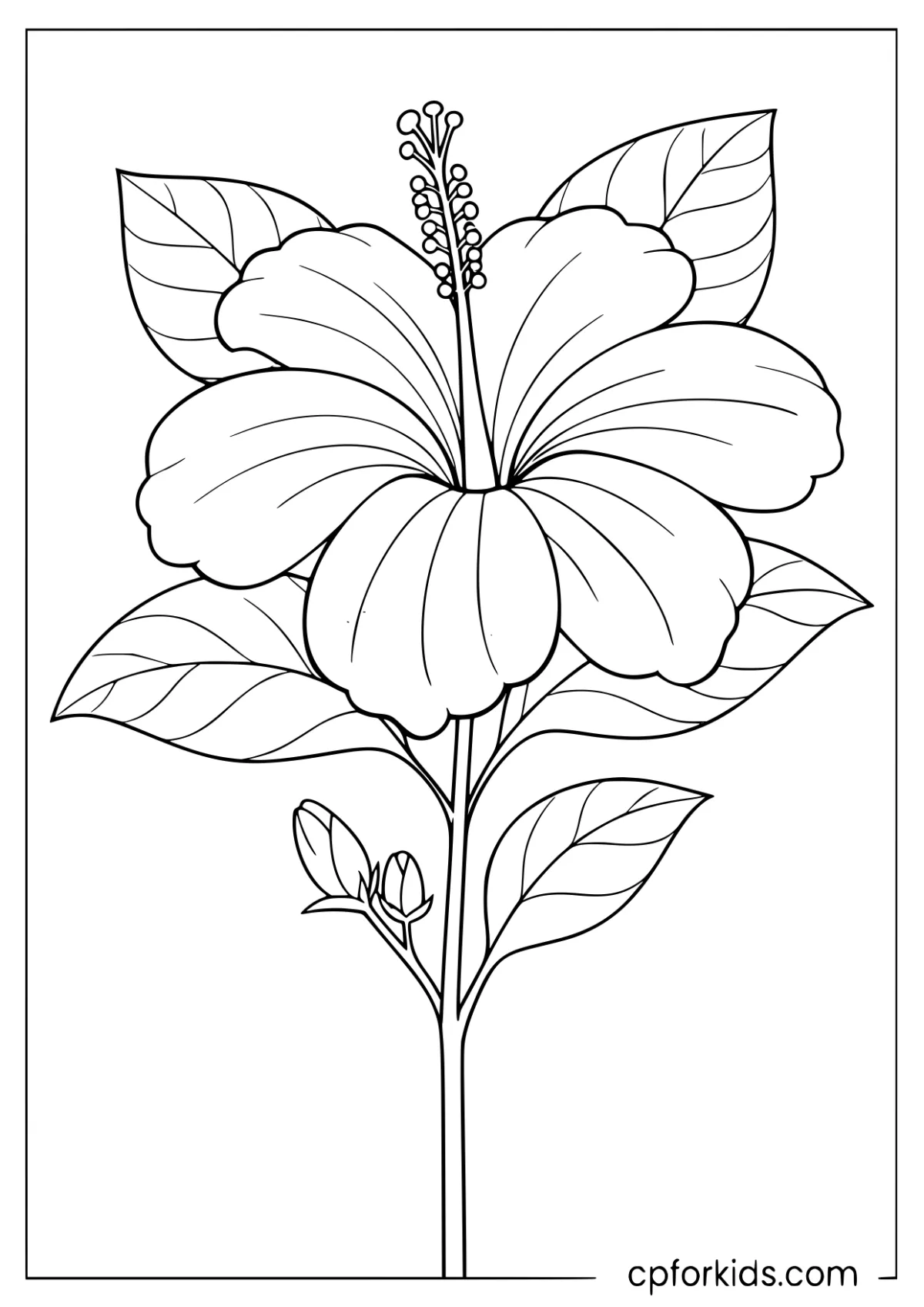
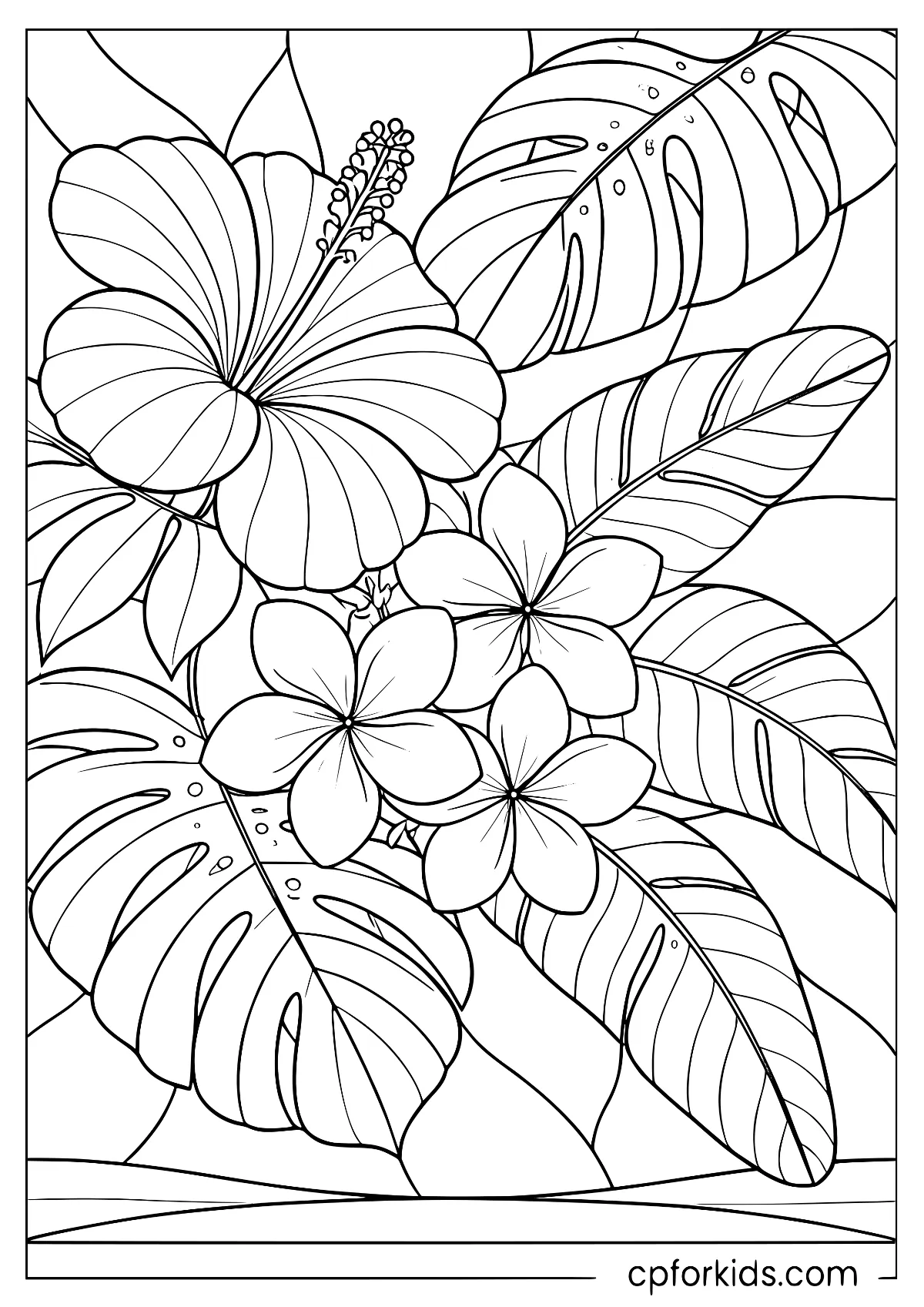
Hibiscus among Tropical Leaves
One broad hibiscus-like flower sits among split leaves and palm fronds.
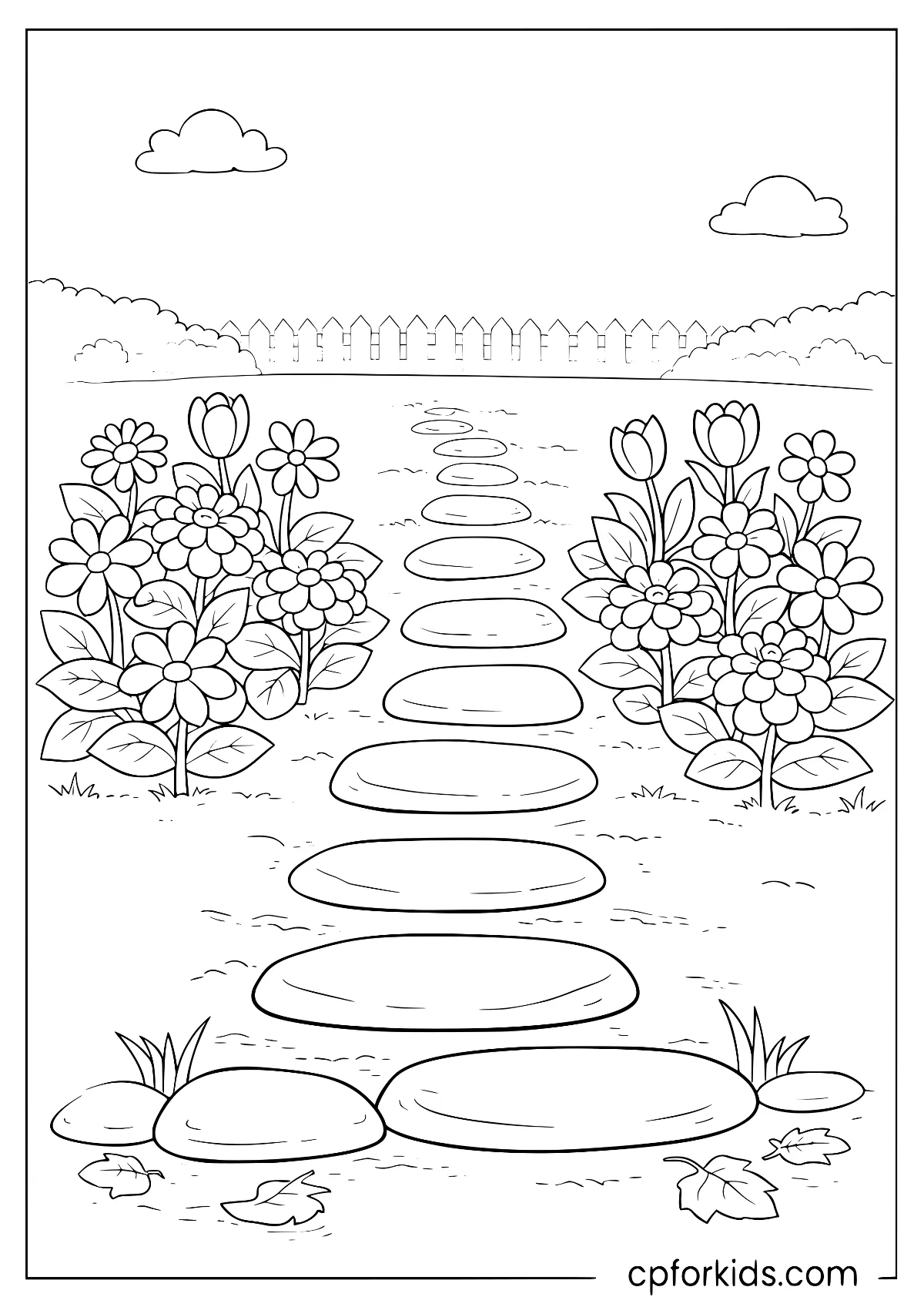
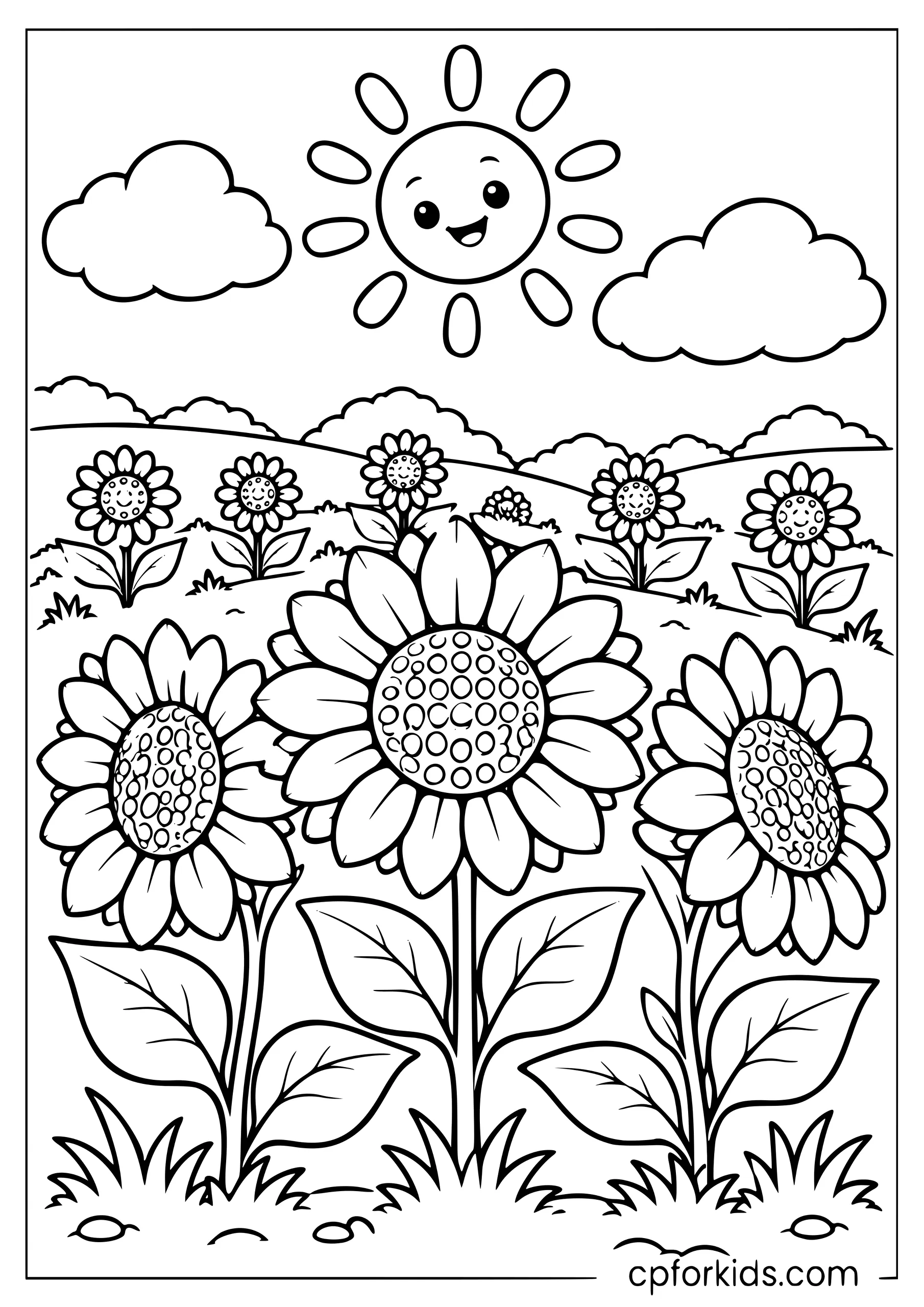
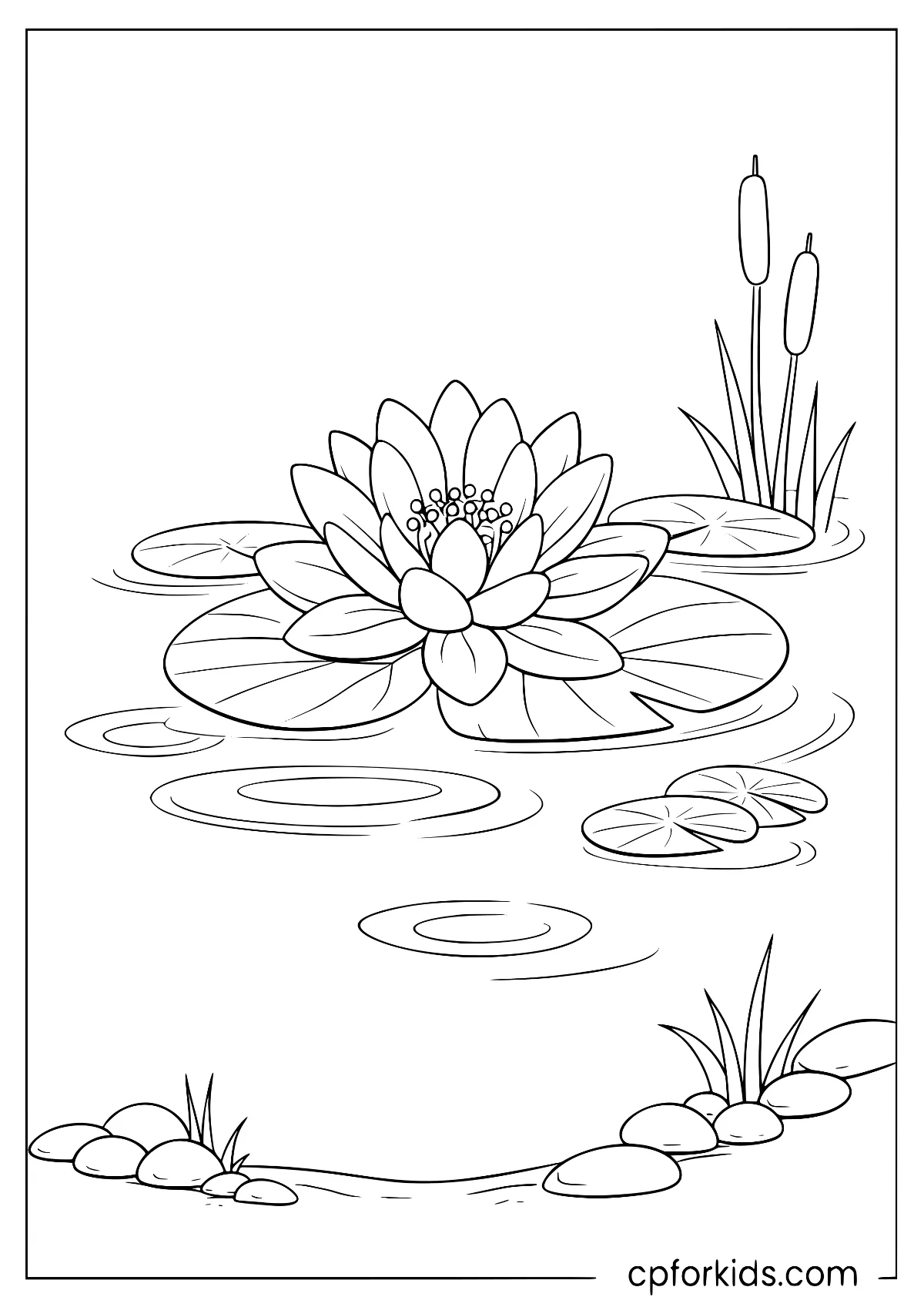
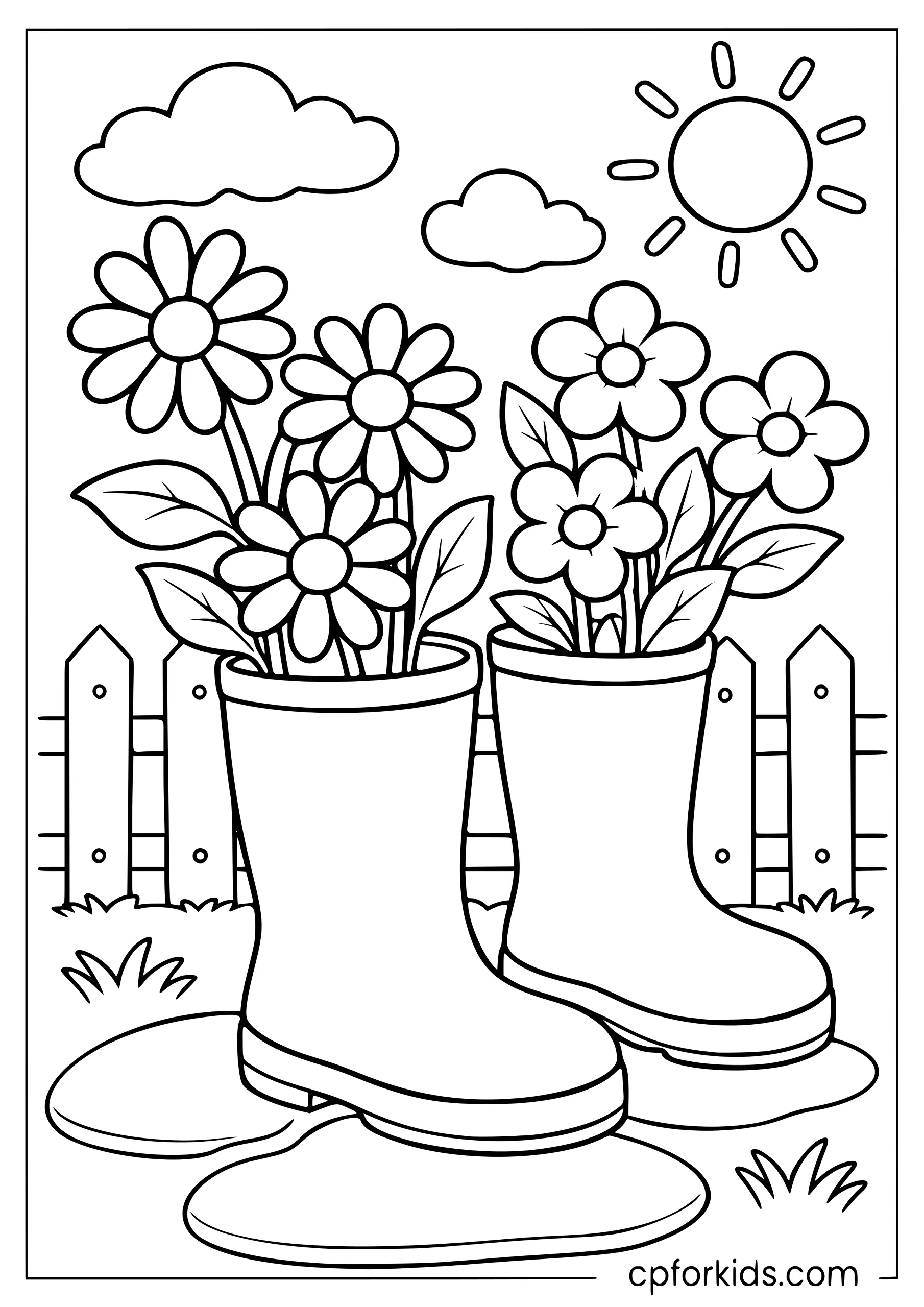
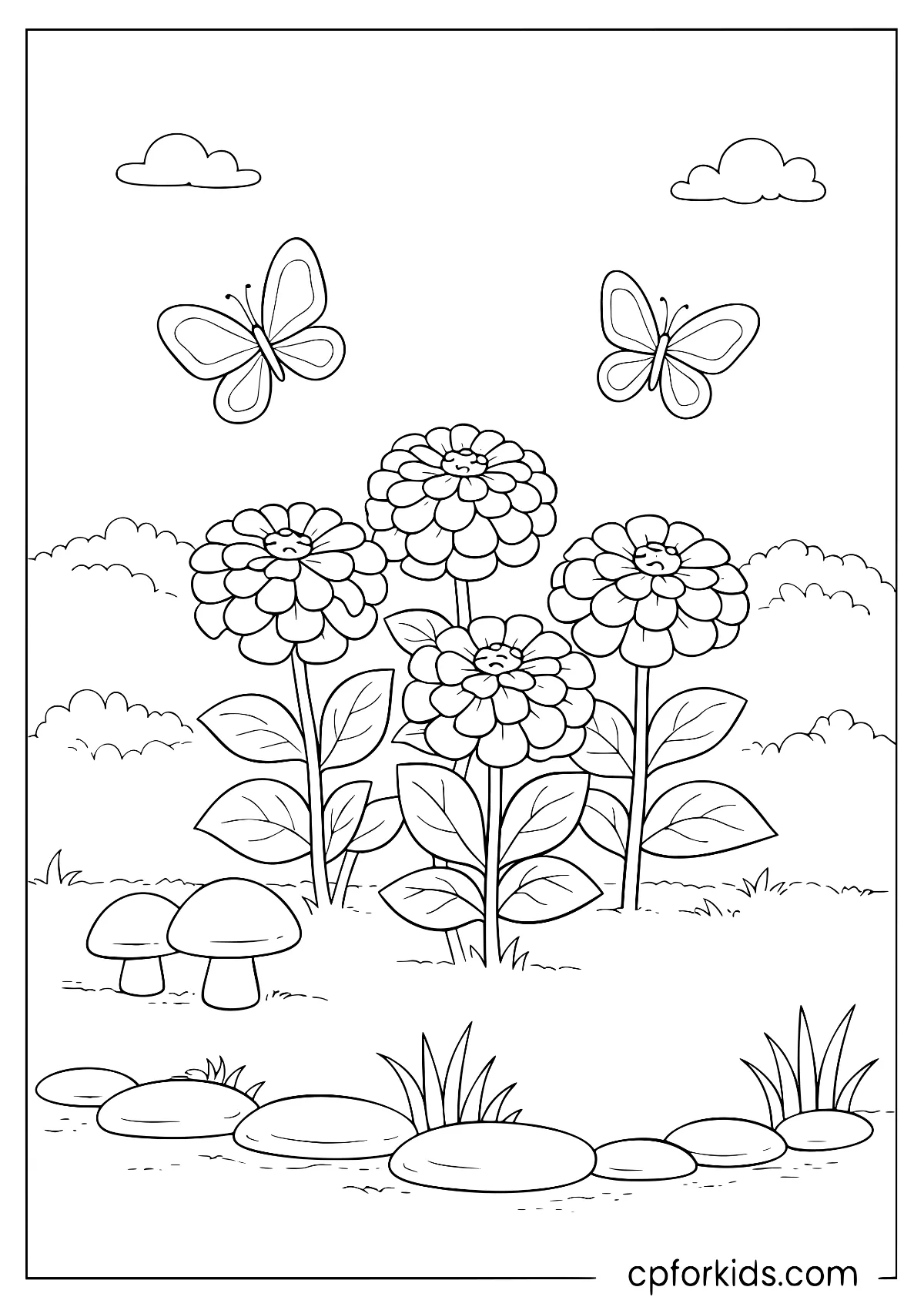
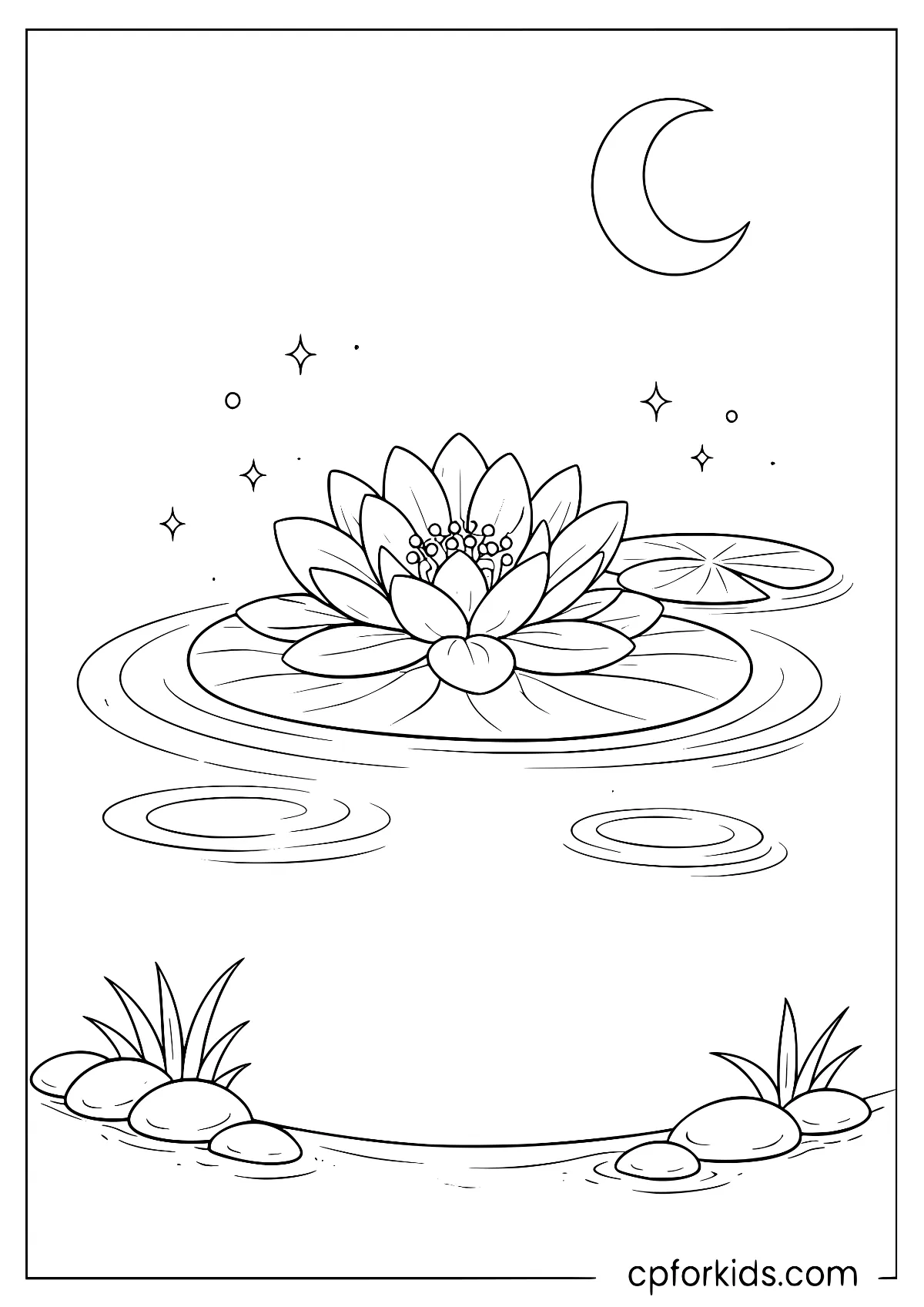
Explore water lilies, a raised lotus, garden paths, sunflower rows, and flower-filled rain boots. A frog and butterflies bring life to the garden scenes.
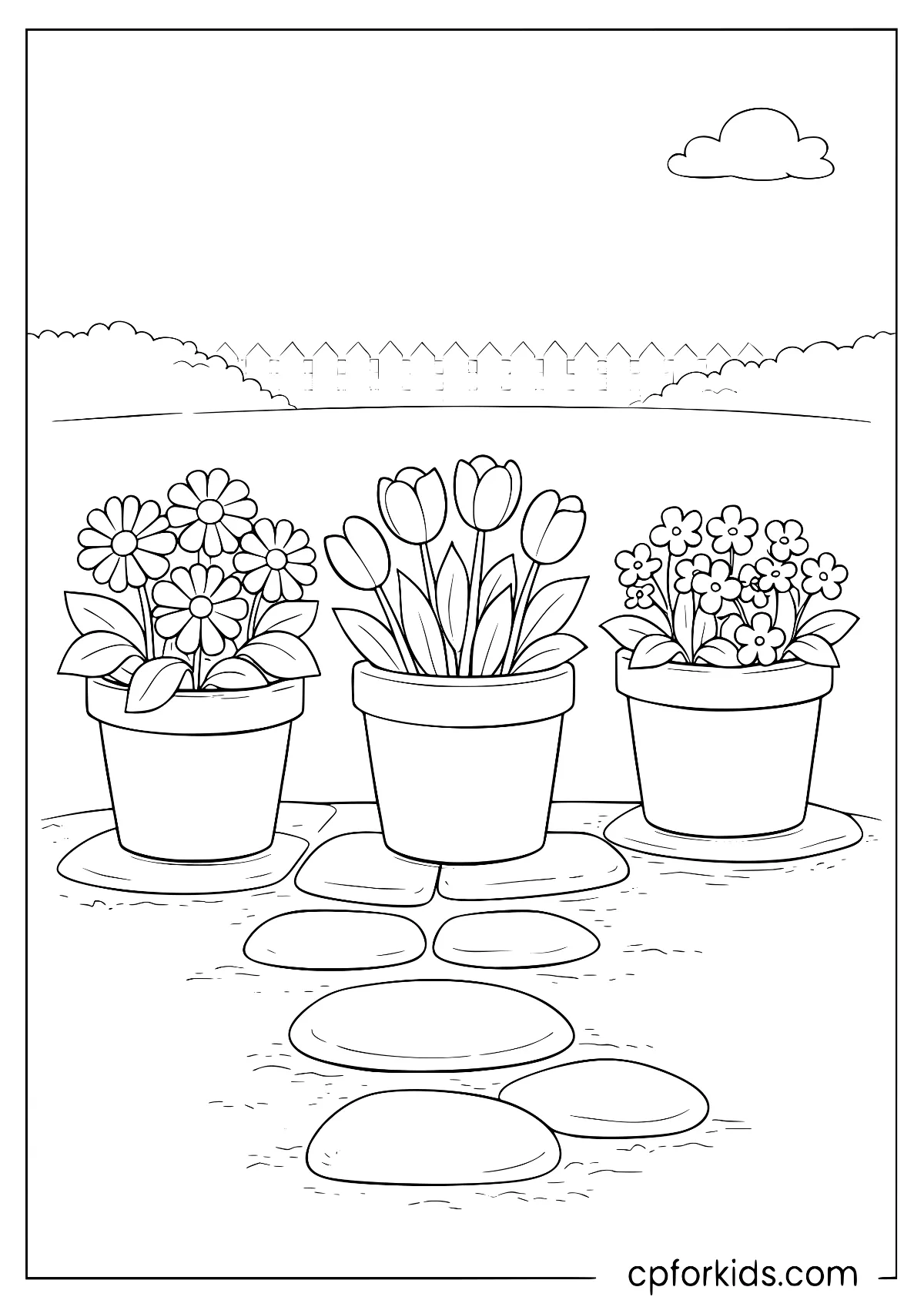
Garden Flower Path
A stepping-stone path runs between two planted flower beds and a distant fence.
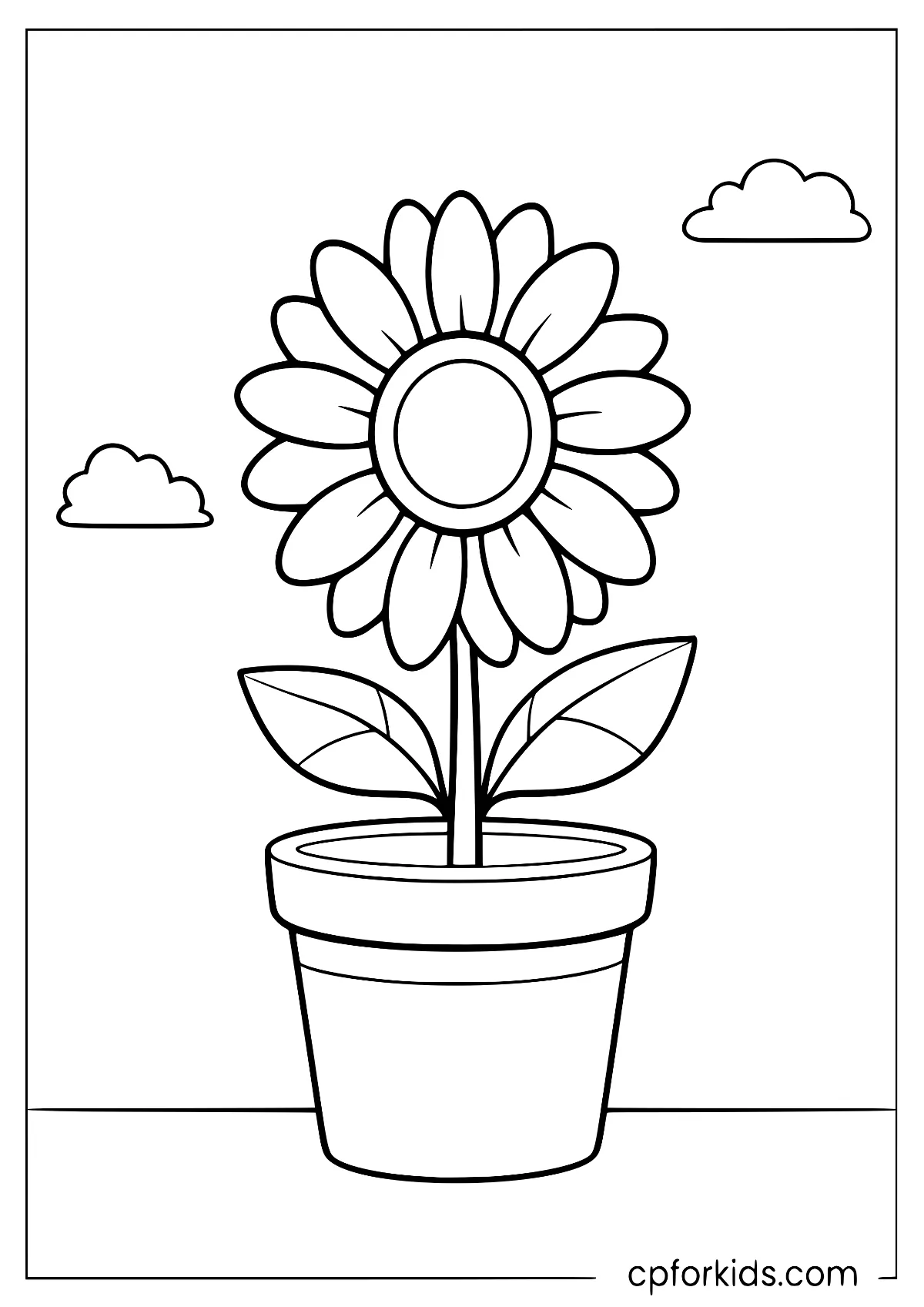
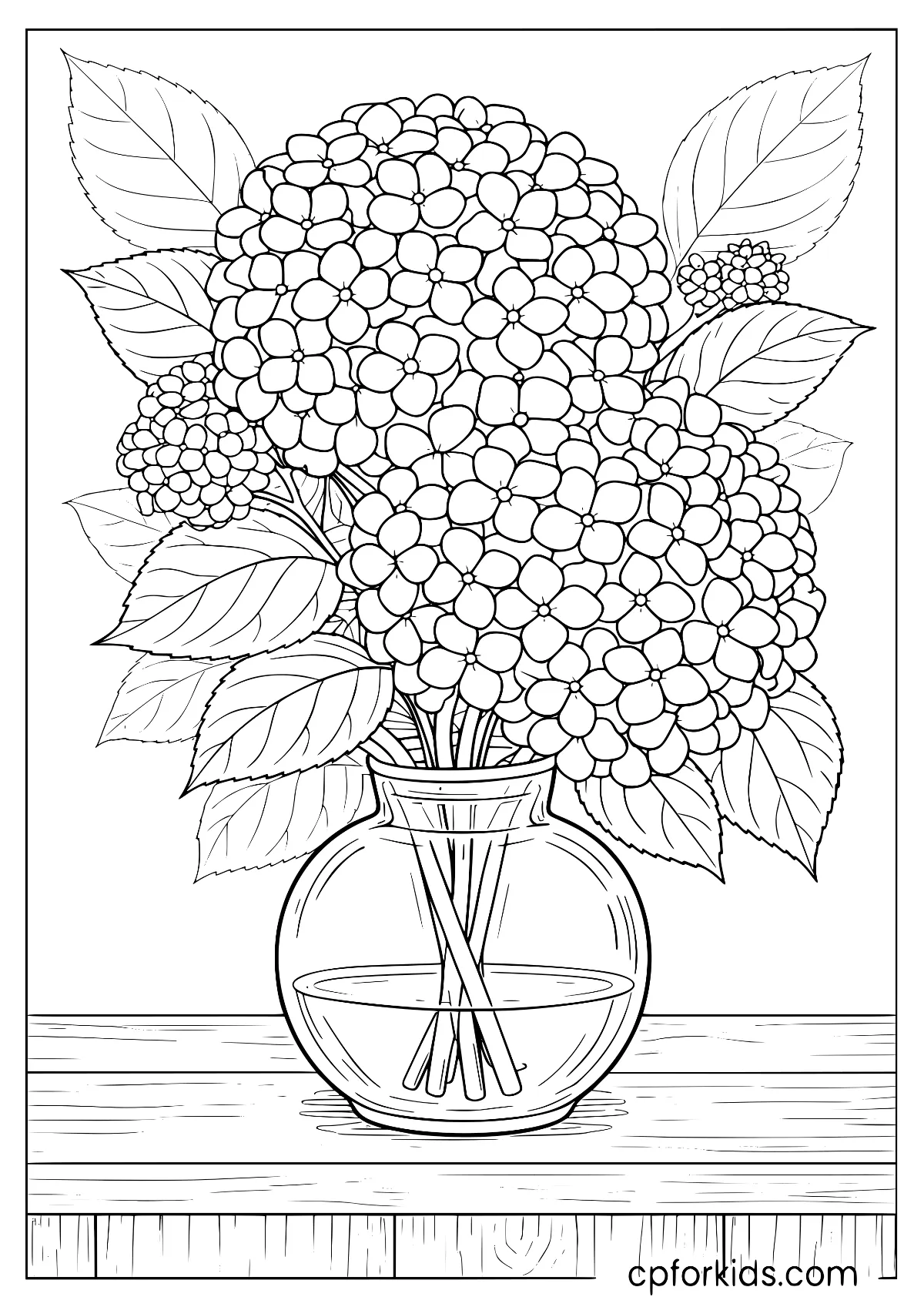
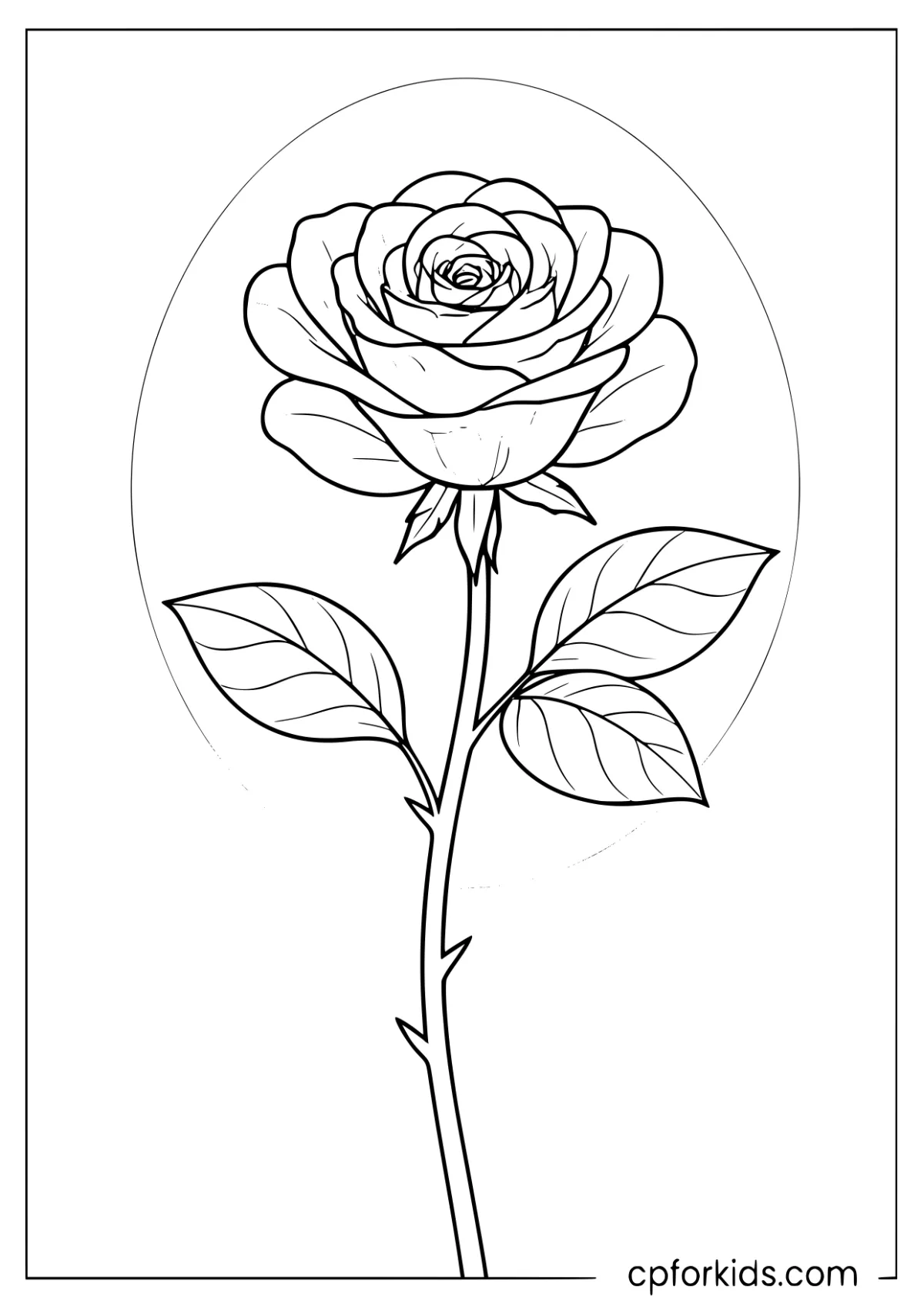
A large flower head with broad petals is easier to finish than a bouquet full of small blooms. Start with the blank template, simple tulip, or potted rose if you want easy flower coloring pages. For a longer session, choose the hydrangeas, layered peony, floral mandalas, or zentangle bouquet. Colored pencils can reach smaller sections; crayons suit the larger open shapes.
Try a Simple Flower Palette
For a natural look, compare the bloom with a reference photo before choosing petal and leaf colors. For cute flowers, use any palette you like: a blue rose or pink sunflower can work just as well as a familiar color. In a mixed bouquet, repeat three or four petal colors and vary the greens so the arrangement feels connected.
Notice the Shapes That Change
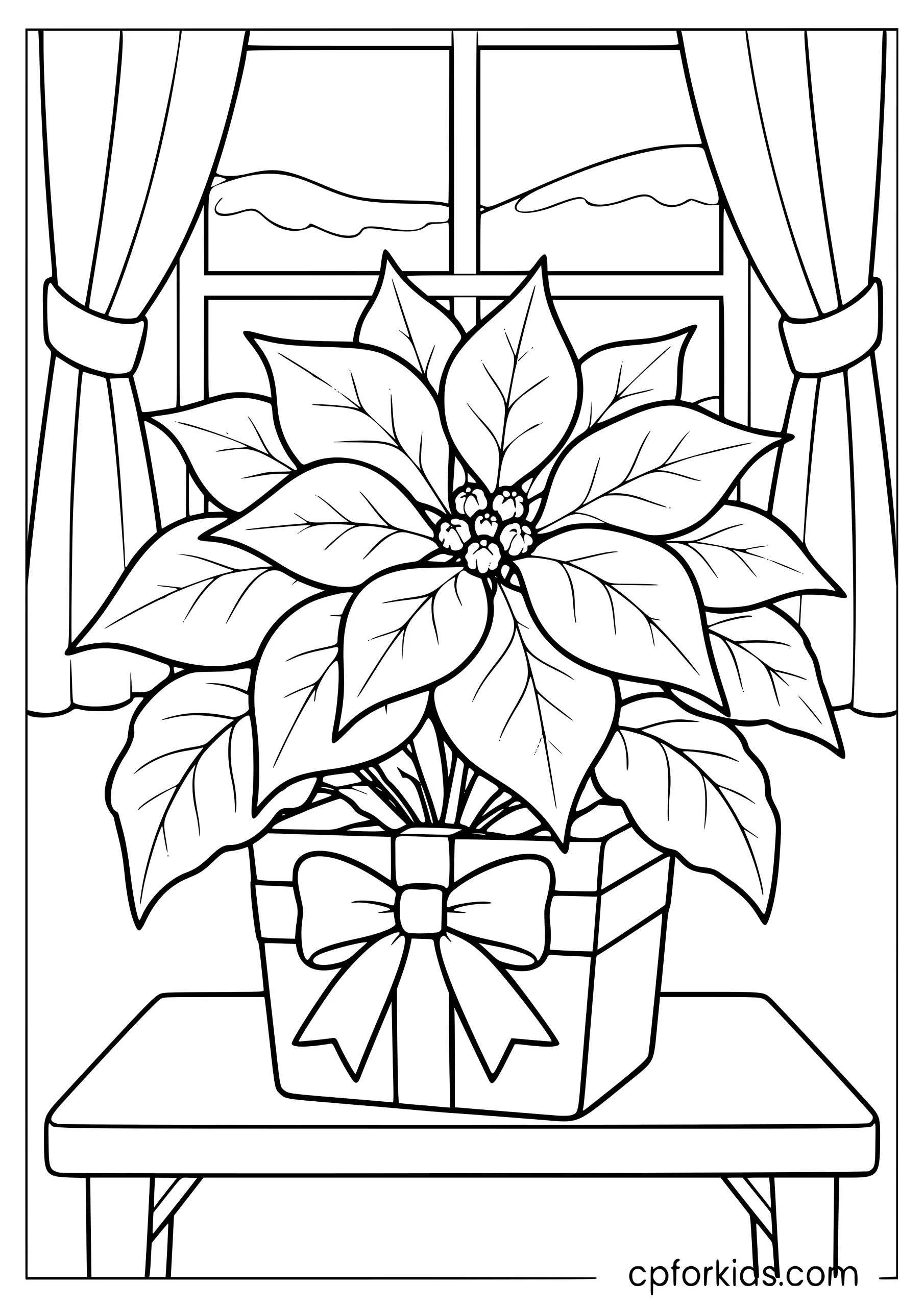
Daffodils have a central trumpet surrounded by six petal-like segments. Poinsettias have showy leaf-like bracts around much smaller flowers. The lotus page places the bloom and leaf above the water, while the water lily pages show floating pads. Look for those shapes as you color; botanical-style pages and playful cartoon flowers do not need the same level of realism.
Make a Flower Activity
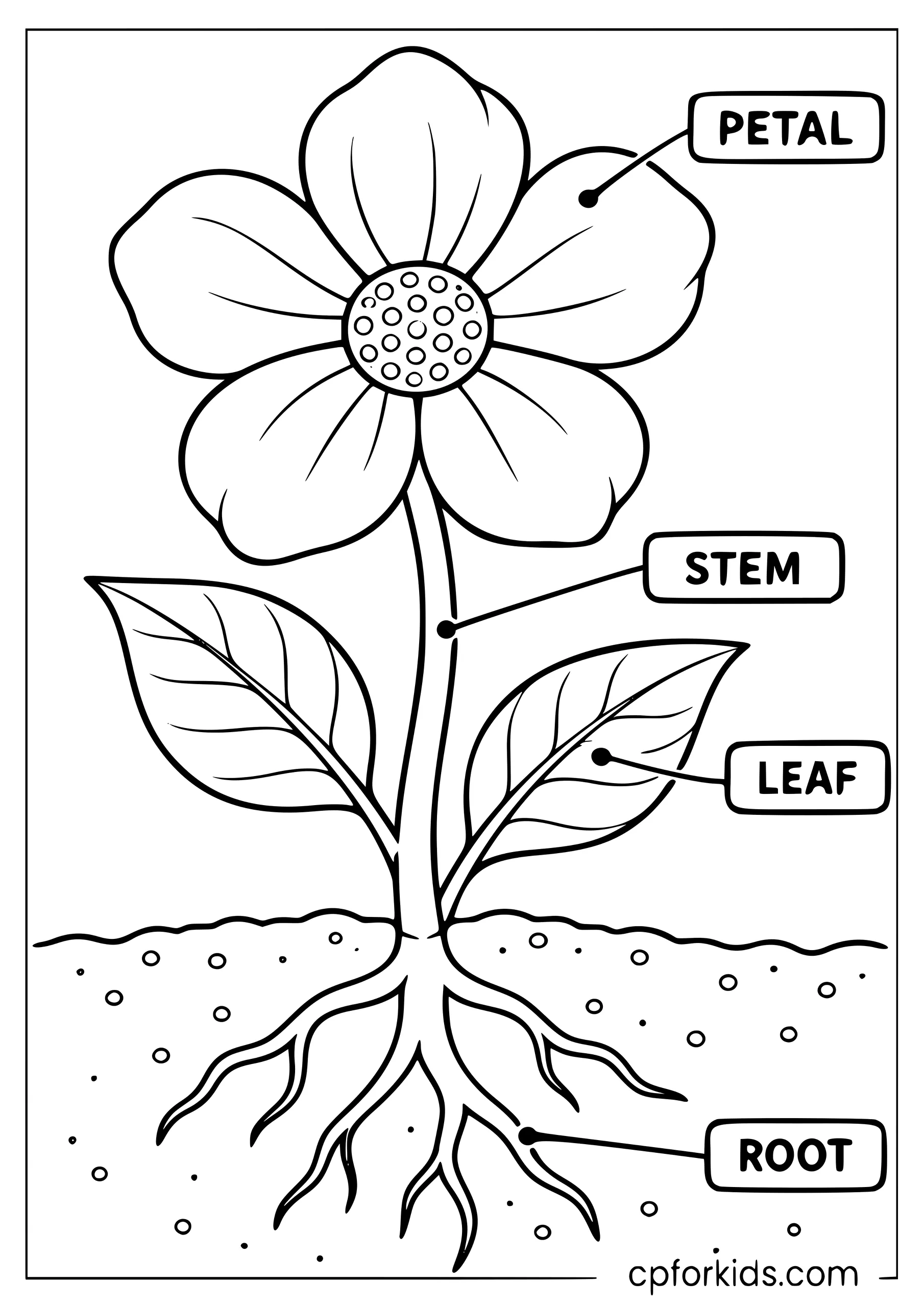
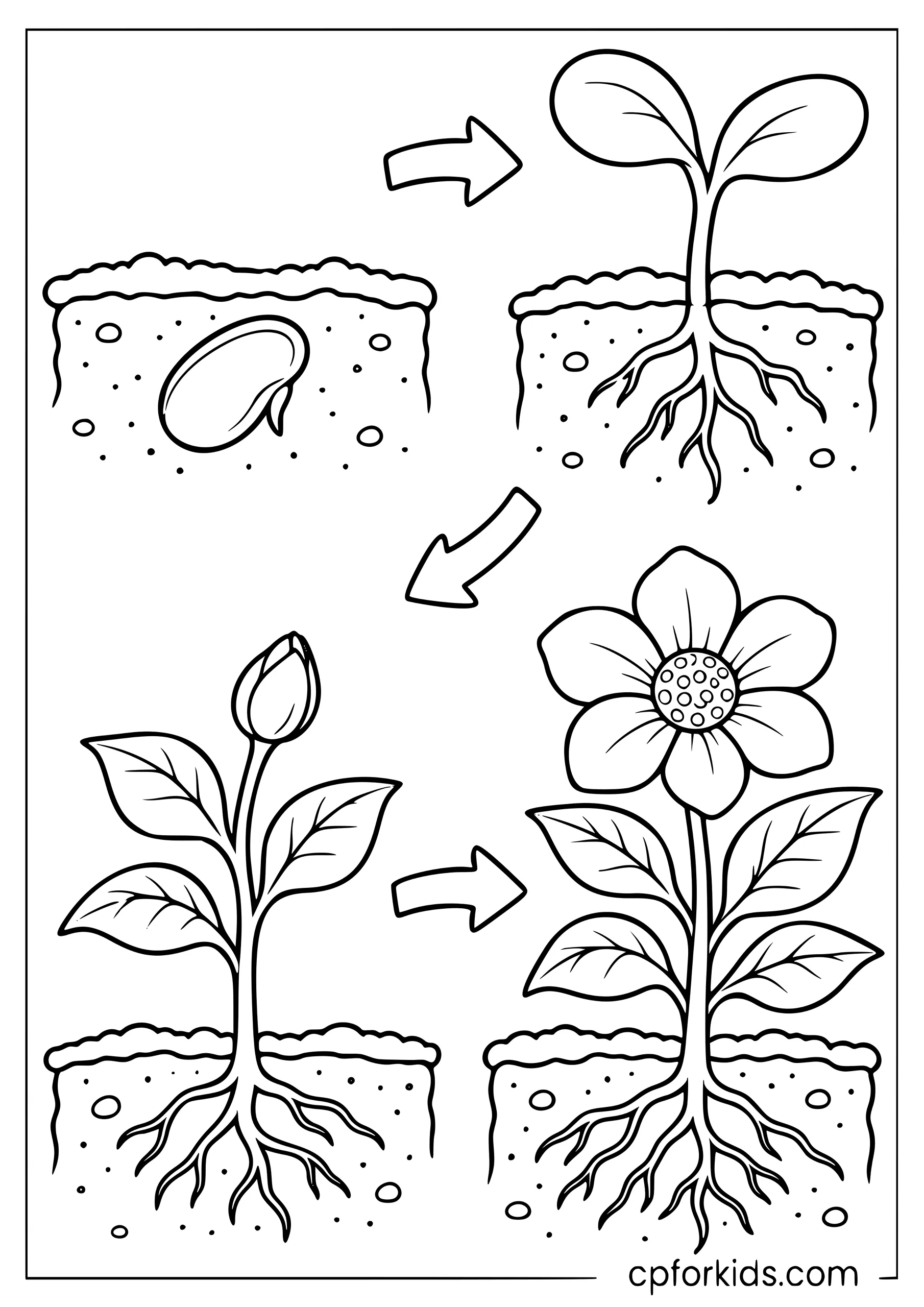
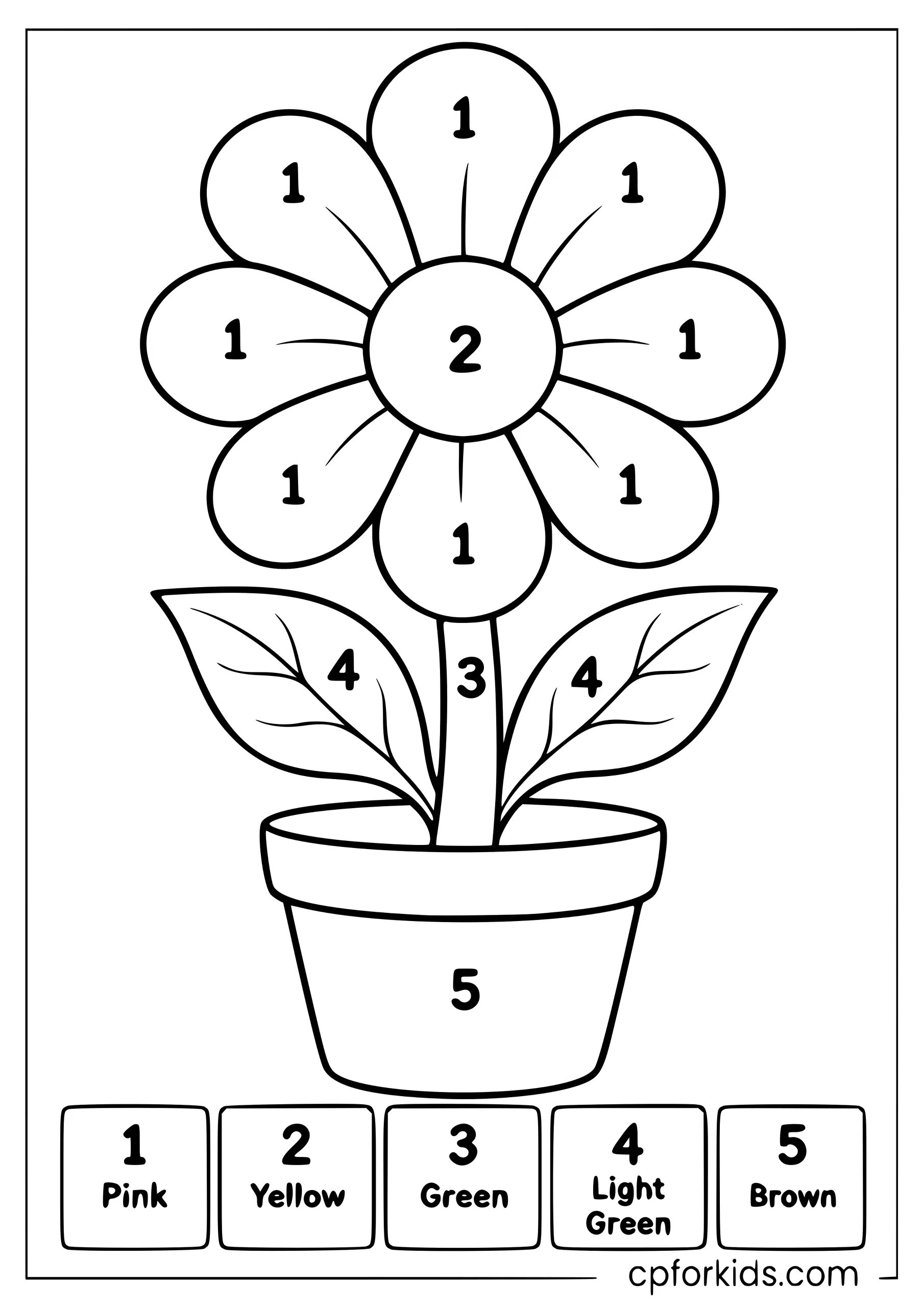
Pair the plant-labeling worksheet with the seed-to-flower page for a short classroom activity, then finish with color by number. For a handmade card, color a bouquet and mount the finished picture on folded cardstock. If you use markers, place a spare sheet underneath to protect the table or the next page. Follow the site’s usage terms when sharing finished activities.
Flower Coloring Pages FAQ
Are these flower coloring pages free to print?
Yes. Each card links to a free PDF that you can open, save, and print without an account. Choose the U.S. Letter or A4 paper setting in your print viewer and check the preview before printing.
Which flower coloring pages are easiest for toddlers?
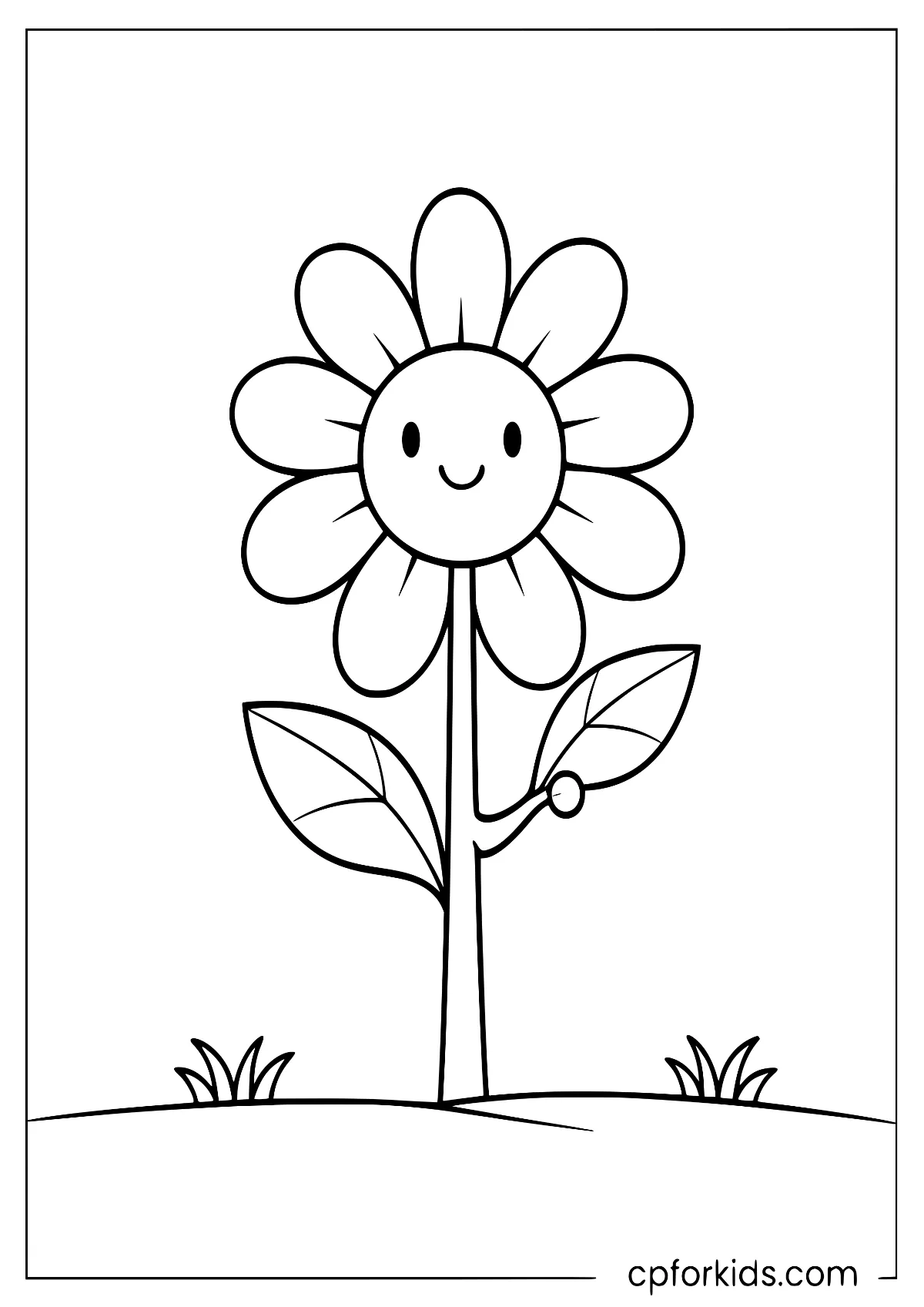
Start with the Large Blank Flower Template, Large Flower Close-Up, or Simple Tulip Outline. Their broad petals and larger spaces need less careful coloring than the dense flower centers, layered bouquets, and patterned designs.
Do you have flower coloring pages for adults?
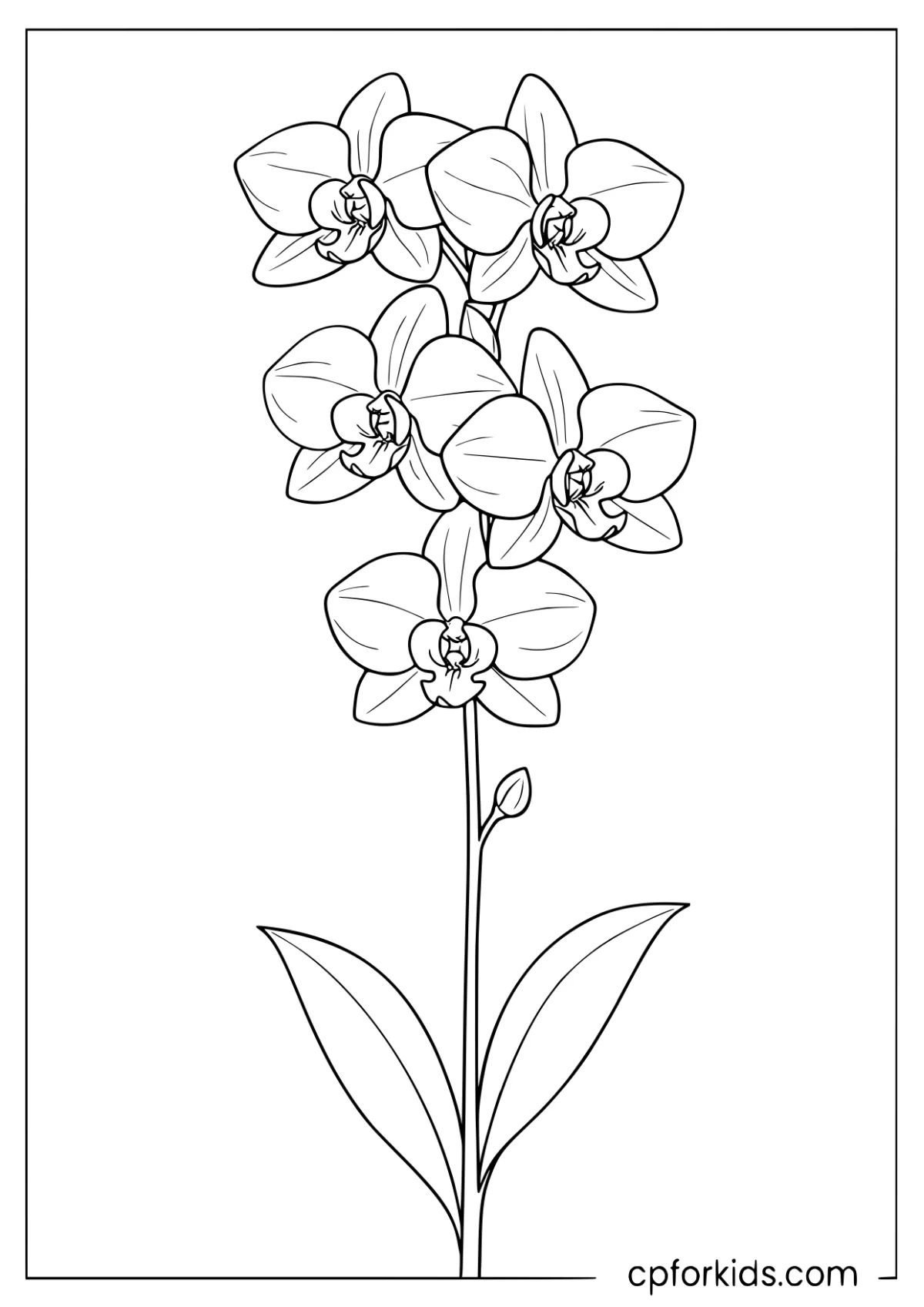
Yes. The realistic-style bouquets, peony, orchids, hydrangeas, and floral mandalas offer more detail. Adults who prefer bold and easy flower pages can also choose the larger single blooms; age does not determine how detailed a page needs to be.
What types of flowers can I color?
The collection includes roses, sunflowers, daisies, tulips, lilies, poppies, hibiscus, orchids, and many more. The Types of Flowers section groups named blooms, while tropical flowers and water plants have their own sections.
How is the lotus page different from the water lily pages?
The lotus picture shows a flower and leaf raised above the pond on stalks, with a separate seed pod. The water lily pictures show notched floating pads and blooms at or close to the water surface.
Are there flower coloring pages with animals?
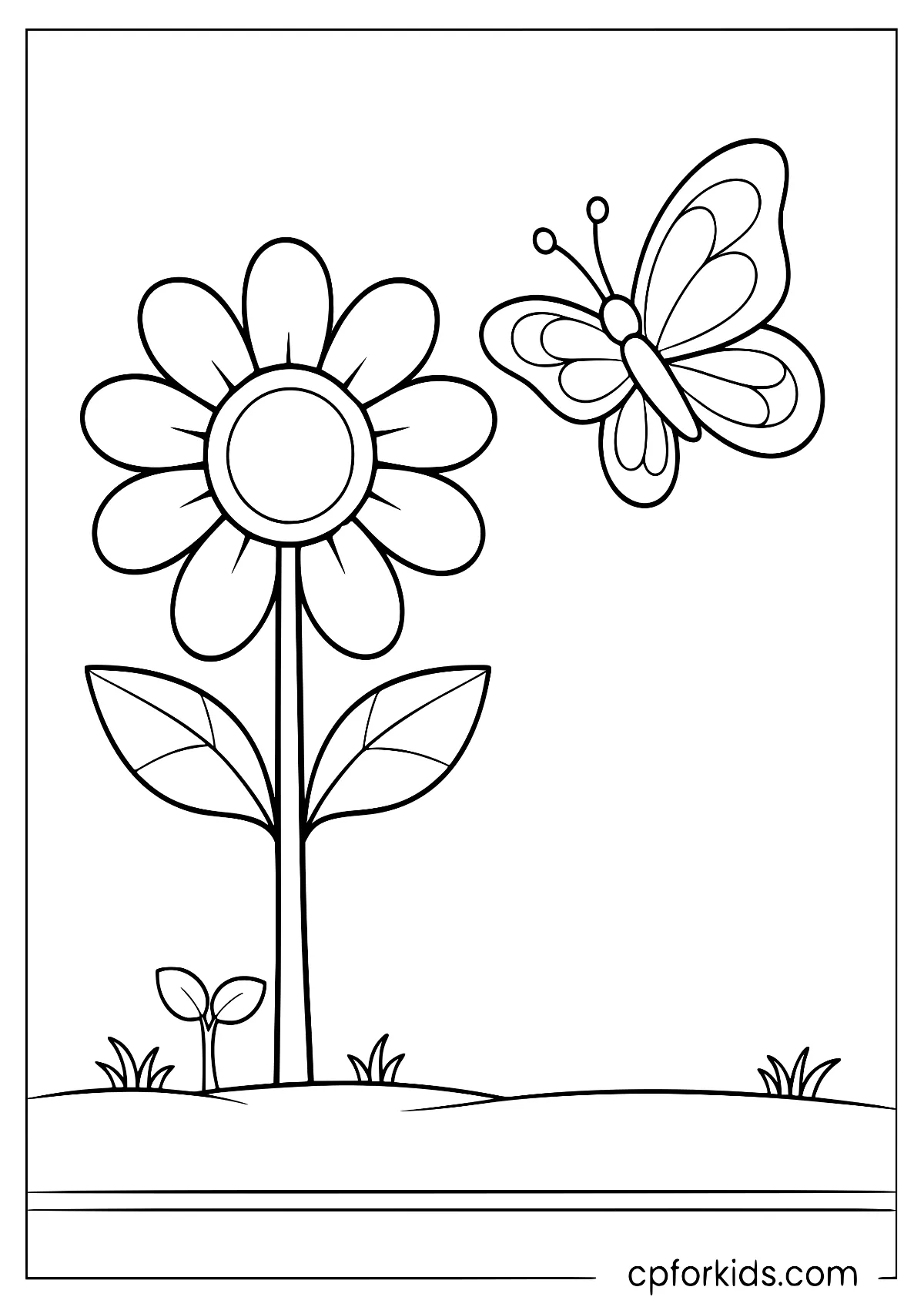
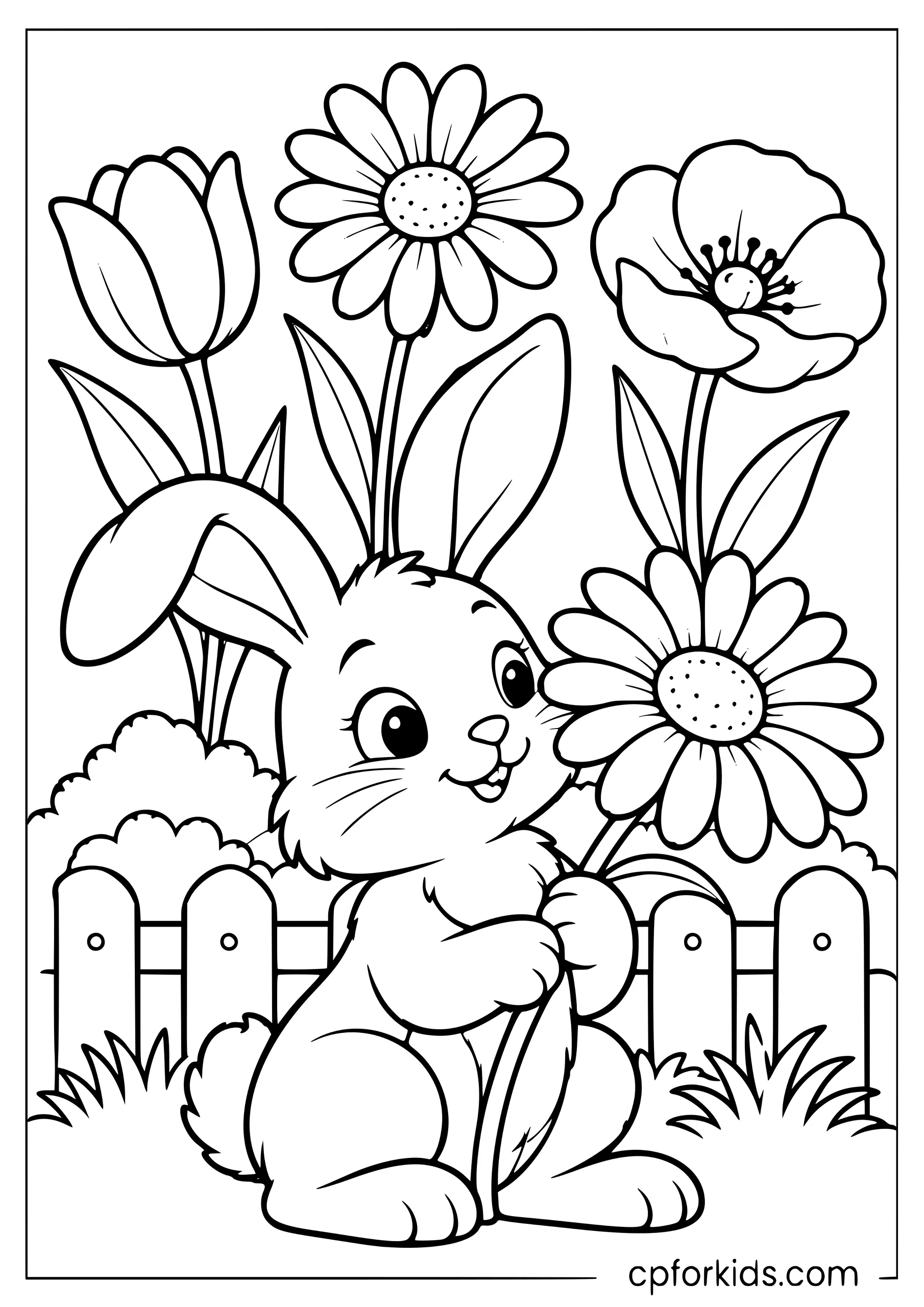
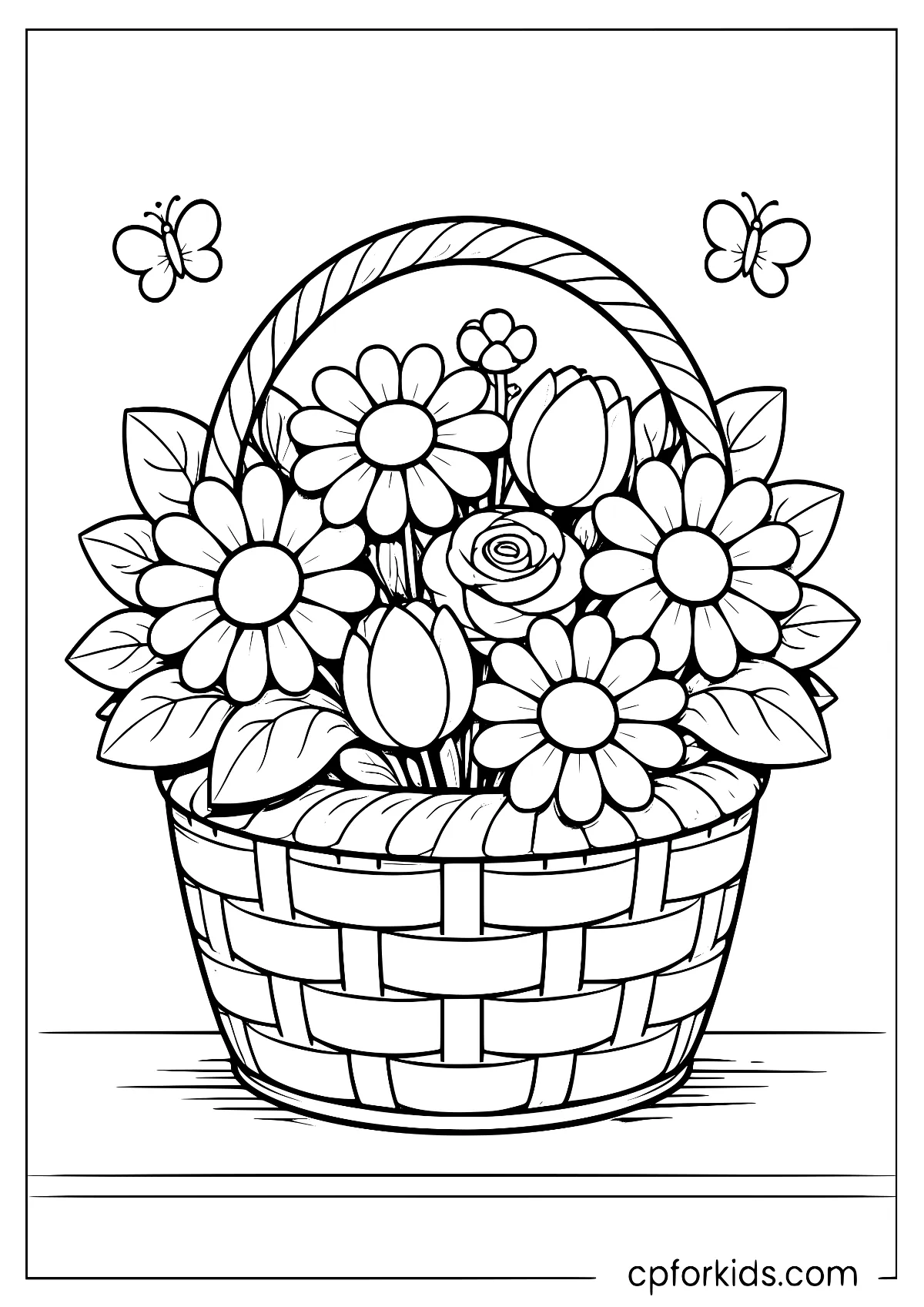
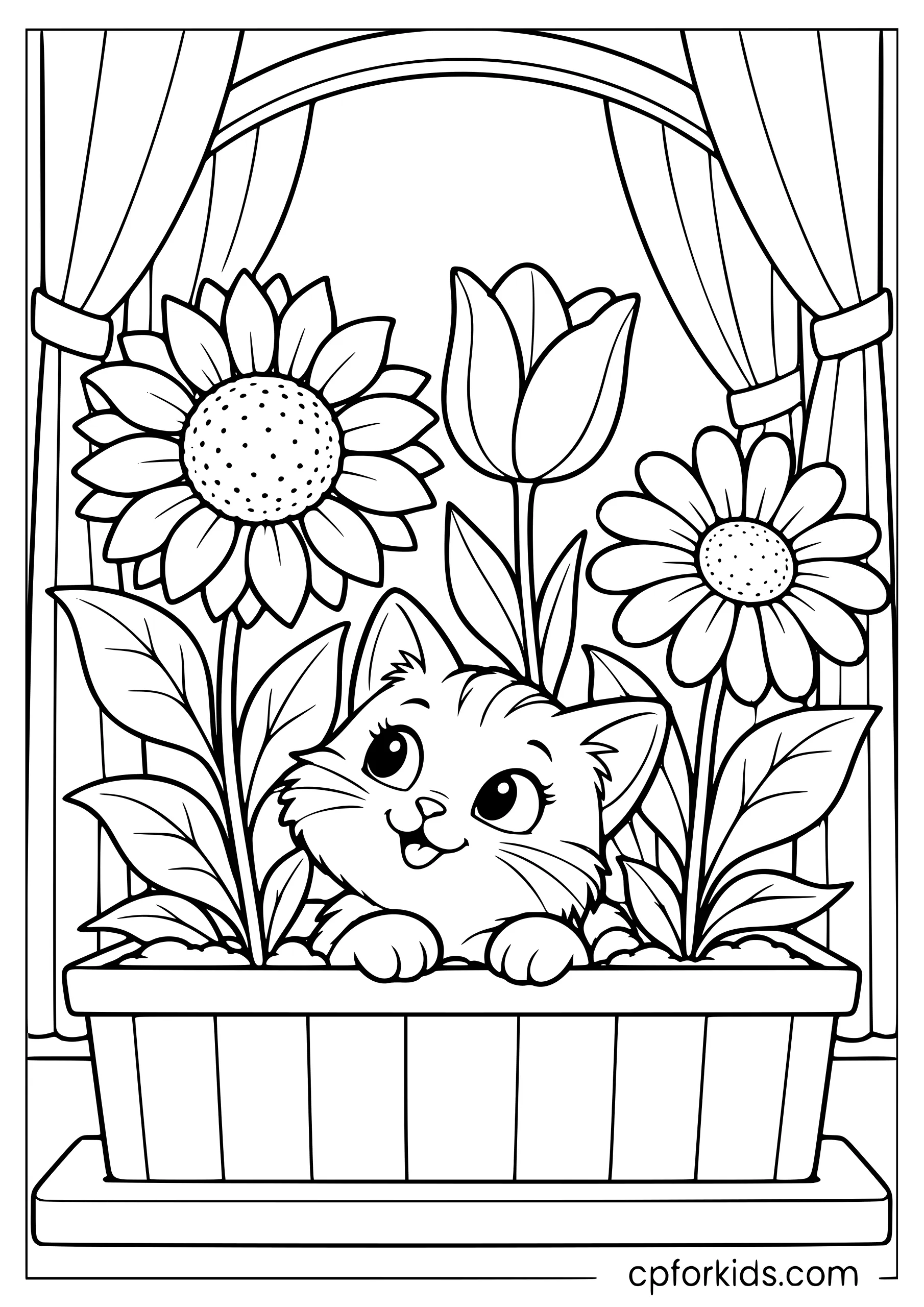
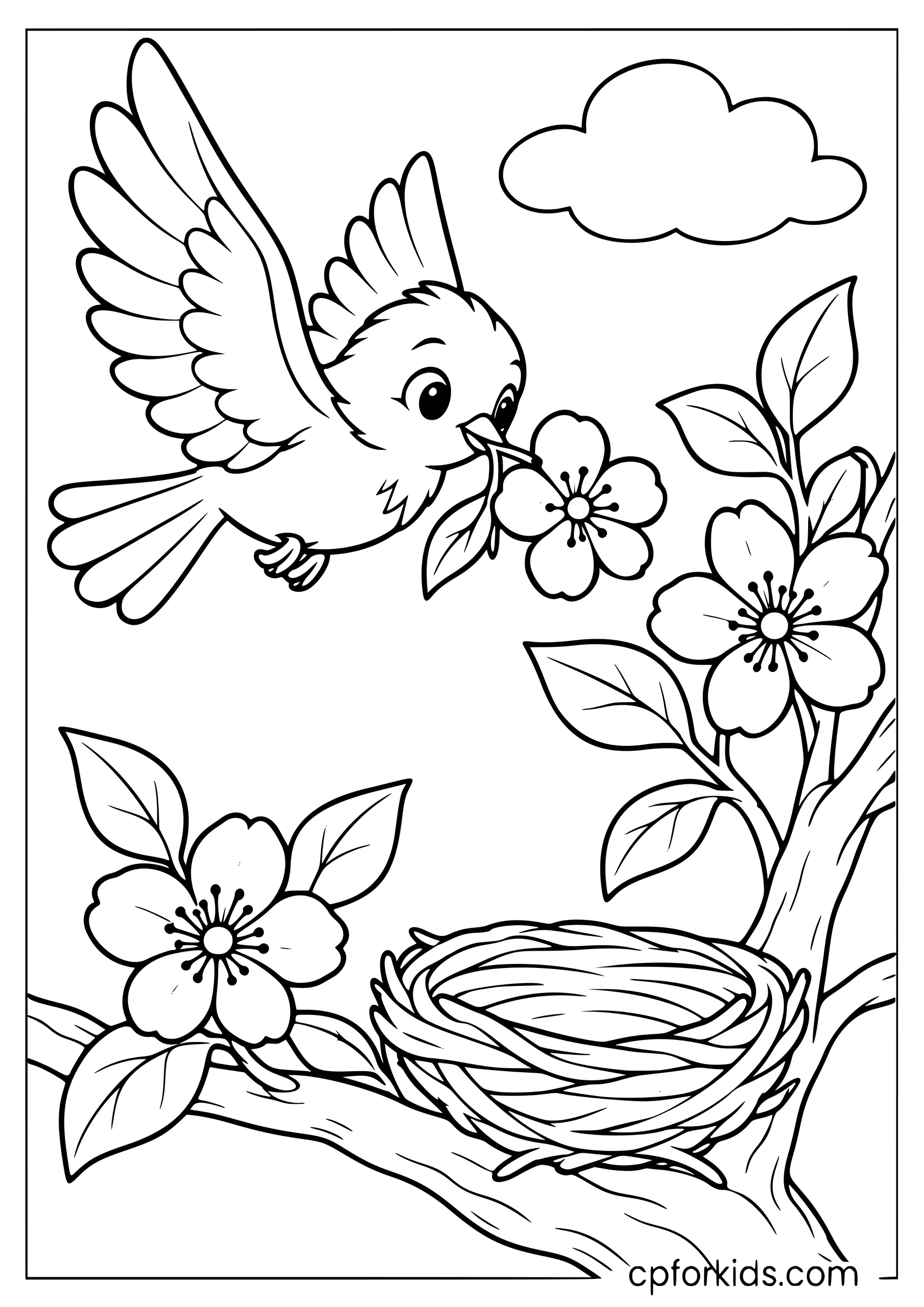
Yes. There are flowers with butterflies, a bee, a ladybug, a frog, and several birds. Newer scenes include a bunny holding a daisy, a cat peeking between flowers, and a puppy sniffing a sunflower.
Can I use the flower worksheets in class?
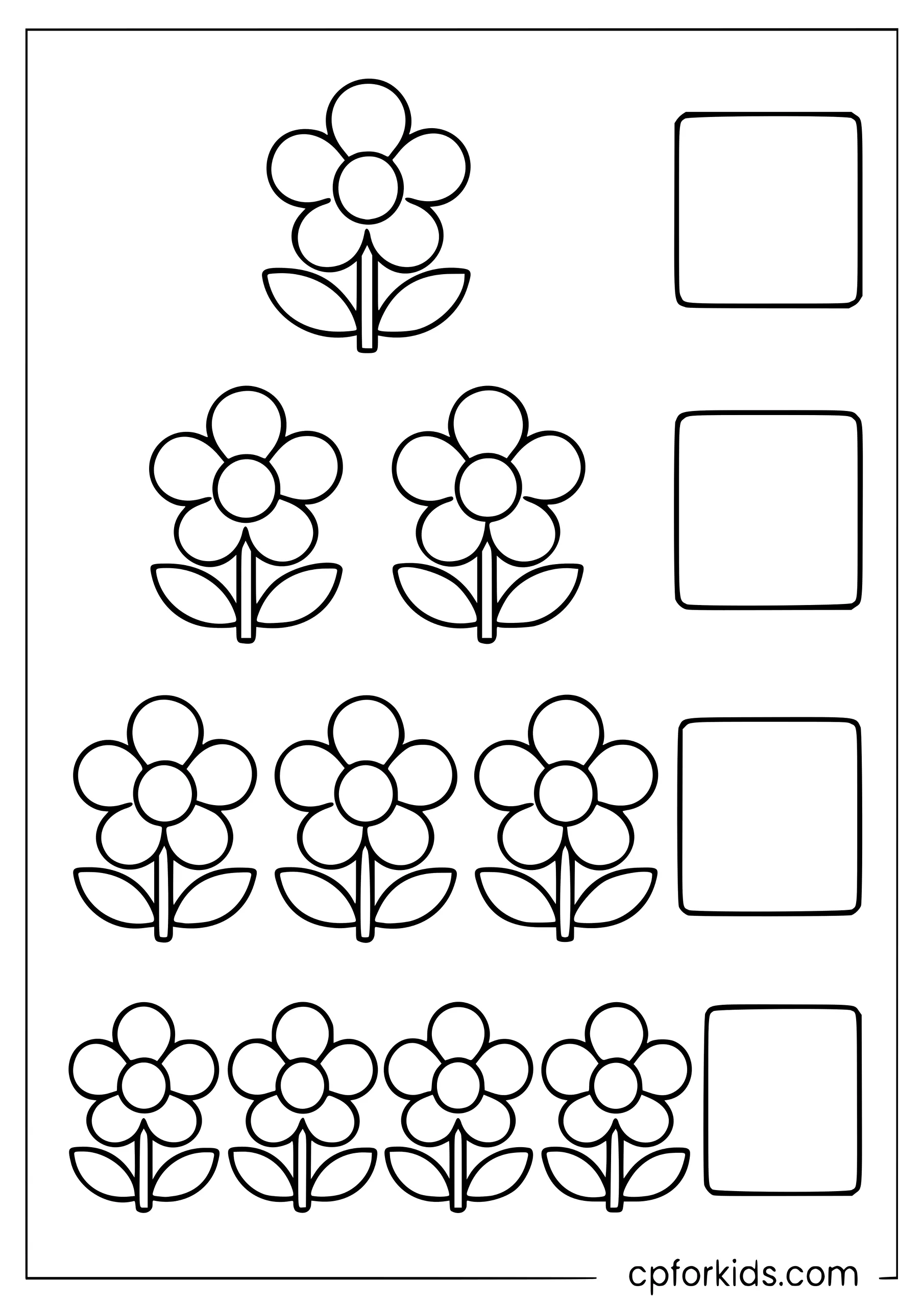
Yes. Teachers and homeschool families may print copies for non-commercial educational activities. Use the plant diagram to discuss labels, follow the growth stages, count the flowers, or match numbered areas to the color key.
What colors should I use for flowers and leaves?
Use a reference photo if you want a realistic palette, or choose any colors you enjoy. Pink or purple sunflowers work on a playful page too. Repeating a few petal colors can help a mixed bouquet feel coordinated.
Selinay Yücesoy is an illustrator and content designer at CPForKids. She helps plan, create, and review printable coloring pages and online coloring activities, with a focus on clear outlines, practical coloring areas, age-appropriate presentation, usability, and an enjoyable coloring experience.